



Key Takeaways
- The Rhône is two worlds, one name. The Northern Rhône is Syrah’s spiritual home—steep granite slopes, single-variety wines, a Burgundian sense of place. The Southern Rhône is Grenache’s kingdom—sun-baked galets, blends of up to 13 grapes, and wines scaled for grandeur.
- Hermitage is France’s most underrated great wine. A 137-hectare granite hill that produces Syrah of impossible depth and longevity. Thomas Jefferson ordered it for the White House. Russian tsars paid more for Hermitage than for Lafite. Prices today? A fraction of Bordeaux First Growths.
- Châteauneuf-du-Pape is value for classified quality. The best CdPs (Beaucastel, Vieux Télégraphe, Rayas) compete with classified Bordeaux—at a fraction of the price. Entry-level CdP starts at $35.
- $20-35 is Rhône’s sweet spot. Côtes du Rhône from top producers (Saint Cosme, Guigal, Charvin) delivers complexity that costs $50+ in Napa. Crozes-Hermitage and Saint-Joseph are the insider value plays.
- The Northern Rhône has 8 crus; the Southern has 9. They share a river and a name, but the wines taste nothing alike. Understanding the difference between Côte-Rôtie and Gigondas is the key to navigating the Rhône.
- Rhône wines are food wines—always. These are not cocktail wines or collector trophies (though the top ones certainly collect). They’re built for the table: grilled meats, stews, herbs, garlic, olive oil. If you’re drinking CdP without food, you’re doing it wrong.
1. Introduction: The River, the Romans & the Wines That Outlasted Empires
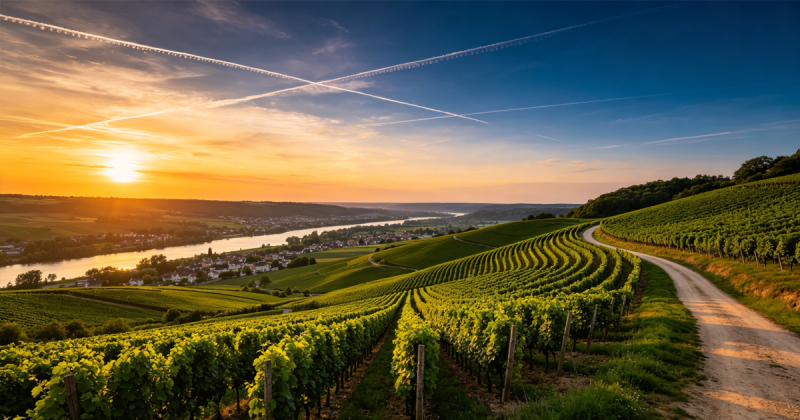
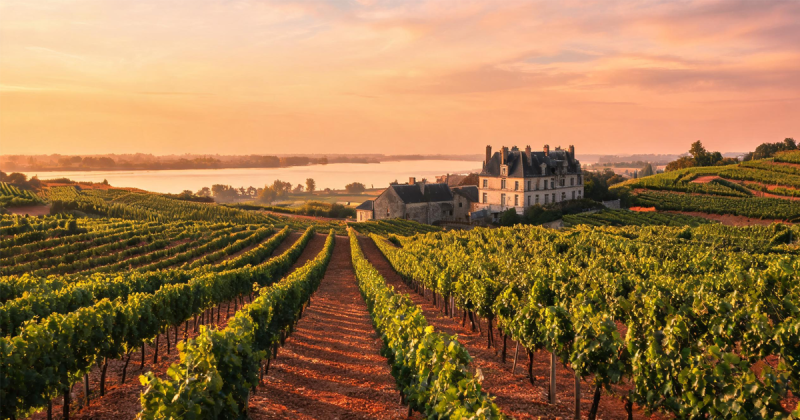
The Rhône River is not just a geographic feature—it’s the reason the wines exist. The Romans planted vines along the Rhône corridor in the 1st century AD, using the river to ship wine north to Lyon and south to the Mediterranean. Vienne, just south of Lyon, became the wine capital of Roman Gaul. The steep granite slopes that flank the northern Rhône were first terraced 2,000 years ago—and some of those terraces are still farmed today.
The Rhône Valley is essentially two wine regions sharing a river. The Northern Rhône, a narrow corridor stretching 70 km from Vienne to Valence, is Syrah country—steep, granite, cool, with a Burgundian obsession with single-variety expression and individual vineyard sites. The Southern Rhône, opening out into a vast sun-blasted amphitheater from Montélimar to Avignon, is Grenache territory—large, rolling vineyards, complex blends, and wines of Mediterranean generosity.
In terms of prestige, the Rhône occupies a strange middle ground in the French wine hierarchy. Côte-Rôtie and Hermitage are among the greatest Syrahs on Earth, trading at prices that rival top Burgundy. Châteauneuf-du-Pape—all 3,200 hectares of it—is perhaps the most recognizable Southern French wine name in the world. Yet the broader Côtes du Rhône category remains one of France’s great value propositions, producing $12-18 wines that punch far above their weight. The Rhône is simultaneously one of France’s most prestigious and most accessible wine regions.
This guide covers the granite and the galets, the 17 crus, the grapes, the vintages, the prices, and how to buy Rhône wines without paying Burgundy prices for wines that rival Burgundy.
2. The Two Rhônes: Granite Slopes & Sun-Baked Galets
2.1 Northern Rhône: The Syrah Cathedral
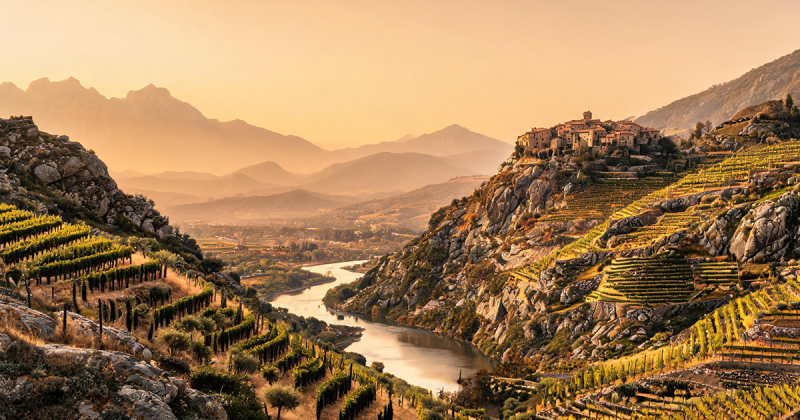
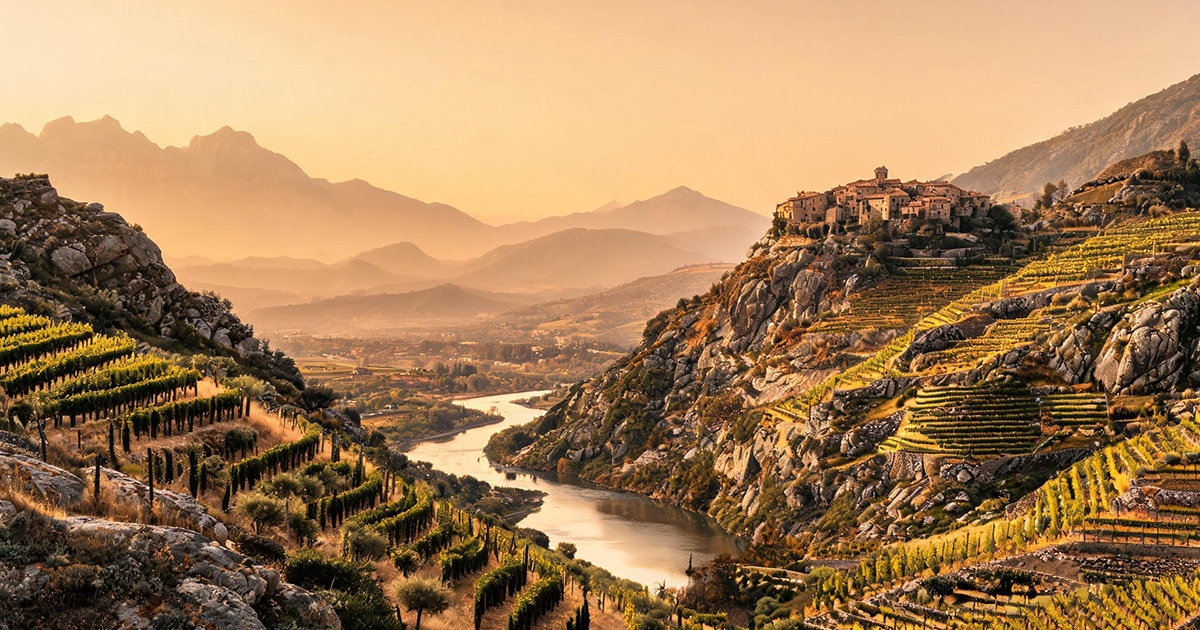
The Northern Rhône is tiny—barely 4,000 hectares of vines squeezed onto impossibly steep granite slopes above the river. The climate is continental: cold winters, warm summers, and the constant threat of the Mistral wind. The soils are granite, schist, and gneiss—poor, mineral, heat-retaining soils that force Syrah roots deep into cracks in the bedrock.
This is single-variety territory. Côte-Rôtie is Syrah (with up to 20% Viognier co-fermented for aromatic lift). Hermitage is Syrah (with small amounts of Marsanne and Roussanne for the white). Cornas is 100% Syrah—no co-fermentation, no white grapes, no compromise. Saint-Joseph, Crozes-Hermitage, and Saint-Péray round out the red crus, with Condrieu and Château-Grillet dedicated to Viognier.
The key to understanding Northern Rhône: the wines are about place, not blend. A Côte-Rôtie from the Côte Brune tastes different from one from the Côte Blonde. A Hermitage from Les Bessards tastes different from one from Le Méal. This is Burgundian thinking applied to Syrah.
2.2 Southern Rhône: The Grenache Kingdom
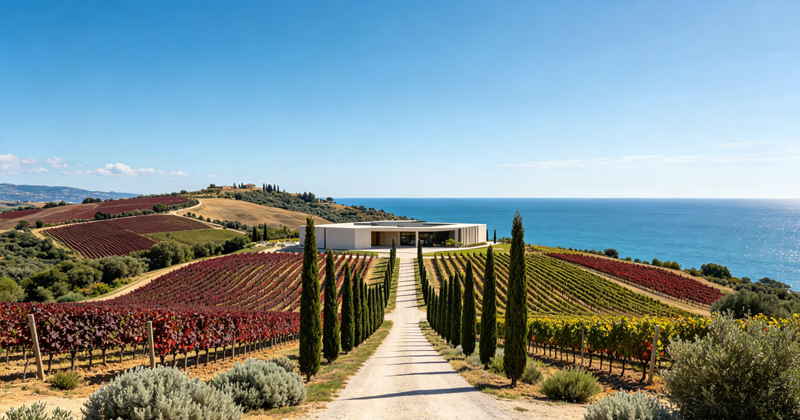
From Montélimar south, the valley opens out—the hills retreat, the sky expands, and the climate turns decisively Mediterranean. Hot, dry summers (often exceeding 35°C), mild winters, 2,800+ hours of sunshine, and the Mistral roaring down the valley. Soils shift from granite to a patchwork of limestone, sand, clay, and the famous galets roulés—large, rounded stones that absorb heat during the day and radiate it back at night.
The Southern Rhône is blend country. Châteauneuf-du-Pape permits 13 grape varieties (18 if you count the color mutations). Gigondas, Vacqueyras, and the Côtes du Rhône-Villages crus all work with multiple grapes, though Grenache is always the dominant note. The art is not in expressing a single vineyard’s terroir but in orchestrating a blend that’s greater than the sum of its parts.
The Southern Rhône is also the value engine of French wine. Côtes du Rhône—a vast appellation producing everything from cheap supermarket plonk to wines that could pass for Châteauneuf-du-Pape—is perhaps the world’s greatest source of sub-$20 wines that taste like $40 wines.
2.3 The Mistral: The Wind That Shapes Everything
No discussion of the Rhône Valley is complete without the Mistral. This cold, dry north wind funnels down the Rhône corridor at speeds up to 100 km/h, shaping viticulture in ways both destructive and beneficial. It dries vines after rain (reducing disease pressure), cools grapes during heatwaves (preserving acidity), and makes organic farming more viable than in almost any other French region. It also snaps trellises, shreds leaves, and desiccates fruit if it blows during flowering. Vineyards are planted at angles to deflect the wind; bush vines (gobelet) are staked low to survive it. The Mistral is why Rhône wines have such vibrant acidity despite the Mediterranean heat.
2.4 Climate Change: The New Normal
The Rhône Valley is on the front lines of climate change in French wine. Average growing-season temperatures have risen 1.5°C since 1980. Harvests that once started in late September now begin in late August—and in extreme years like 2003, 2015, and 2022, the first week of August. The implications are profound and uneven.
In the Northern Rhône, warming has been a mixed blessing. Syrah, historically marginal in the cool granite slopes, now ripens more reliably. Vintages like 2015, 2018, and 2022 produced Syrah of unprecedented ripeness and power—but also higher alcohol (15%+ is now common, up from 12.5-13% in the 1980s). The risk: Syrah that tastes more like Australian Shiraz than classic Rhône, losing its pepper-and-violet signature to jammy black fruit and heat.
In the Southern Rhône, where Grenache already thrived in heat, the challenge is greater. Alcohol levels in CdP regularly hit 15-16%. The CIVC (Conseil Interprofessionnel des Vins de Provence) and Rhône wine bodies are investing in research: drought-resistant rootstocks, later-ripening clones, experimental varieties (Counoise and Cinsault are gaining interest for their late-ripening, acid-retaining properties). Mourvèdre—long the hard-to-ripen “wild card”—is becoming easier to ripen fully, and its percentage in blends is slowly climbing.
The 2021 vintage was a stark reminder that climate change means volatility, not just heat. A devastating April frost wiped out up to 70% of the crop in parts of the northern and southern Rhône—the worst frost since 1956. The Rhône’s future is not simply “hotter”—it’s more unpredictable. Producers who hedge their bets with multiple varieties, diverse vineyard sites, and altitude (Gigondas, Vinsobres, higher-elevation Saint-Joseph) will be the ones who weather the transition.
3. The Northern Rhône Crus: 8 Appellations of Granite & Syrah
3.1 Côte-Rôtie: The Roasted Slope
Côte-Rôtie—“the roasted slope”—is the northernmost red appellation in the Rhône. Its vineyards climb the right bank of the river in impossibly steep terraces, facing south and southeast to catch every available ray of sun. The soils are schist and granite, iron-rich and mineral. This is where Syrah reaches its most aromatic, perfumed expression—floral (violet, iris), spicy (black pepper, clove), with a silky texture that’s unique among Northern Rhône reds.
The appellation is divided into two legendary slopes. The Côte Brune (north) produces darker, more structured, more tannic wines from iron-rich schist. The Côte Blonde (south) produces lighter, more aromatic, more immediately seductive wines from lighter, limestone-rich soils. Most wines are blends of parcels from both slopes. A tiny amount of Viognier (up to 20%) may be co-fermented, adding floral lift and softening Syrah’s tannins.
The Guigal family dominates Côte-Rôtie, producing the entry-level Brune et Blonde and the three legendary single-vineyard “La La” wines: La Mouline (Côte Blonde, 11% Viognier), La Landonne (Côte Brune, 100% Syrah), and La Turque (a blend, only made since 1985). These are among the most expensive Rhône wines, trading at $300-800+ per bottle. Other essential producers: Jamet, Rostaing, Ogier, Barge, and Clusel-Roch.
3.2 Hermitage: The Hill of Kings
Hermitage is a single granite hill rising abruptly from the Rhône’s left bank in Tain-l’Hermitage—all 137 hectares of it. It faces south, soaking in the sun from dawn to dusk, and produces Syrah of a scale and depth that is unmatched anywhere in the world. If Côte-Rôtie is about perfume, Hermitage is about power: brooding, dense, mineral, and built to age for decades.
The hill is divided into named lieux-dits—Les Bessards (the core, granite, structural), Le Méal (limestone-rich, rounder, more generous), Les Greffieux (silty, elegant), and others. The greatest Hermitages are blends across these sites, though single-vineyard bottlings are increasingly common.
Hermitage also produces white wine from Marsanne and Roussanne—full-bodied, honeyed, nutty whites that can age for 30+ years. Chapoutier’s Le Méal Blanc and Chave’s Hermitage Blanc are the benchmarks.
Producers: Jean-Louis Chave (the traditional reference), Chapoutier (biodynamic, single-vineyard focus), Delas (Les Bessards), Jaboulet (La Chapelle), and M. Sorrel (Le Gréal). Prices for top cuvées run $150-400+; entry-level Hermitage starts around $70.
3.3 Cornas: The Wild One
Cornas is 100% Syrah, no Viognier, no compromise. The wines are—or were—notoriously rustic, tannic, and savage, demanding 10+ years to become drinkable. The modern generation of producers (Thierry Allemand, Auguste Clape, Vincent Paris, Franck Balthazar) has tamed the tannins without sacrificing the wild, animal, “barnyard and black olive” character that makes Cornas distinctive. These are the most underrated Syrahs in France—priced well below Côte-Rôtie and Hermitage, but capable of rivaling both. Appellation size: about 150 hectares.
3.4 Saint-Joseph & Crozes-Hermitage: The Everyday Northern Rhône
Saint-Joseph (1,300 hectares) and Crozes-Hermitage (1,700 hectares) are the volume players of the Northern Rhône—and when you buy right, two of France’s greatest wine values. Both produce Syrah-based reds and small amounts of Marsanne/Roussanne whites.
Saint-Joseph runs 60 km along the right bank. The best sites—on granite slopes near Tournon (Saint-Jean-de-Muzols, Mauves)—produce aromatic, peppery Syrahs that can compete with Côte-Rôtie at half the price ($25-45). Lesser sites on the plateau produce simpler wines ($18-25). Crozes-Hermitage surrounds Hermitage itself; the best parcels (on granite and gravel in the north, near the hill) produce structured, age-worthy Syrah for $20-35. Producers to know: Saint Cosme, Guigal, Gonon, Coursodon, Cuilleron (Saint-Joseph); Graillot, Jaboulet, Belle, Ferraton (Crozes-Hermitage).
3.5 Condrieu & Château-Grillet: The Viognier Temples
Condrieu is Viognier’s world headquarters—a 200-hectare appellation producing the most opulent, aromatic, seductive white wines in France. Apricot, peach, honeysuckle, orange blossom, sometimes a hint of exotic fruit. The best examples (Guigal, Vernay, Perret, Gaillard, Gangloff) combine this aromatic fireworks with surprising minerality and can age 5-10 years. Prices: $40-100.
Château-Grillet is a single 3.5-hectare estate inside Condrieu, surrounded by walls, owned entirely by one family (and recently Artémis Domaines / Pinault after a 2024 sale). It is its own appellation—the smallest in France—and produces a single Viognier of extraordinary richness and longevity. Expect to pay $150-250+.
3.6 Saint-Péray: The Bubbles & Whites
Saint-Péray is the Northern Rhône’s only sparkling wine appellation, producing traditional-method whites from Marsanne and Roussanne. Also produces still whites. Small (80 hectares), often overlooked, but capable of distinctive, mineral wines. A curiosity worth knowing about.
4. The Southern Rhône Crus: Grenache, Galets & the Art of the Blend
4.1 Châteauneuf-du-Pape: The Pope’s New Castle
Châteauneuf-du-Pape is the Southern Rhône’s flagship—3,200 hectares on the left bank of the Rhône, producing reds (94%), whites (6%), and an identity so strong that the papal tiara embossed on every bottle is recognizable worldwide. The name dates to the 14th century, when Pope Clement V moved the papal court to Avignon and planted vines on the stony plateau north of the city—the “new castle.”
The soils of CdP are legendary: galets roulés—large, rounded stones the size of fists and heads, polished smooth by glacial action, absorbing solar heat during the day and radiating it back at night. The stones also protect the soil from evaporation, keeping moisture locked beneath. Beneath the galets: sand, clay, limestone, and iron-rich red clay.
CdP permits 13 grape varieties: Grenache (the dominant red, typically 70-80% of the blend), Syrah, Mourvèdre, Cinsault, Counoise, Muscardin, Vaccarèse, Terret Noir, Picpoul Noir (reds); Grenache Blanc, Roussanne, Clairette, Bourboulenc, Picpoul Blanc (whites). In practice, most reds are built on a Grenache-Syrah-Mourvèdre core, with the “accessory grapes” adding aromatic complexity. The whites are rare but extraordinary—full-bodied, mineral, and age-worthy (Beaucastel Vieilles Vignes Roussanne, Vieux Télégraphe Blanc).
Châteauneuf-du-Pape is one of the great value plays in fine wine. At $35-60, you can buy world-class CdP (Pegau, Tardieu-Laurent, Charvin, Janasse). At $80-150, you’re in the top tier (Beaucastel, Vieux Télégraphe, Clos des Papes). Rayas—a tiny estate on sandy soils that produces 100% Grenache of haunting elegance—is the unicorn: deeply unlike any other CdP, and priced accordingly ($500-1,000+).
4.2 Gigondas: The Mountain Cru
Gigondas, tucked against the Dentelles de Montmirail mountains, produces the most powerful, structured wines of the Southern Rhône after CdP. The altitude (up to 400m), limestone soils, and cooling influence of the mountains give Gigondas a freshness and mineral tension that separates it from the broader, softer CdPs. At $25-45, Gigondas is one of the world’s great red wine values.
Producers to know: Saint Cosme (the reference point, making wines of astonishing purity), Domaine du Cayron, Domaine les Pallières, and Domaine Raspail-Ay.
4.3 Vacqueyras & the Crus of the Côtes du Rhône
Vacqueyras (pronounced VACK-uh-rass) was promoted from Côtes du Rhône-Villages to full cru status in 1990. It produces wines of power and rusticity at $18-28—essentially budget Gigondas. The best producers: Domaine le Sang des Cailloux, Domaine des Amouriers.
The Côtes du Rhône-Villages system includes 21 named villages, of which 8 have been elevated to named cru status: Rasteau (fortified Vin Doux Naturel and structured reds), Cairanne (elegant, mineral Grenache-Syrah blends), Vinsobres (high-altitude freshness), Beaumes-de-Venise (famous for Muscat sweet wine; also dry reds), Sablet, Séguret, Plan de Dieu, and others. These are where the best sub-$20 Southern Rhône values live.
4.4 Tavel & Lirac: Rosé & Red Across the River
Tavel, across the river from Châteauneuf-du-Pape, is France’s only all-rosé appellation—and not the pale, whisper-pink rosé of Provence. Tavel is deeply colored, structured, almost a light red wine in rosé clothing. Darker, more tannic, spicier than Provence, and emphatically a food wine. Lirac, Tavel’s red-wine sibling, produces structured Grenache-Syrah-Mourvèdre reds ($18-28) that are often overlooked in favor of neighboring CdP—a mistake. Both appellations deserve far more attention than they get.
5. The Grapes of the Rhône: Syrah, Grenache & the Blend
5.1 Syrah: The Northern Monarch
Syrah is what makes the Northern Rhône matter. On the granite slopes, it produces wines of extraordinary depth, structure, and longevity—black fruit (blackberry, cassis), black pepper, olive tapenade, smoked meat, violet, graphite. At 5-10 years, the primary fruit recedes and secondary aromas—leather, game, sous-bois—emerge. At 15-25+ years, great Côte-Rôtie and Hermitage achieve a haunting, Burgundian elegance.
In the Southern Rhône, Syrah plays a supporting role—adding color, structure, and spice to Grenache-based blends. Southern Syrah is typically softer, rounder, and less fiercely tannic than its northern counterparts.
5.2 Grenache: The Southern King
Grenache is the most-planted red grape in the Southern Rhône and the backbone of Châteauneuf-du-Pape. It brings ripe red fruit (strawberry, raspberry, kirsch), high alcohol, and a soft, generous texture. On its own, Grenache can be flabby and unstructured. Blended with Syrah (structure) and Mourvèdre (tannin, game), it achieves greatness. Old-vine Grenache—60-100+ year-old bush vines on sandy soils—produces the Rhône’s most ethereal wines. Château Rayas is the undisputed master.
5.3 Mourvèdre: The Animal Power
Mourvèdre is the wild card. Late-ripening, heat-loving, tannic. Brings dark fruit, game, leather, and a ferocious structure to Southern Rhône blends. Increasingly prized as climate change makes it easier to ripen. In CdP, it’s typically 5-15% of the blend; in Bandol (Provence), it’s the star. Beaucastel is famous for its unusually high Mourvèdre percentage (30%+).
5.4 The Whites: Viognier, Marsanne & Roussanne
| Grape | Where | Character | Price Range |
| Viognier | Northern (Condrieu, Château-Grillet, co-fermented in Côte-Rôtie) | Apricot, peach, honeysuckle, orange blossom. Opulent, aromatic, low acid. The hedonist’s white grape. | $35-100 (Condrieu); $150-250+ (Château-Grillet) |
| Marsanne | Northern & Southern | Almond, white flowers, honey, wax. Full-bodied, low acid, ages beautifully. The primary white in Hermitage and Saint-Joseph Blanc. | $25-80 |
| Roussanne | Northern & Southern | More aromatic and acidic than Marsanne. Herbal tea, pear, pepper, minerality. Often blended with Marsanne for balance. | $30-100 |
| Grenache Blanc | Predominantly Southern (CdP, Lirac) | Apple, pear, fennel, anise. Soft, round, often blended for texture in CdP whites. | $25-60 |
| Clairette | Southern (CdP, southern crus) | Low acid, high alcohol, honeyed. Used in CdP white blends for weight. The traditional base grape for Vermouth. | $25-60 |
| Bourboulenc | Southern | High acid, neutral, citrus. Blended for freshness in CdP whites. Never bottled alone. | N/A (blending only) |
5.5 The Accessory Reds
Cinsault adds perfume and freshness to Southern Rhône blends; on its own, it makes light, chillable reds. Counoise contributes spice and acidity. Muscardin, Vaccarèse, Terret Noir, and Picpoul Noir are the “historic” varieties—each accounting for well under 1% of plantings but still permitted in CdP. Most are academic curiosities, but a few producers (Beaucastel, Vieux Télégraphe) use them intentionally.
6. How to Buy Rhône Wine: Price Tiers, Strategies & What to Avoid
6.1 Price Tiers: The Rhône Value Ladder
| Price | What You Get | Wine Profile | Benchmark |
| $10-18 | Côtes du Rhône (basic); Côtes du Rhône-Villages | Simple, fruity, everyday wines. Some are industrial; the good ones are great value. | E. Guigal Côtes du Rhône, Saint Cosme Côtes du Rhône |
| $18-30 | CDR-Villages (Cairanne, Sablet, Plan de Dieu); entry Crozes-Hermitage & Saint-Joseph; Lirac; Vacqueyras | The sweet spot for everyday Rhône. Serious wines at laughable prices. | Graillot Crozes-Hermitage, Domaine le Sang des Cailloux Vacqueyras, Ogier Lirac |
| $30-50 | Gigondas; mid-tier Crozes-Hermitage & Saint-Joseph; entry CdP; Vinsobres; Rasteau | Where the Rhône gets serious. Gigondas and Saint-Joseph are the stars here. | Saint Cosme Gigondas, E. Guigal Saint-Joseph, Domaine de la Janasse CdP |
| $50-90 | Top Gigondas; top Saint-Joseph; classic CdP; entry Côte-Rôtie & Hermitage; Condrieu | World-class wines. This is where CdP generally lives. | Vieux Télégraphe CdP, Clos des Papes CdP, E. Guigal Côte-Rôtie Brune et Blonde, Chave Saint-Joseph |
| $90-200 | Top CdP; classic Côte-Rôtie & Hermitage; top Condrieu | The great names. Hermitage, top Côte-Rôtie, single-vineyard CdP. | Chave Hermitage, Chapoutier Ermitage, Beaucastel Hommage à Jacques Perrin, E. Guigal La Mouline/La Turque/La Landonne |
| $200-800+ | The icons. La La Côte-Rôtie, Rayas CdP, top Hermitage, Château-Grillet, aged top wines | Investment-grade Rhône. Some of the greatest red wines on Earth. | E. Guigal La Mouline/La Turque/La Landonne, Rayas, Chave Hermitage |
6.2 The Rhône Buying Playbook
- 1. Start with Saint Cosme and Guigal. These two producers make reference-quality wines at every price point—from $12 Côtes du Rhône to $400 single-vineyard Côte-Rôtie. If you’re new to the Rhône, buy anything with either name on the label.
- 2. Côtes du Rhône from top producers outperforms its price. Guigal’s CDR ($14-18) tastes like a $30 wine. Saint Cosme’s CDR Les Deux Albions ($20) could pass for a $40 Gigondas. This is the greatest value play in French wine.
- 3. Buy Gigondas and Saint-Joseph instead of entry-level CdP. At the $30-45 level, Gigondas and Saint-Joseph from top producers deliver more character and structure than generic CdP at the same price. Save CdP for $50+.
- 4. Northern Rhône reds reward decanting—and patience. Young Côte-Rôtie and Hermitage need 1-2 hours in a decanter. Cornas can need 3+. If you’re opening a young Northern Rhône red for dinner, decant it before lunch.
- 5. Look for old-vine Grenache in Southern Rhône wines. “Vieilles Vignes” on a CdP or Gigondas label means lower yields, more concentration, more complexity. Old-vine Cinsault and Grenache are the secret weapons of the southern crus.
- 6. Don’t overlook Rhône whites. Condrieu, Hermitage Blanc, Saint-Joseph Blanc, and CdP Blanc are among France’s most distinctive white wines—full-bodied, aromatic, food-driven. You’re not drinking enough Rhône white.
- 7. The best vintages to backfill: 2010, 2015, 2016, 2018, 2019 (Northern Rhône); 2007, 2010, 2016, 2019, 2022 (Southern Rhône). Wines from these years are at or approaching their prime and can still be found at reasonable prices.
7. Rhône Vintage Guide: 22 Years of Northern & Southern Variation
The Rhône’s split personality extends to vintages. A great Northern Rhône year (cool nights, slow ripening, Syrah-friendly) can be an uneven Southern Rhône year (Grenache wants heat). Conversely, a hot, sunny year that produces opulent CdP can produce jammy, overripe Syrah in the north. The vintage table below distinguishes between Northern and Southern Rhône for each year—because anyone who tells you “2017 was a great Rhône vintage” without specifying north or south doesn’t know what they’re talking about.
| Year | N.·Score | S.·Score | Character | Drink Window | Advice |
| 2023 | 8.5 | 8.0 | Warm, balanced. Good structure in north; southern reds are generous. | Drink northern from 2030+; southern from 2028+ | Good across the board but not a classic |
| 2022 | 8.5 | 9.0 | Outstanding in the south—powerful, concentrated, balanced. Northern reds are ripe but fresh. | Northern from 2030+; southern drinking well young but ageable | Buy southern; buy northern from top producers |
| 2021 | 7.5 | 6.5 | Cool, difficult. Frost in April hit hard. Northern reds are lean but elegant; southern reds are dilute. | Drink northern 2026-2033; drink southern now | Northern only from top producers; avoid southern |
| 2020 | 9.0 | 9.0 | Outstanding everywhere. Balanced, concentrated, fresh. One of the great Rhône vintages of the modern era. | Northern 2030-2045+; southern 2028-2040+ | Buy everything you can afford |
| 2019 | 9.0 | 9.0 | Another outstanding year. Northern Syrah is structured and complete; southern Grenache is ripe and balanced. | Northern 2028-2045+; southern 2027-2040+ | Buy everything. A top-5 vintage. |
| 2018 | 8.5 | 9.0 | Southern Rhône is spectacular—generous, ripe, concentrated. Northern Rhône slightly less structured but very good. | Northern 2026-2038; southern 2026-2038+ | Excellent for southern; good for northern |
| 2017 | 8.0 | 7.5 | Small, concentrated vintage in north. Southern reds are good but variable. Frost reduced yields. | Northern 2025-2035; southern drink now–2030 | Northern from top producers; southern cautiously |
| 2016 | 9.0 | 9.5 | The legendary southern vintage. Perfect growing season. CdP from 2016 is monumental. Northern is also outstanding. | Northern 2025-2045+; southern 2025-2045+ | Buy any 2016 CdP you can find. A reference vintage. |
| 2015 | 9.5 | 9.0 | The legendary northern vintage. Perfect Syrah conditions—ripe, structured, built for decades. Southern is excellent. | Northern 2025-2050+; southern 2025-2040+ | Buy northern; buy southern. One of the all-time greats. |
| 2014 | 7.0 | 7.0 | Cool, wet, challenging both north and south. Wines are lean and early-drinking. | Drink now | Skip unless from irreproachable producers |
| 2013 | 7.5 | 7.0 | Late harvest, cool year. Northern reds have some structure; southern is diluted. | Northern drink now–2030; southern drink now | Northern from top producers only |
| 2012 | 8.0 | 7.5 | Good northern year—wines are structured and classic. Southern is decent but not great. | Northern 2023-2035; southern drink now | Buy northern |
| 2011 | 8.0 | 8.0 | Hot, early harvest. Northern reds are ripe and forward; southern is generous and early-drinking. | Northern 2022-2033; southern 2022-2030 | Good for early drinking across the board |
| 2010 | 9.5 | 9.5 | A universal masterpiece. Both north and south produced monumental, structured wines built for the ages. | Now–2045+ | Buy any 2010 you can find. One of the all-time greats. |
| 2009 | 8.5 | 9.0 | Southern is spectacular—ripe, powerful, hedonistic. Northern is very good but less structured than 2010. | Northern now–2035; southern now–2038+ | Buy southern |
| 2008 | 7.0 | 7.0 | Cool, wet, challenging. Lean wines throughout. | Drink now | Selective buying |
| 2007 | 8.5 | 9.0 | Southern Rhône is outstanding—2007 CdP is legendary. Northern is very good. | Southern now–2035; northern now–2030 | Buy southern, especially CdP |
| 2006 | 7.5 | 8.0 | Good southern year; northern is solid but not spectacular. | Drink now | Southern still drinking well |
| 2005 | 8.5 | 8.5 | Excellent across the board. Structured, classic wines. Northern reds are at peak now. | Now–2035 | Buy back-vintage northern |
| 2004 | 7.0 | 7.5 | Cool, classic. Austere northern reds that have softened; decent southern. | Drink now | Selective |
| 2003 | 7.5 | 8.0 | Record heat. Massive, low-acid wines. Some northern reds are roasted; southern Grenache survived better. | Drink now | Top southern producers only |
| 2002 | 6.0 | 6.5 | Dilute. Avoid. | Past | Skip |
8. Serving, Storing & Food Pairing
8.1 Temperature & Decanting
- Northern Rhône reds (Côte-Rôtie, Hermitage, Cornas): 16-18°C (61-64°F). Decant 1-2 hours for wines under 10 years; 3+ hours for young Cornas. Use a Bordeaux glass.
- Southern Rhône reds (CdP, Gigondas, Vacqueyras): 16-18°C. Decant 1 hour for wines under 5 years. Older CdP (10+ years) needs gentle handling and 30 minutes in a decanter.
- Crozes-Hermitage, Saint-Joseph, Côtes du Rhône: 15-17°C. Decant 30 minutes. No special equipment needed.
- Condrieu & Rhône whites: 10-12°C (50-54°F). A Burgundy glass focuses the aromatics. Do not serve ice-cold—you’ll lose the perfume.
- Tavel rosé: 10-12°C. A white wine glass is fine. Tavel is not Provence—serve it slightly warmer to appreciate the structure.
8.2 Food Pairing: The Rhône Table
Rhône wines are built for robust, herb-scented, garlic-heavy cooking. If you’re pairing Rhône wines with delicate sushi or light salads, you’re wasting the wine.
- Côte-Rôtie: Roasted duck breast, lamb with thyme, beef stews, coq au vin. The wine’s floral notes match the herbs; its tannins match the protein.
- Hermitage (red): Prime rib, braised short ribs, game birds, mature cheeses. Hermitage has the power of classified Bordeaux at the table.
- Cornas: Daube provençale, cassoulet, slow-cooked lamb shank. The wine’s wild character needs bold flavors.
- Châteauneuf-du-Pape: Lamb chops with rosemary, roasted leg of lamb, beef daube, grilled sausages, strong cheeses (Époisses, Munster). CdP demands food with fat, herbs, and intensity.
- Gigondas: Grilled meats, ratatouille, Provençal stews. Slightly lighter than CdP—works with a wider range of dishes.
- Condrieu: Foie gras, lobster thermidor, roast chicken with creamy sauce, blue cheese. The opulence matches rich food.
- Hermitage Blanc: Lobster, scallops, roast chicken with truffles, Comté. Ages into something that demands fine dining.
- Côtes du Rhône: The universal bistro wine. Pizza, burgers, charcuterie, grilled chicken, pasta Bolognese. This is everyday-drinking perfection.
8.3 Storing Rhône Wine
- Northern Rhône reds (Côte-Rôtie, Hermitage, Cornas): Cellar at 12-14°C, 70% humidity. Top cuvées can evolve for 20-30+ years. Entry-level Crozes and Saint-Joseph: drink within 5-8 years.
- Southern Rhône reds: CdP from top producers ages 15-25+ years. Gigondas and Vacqueyras: 8-15 years. Côtes du Rhône: drink within 3-5 years.
- Rhône whites: Condrieu: 3-8 years (most), 10+ for top cuvées (Guigal). Hermitage Blanc: 10-30+ years (Chave’s are legendary agers). CdP Blanc: 5-15 years.
Frequently Asked Questions
What’s the difference between Northern and Southern Rhône?
The Northern Rhône is Syrah territory: steep granite slopes, cool continental climate, single-variety wines, a Burgundian focus on place. The 8 crus (Côte-Rôtie, Condrieu, Château-Grillet, Hermitage, Crozes-Hermitage, Saint-Joseph, Cornas, Saint-Péray) produce wines of structure, longevity, and site-specific character. The Southern Rhône is Grenache territory: rolling hills, Mediterranean climate, blended wines, and 9 crus anchored by Châteauneuf-du-Pape. The flavors, philosophy, and price structure are completely different. Think of them as two distinct regions that happen to share a river.
Is Hermitage really as great as Bordeaux First Growths?
In quality, yes. The greatest Hermitages (Chave, Chapoutier Ermitage, Jaboulet La Chapelle) stand toe-to-toe with classified Bordeaux and Grand Cru Burgundy in blind tastings. Thomas Jefferson considered it one of the world’s greatest wines. The difference is price: Chave Hermitage ($250-400) costs what a third-growth Bordeaux costs, while matching first-growth quality. Hermitage is arguably the most undervalued category in fine wine today.
What’s with the 13 grapes of Châteauneuf-du-Pape?
In 1923, Baron Le Roy of Château Fortia codified the appellation rules for CdP, specifying 10 red and 3 white grape varieties. The list later expanded to include color mutations—18 total. In practice, most CdP reds use 3-5 grapes: Grenache (70-80% of the blend), Syrah (structure), Mourvèdre (game, tannin), with small amounts of Cinsault, Counoise, and the historic varieties. The 13-grape law is more historical artifact than practical winemaking guide—but it’s part of the CdP mythology.
Should I age Rhône wines?
It depends on the wine. Top Côte-Rôtie and Hermitage need 8-10 years minimum from vintage; great vintages (2010, 2015, 2016) are just entering their prime. Top CdP needs 5-8+ years. Gigondas and Saint-Joseph need 3-6. Crozes-Hermitage and basic CdP: 2-5. Côtes du Rhône: drink within 3 years. The key rule: if you spend $50+ on Northern Rhône, you’re probably drinking it too young. Wait.
What about Guigal’s “La La” wines—are they worth $300+?
The three single-vineyard Côte-Rôties—La Mouline, La Landonne, La Turque—are among the greatest Syrahs on Earth. La Mouline (co-fermented with Viognier) is the most seductive and early-drinking. La Landonne (100% Syrah) is the most powerful and structured. La Turque (a blend of parcels) splits the difference. At $300-800+, you’re paying for rarity (tiny production) and status, but the quality is undeniable. If you buy them, wait 10-15 years before opening. For everyday Côte-Rôtie, Guigal’s Brune et Blonde ($60-90) is extraordinary value.
Is Côtes du Rhône actually good wine?
At the bottom, it’s industrial plonk. At the top, from producers like Guigal, Saint Cosme, and Charvin, it’s $12-20 wine that tastes like $30-40. The trick: look for producer names you recognize from their crus. Guigal’s Côtes du Rhône is essentially declassified Côte-Rôtie juice blended with southern Grenache—and it shows. “Producer, not appellation” is the rule for Côtes du Rhône.
What’s the best Rhône wine to start with?
If you’re new to the Rhône, start with three bottles: (1) Guigal Côtes du Rhône ($14-18)—the reference entry point; (2) Saint Cosme Gigondas ($35-40)—the sheer power and purity of Southern Rhône Grenache; (3) Graillot or Belle Crozes-Hermitage ($22-30)—the spicy, peppery, food-friendly face of Northern Rhône Syrah. Three bottles, $75-90 total, and you’ll understand why the Rhône is the world’s most undervalued wine region.

No comments yet