



Key Takeaways
- Nebbiolo produces Italy’s greatest age-worthy red wines—Barolo and Barbaresco—on just 5% of Piedmont’s vineyard area. The grape is a diva: pale in color, explosive in aroma, ferocious in tannin.
- Barolo vs Barbaresco is a soil story. Barolo’s Tortonian soils (Sant’Agata Fossili marls) produce structural, long-aging wines. Barbaresco’s younger Sant’Agata soils yield slightly softer, earlier-maturing Nebbiolo. Both are DOCG; both can age 20–40+ years from a great vintage.
- The “Barolo Boys” of the 1980s–’90s split the region into traditionalists (long macerations, large Slavonian oak botti) and modernists (short macerations, French barrique). Today’s best producers fuse both approaches—and the war is over, but it reshaped everything.
- Piedmont’s value is not in Nebbiolo—it’s in Barbera, Dolcetto, and the whites. A $18 Barbera d’Alba from a top producer delivers more drinking pleasure than most $40 wines from anywhere else. Gavi (Cortese) and Arneis are Italy’s best-kept white-wine secrets.
- The Cru system is not legally codified—Menzioni Geografiche Aggiuntive (MGA) map named vineyard sites, but ownership is fragmented, quality varies wildly, and the producer’s name on the label matters more than the hill it’s from.
- Top vintages to seek out: 2010, 2016, 2019 (Barolo). 2014 is better in Barbaresco than Barolo. 2018 is an early-drinking charmer. 2015 and 2017 are ripe, powerful, and splitting opinions—buy selectively from producers who handled the heat.
1. Introduction: The Night They Almost Killed Barolo
In the autumn of 1982, a young man named Elio Altare took a chainsaw to his father’s wine cellar.
He wasn’t destroying it. He was cutting holes in the wall—to install temperature-controlled stainless-steel tanks. His father Giovanni had been making Barolo the same way for forty years: ferment the Nebbiolo for thirty, forty, sometimes fifty days in open-top wooden vats, then age it for years in enormous Slavonian oak botti that held thousands of liters and imparted grace rather than flavor. The wines were pale, tannic, and nearly undrinkable for a decade. Giovanni’s generation considered this a feature, not a bug. Barolo was wine to lay down for your children, not to open on a Tuesday.
Elio had other ideas. He’d traveled to Burgundy. He’d tasted wines from small French barrique barrels—228 liters of new oak that seasoned wine fast and gave it color, texture, and aromatic immediacy. He came home convinced that Barolo needed to join the twentieth century before the twentieth century ended. His father disagreed. So Elio started cutting holes in the walls.
The Altare family split was not unique. Across the Langhe hills, generational warfare was breaking out in cellars from La Morra to Serralunga d’Alba. A loose band of young winemakers—Domenico Clerico, Luciano Sandrone, Roberto Voerzio, Elio Altare—began experimenting: shorter macerations, rotary fermenters, French barrique. The Italian press called them the Barolo Boys. Traditionalists called them vandals. Bartolo Mascarello, the legendary traditionalist whose “No Barrique, No Berlusconi” sign became a global meme before memes existed, refused to shake hands with modernist producers at wine fairs. Tasting panels devolved into shouting matches. Families stopped speaking.
The Barolo Wars, as they’re now known, defined Piedmont’s modern era. And the most remarkable thing about them isn’t who won—it’s that, thirty years later, the best producers in both camps are making wines that have converged. Short macerations are now paired with large neutral oak. Barrique is used for micro-oxygenation, not flavor. Giacomo Conterno—the high church of traditionalism—uses some new wood. Elio Altare’s wines are more elegant and less oaky than they were in 1995. The war produced a synthesis.
This guide covers the full geography of Piedmont wine—from the foggy hills that give Nebbiolo its name to the everyday Barbera and Dolcetto that Piedmontese families actually drink with dinner. Because if you only know Barolo, you don’t know Piedmont. You know its crown jewel. You’re about to learn the whole kingdom.
2. Piedmont’s Terroir: Fog, Fossils & the Right Side of the Alps
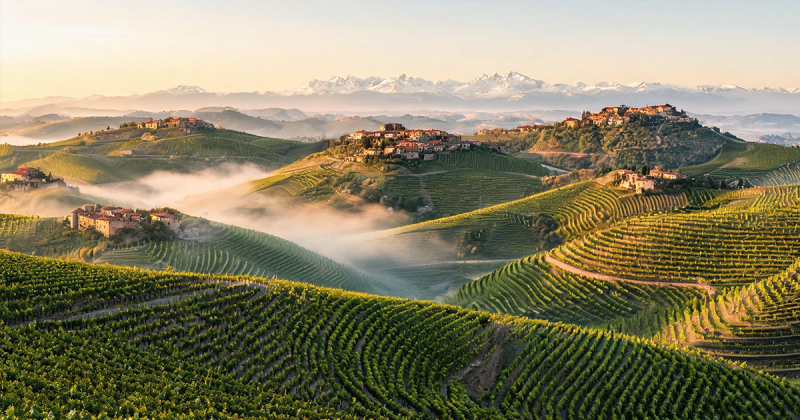
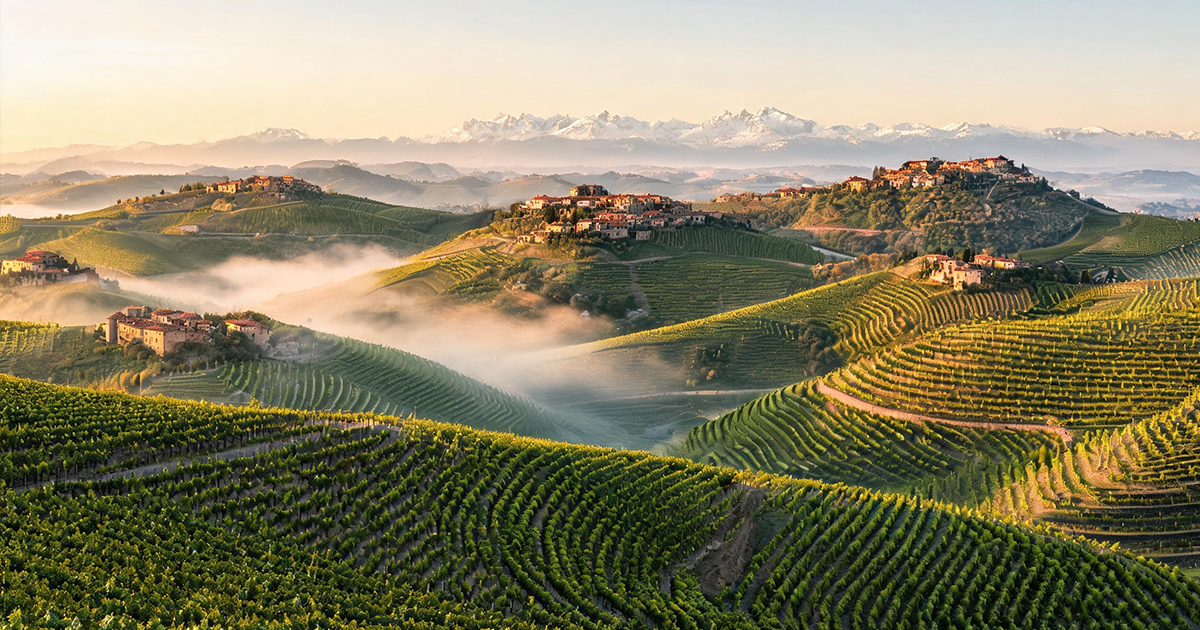
Piedmont’s name gives away its position—“at the foot of the mountains.” The Alps form a vast crescent along the northern and western borders, trapping cold air and funneling moisture. To the south, the Apennines drop toward the Ligurian Sea. In between sits the Po River plain, one of Italy’s most fertile agricultural zones, and rising from it—abruptly, like islands—the hills of Langhe, Roero, and Monferrato. This is where the wine happens.
2.1 The Right Side of the Tanaro
The Tanaro River splits Piedmont’s wine zones into two geological worlds. North of the river: Roero, a landscape of sandy soils, steep ravines, and a lighter, more aromatic Nebbiolo. South of the river: the Langhe, where the world’s greatest Nebbiolo grows on a tight band of hills around the towns of Barolo and Barbaresco.
The Langhe itself is not one thing. The Barolo zone covers eleven communes, and the differences between them—La Morra versus Serralunga d’Alba, for example—are as stark as the difference between Volnay and Gevrey-Chambertin in Burgundy. La Morra produces the most aromatic, elegant, approachable Barolo. Serralunga produces the most tannic, structured, and age-worthy. Monforte d’Alba splits the difference, with some of the greatest single vineyards in the world (Bussia, Ginestra).
The Barbaresco zone, just northeast of Barolo and closer to the Tanaro River, occupies three communes (Barbaresco, Neive, Treiso) and one sliver of a fourth (San Rocco Seno d’Elvio, part of Alba). The river’s moderating influence—warmer springs, earlier harvests, gentler diurnal shifts—produces Nebbiolo that ripens a week or two ahead of Barolo. The resulting wines are slightly softer in tannin, more aromatic in fruit, and approachable slightly earlier. But “softer” and “earlier” are relative terms: a top Barbaresco from a great vintage effortlessly ages 25–30 years.
2.2 Tortonian vs Serravallian: The Geological Map of Terroir
If you drive from La Morra to Serralunga d’Alba—a distance of about twelve kilometers—the soil under your wheels changes completely. This isn’t a subtle shift. It’s a geological boundary of epochal significance, and it’s the single most important thing to understand about Barolo.
The western and northern Barolo communes—La Morra, Barolo, Verduno, Novello, and the western slopes of Monforte d’Alba—sit on Tortonian soils, named for the late Miocene epoch roughly 7–11 million years ago. These are the Sant’Agata Fossili marls: blue-gray calcareous clay interspersed with layers of sand and sandstone. They’re nutrient-rich (by Nebbiolo standards), moisture-retentive, and compact. Wines from Tortonian soils are more aromatic—dried rose, red cherry, licorice, anise—with softer, silkier tannins and a more graceful arc of development. La Morra is the purest expression of the Tortonian type. If you taste a La Morra Barolo and think “Burgundy,” you’re not crazy. The soil is doing that.
The eastern and southern communes—Serralunga d’Alba, Castiglione Falletto, and the eastern slopes of Monforte—sit on Serravallian soils, older by a few million years. These are the Lequio formations: sandier, more compacted, with higher proportions of sandstone and limestone. They’re poorer in nutrients, drain faster, and produce wines of ferocious structure: darker fruit (black cherry, plum), tar, leather, iron, and tannins that feel like fine-grit sandpaper for the first ten years of life. Serralunga Barolo is not Burgundy. It’s a heavyweight boxer wearing a velvet robe.
Castiglione Falletto is the hinge commune—the transition zone where Tortonian and Serravallian formations meet. It produces Barolo that combines the perfume of the west with the structure of the east. The Vietti and Giacomo Conterno vineyards straddle both soil types. This is arguably the most complete terroir in the Barolo zone, and the wines prove it.
In Barbaresco, the geology simplifies. The soils are predominantly the younger Sant’Agata formation—higher in sand, lower in compacted marl than Barolo’s Tortonian type. The top crus (Asili, Rabajà, Martinenga, Montestefano) sit on the best-drained limestone and marl exposures. The result is Nebbiolo with Barolo’s structure scaled to a finer grain—less muscle, more nerve.
2.3 The Fog: Climate as Terroir
Nebbiolo takes its name from nebbia, the fog that blankets the Langhe hills through October and November. This is not decorative mist. It’s a climatic force that shapes the entire growing cycle.
Piedmont has a continental climate moderated by two influences: the Alps to the north and west, blocking the coldest air masses, and the Mediterranean to the south, sending warm, humid air up through Liguria. The result is warm summers (July highs routinely exceed 30°C), cold winters, and long, dry autumns. The fog arrives in late September and thickens through November—exactly when Nebbiolo, Piedmont’s latest-ripening grape, is finishing its slow crawl toward maturity.
The fog matters for three reasons. First, it slows ripening: reduced sunlight in the final weeks forces Nebbiolo to develop phenolic maturity without sugar spikes, preserving acidity. Second, it moderates temperature: foggy nights prevent the sharp diurnal drops that can shock vines into shutdown. Third, it creates micro-climates within individual hillsides—the top of a cru like Bricco Boschis gets more fog-free morning sun than the lower slopes, producing riper, more powerful fruit.
Aspect is everything in Piedmont. The best vineyards face south to southwest, capturing maximum sunlight in a region that lies roughly at the latitude of Bordeaux but has a cooler, more continental climate. Southeast exposures are second-tier; east and north are avoided for Nebbiolo and used for Dolcetto and Barbera. The angle of the slope matters, too—gentler grades accumulate deeper soils, steeper slopes (30°+) produce more concentrated, structured wines.
2.4 Climate Change: Heat, Hail & the Fog That’s Fading
Piedmont’s climate is shifting faster than almost any European wine region this side of Champagne. Average growing-season temperatures have risen 1.8°C since 1980. Harvest dates have crept forward by two to three weeks—Barolo that was picked in mid-October in the 1980s now comes in during the last week of September. The fog, historically Piedmont’s signature ripening moderator, is arriving later and thinner. More sun during the final ripening window means higher sugar, higher alcohol, and a compression of the Nebbiolo flavor spectrum—fewer floral notes, more jam.
The consequences are uneven. In cooler crus with excellent air drainage (Cannubi, Bussia, Cerequio), warming has been a net positive—wines that used to struggle for ripeness in four out of ten vintages now reach full maturity in eight or nine. In warmer crus, especially south-facing sites in Serralunga and lower-elevation blocks, the signature Nebbiolo perfume—dried rose, tar, red cherry—is being replaced by darker, cooked-fruit flavors that taste less like Piedmont and more like an overheated version of itself.
Hail has become the unpredictable wildcard. The Langhe has always had hailstorms, but their frequency and intensity are increasing. A single storm on August 15, 2018, destroyed 40% of the crop in parts of Castiglione Falletto and Monforte d’Alba. Anti-hail netting is now widespread, but it’s expensive, changes the microclimate under the canopy, and isn’t feasible on the steepest, most prized slopes. Some producers are experimenting with higher-elevation sites (400m+, previously considered marginal for Nebbiolo) as an adaptation strategy. Watch for wines labeled “Alta Langa” Nebbiolo, currently a novelty, to become a serious category within a decade.
3. The Grapes of Piedmont: Nebbiolo & Its Supporting Cast
Piedmont grows dozens of native varieties, most of them unknown outside the region. But the hierarchy is clear: Nebbiolo at the top, Barbera and Dolcetto as the everyday reds, Cortese and Arneis as the whites, and Moscato claiming the sparkling and sweet kingdom of Asti.
3.1 Nebbiolo: The Diva
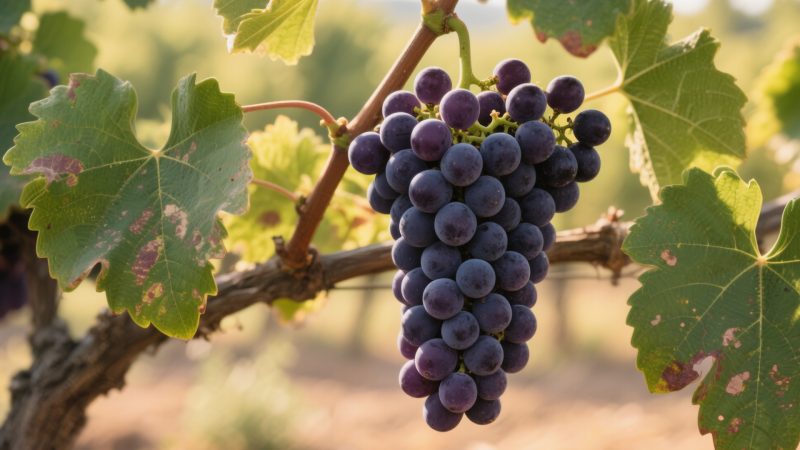
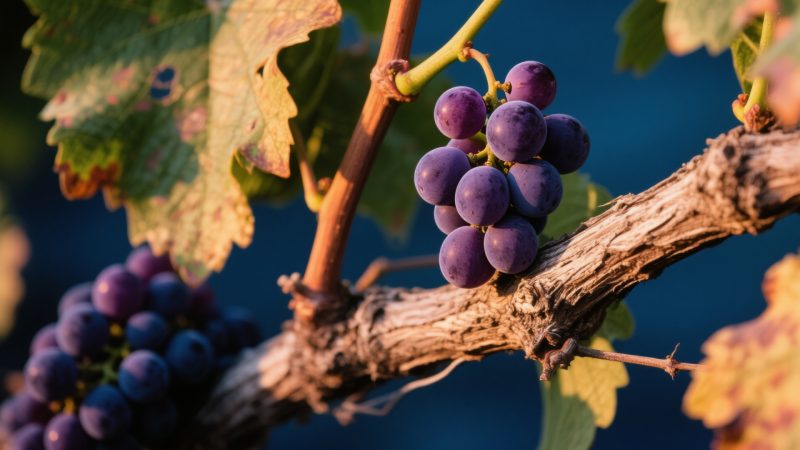
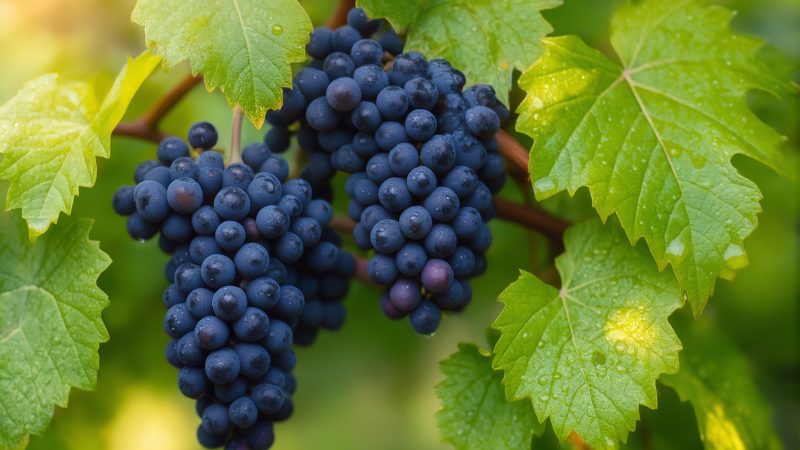
Nebbiolo is one of those grape varieties that, described on paper, sounds like a bad idea. It’s pale in color—a translucent garnet that, in its youth, can be mistaken for a light Pinot Noir by someone not paying attention. It’s ferociously tannic—the skins are thin but the pip-to-pulp ratio is high, and the tannins extract aggressively during fermentation. It’s high in acid, late to ripen (harvest can stretch into November), and hypersensitive to site. Plant Nebbiolo in the wrong soil or at the wrong elevation and you get thin, astringent wine that nobody wants to drink.
Plant it in the right place—a south-facing slope on Tortonian or Serravallian marl between 200 and 450 meters—and you get a wine of such haunting aromatic complexity that it recalibrates your understanding of what a red grape can do. Young Nebbiolo smells of red cherry, dried rose petal, tar, licorice, and sometimes a note of orange peel that’s uniquely its own. As it ages—and this is the point of the grape—the fruit recedes and the secondary notes emerge: leather, truffle, forest floor, dried herbs, worn saddle leather, tobacco. A fully mature Barolo from a great vintage is one of the world’s great wine experiences, and there’s nothing else that tastes remotely like it.
Nebbiolo is the grape of Barolo DOCG, Barbaresco DOCG, Roero DOCG, Gattinara DOCG, Ghemme DOCG, and Langhe Nebbiolo DOC (the catch-all for declassified Barolo/Barbaresco fruit and wines from outside the prime zones). Of these, Barolo and Barbaresco are the only two that matter at the global fine-wine level. Everything else is regional—excellent to taste in Piedmont, rarely exported, inconsistently great.
3.2 Barbera: The People’s Grape
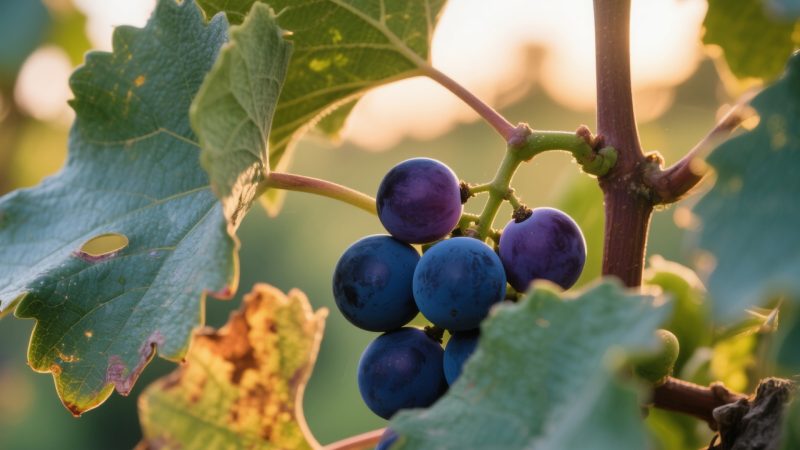
If Nebbiolo is the aristocrat, Barbera is the farmer. It’s Piedmont’s most-planted red grape, covering roughly 30% of the region’s vineyard area. Barbera grows where Nebbiolo won’t—cooler sites, lower elevations, heavier soils—and produces wines defined by lip-smacking acidity and deep purple-red fruit: black cherry, blueberry, plum. Tannin is low to moderate. Alcohol is moderate. The grape’s weakness—low tannin—is also its strength: Barbera is meant to be drunk, not worshipped.
The Barbera quality pyramid runs from Barbera d’Asti DOCG (the broad, crowd-pleasing baseline) to Barbera d’Alba DOC (slightly more structured, often from declassified Nebbiolo sites) to Barbera d’Asti Superiore DOCG (lower yields, mandatory aging, serious wine from top single vineyards). At the top end—producers like Braida (Bricco dell’Uccellone), Giacomo Conterno, Vietti, and Elio Altare—Barbera becomes a world-class red in its own right, capable of aging a decade or more, with concentration that would embarrass most $50 wines from anywhere else.
The Barbera sweet spot is $15–30. At that price, from a good producer, you get a red that outpunches everything in its weight class. Buy it by the case; drink it with pizza, pasta, braised meats, or nothing at all. It’s the versatile daily red that every wine drinker should have on hand.
3.3 Dolcetto: The Early-Drinking Chameleon
Dolcetto—literally “little sweet one,” though the wine is dry—is Piedmont’s earliest-ripening red grape. It’s the first to be harvested each season, often in the first week of September, and the first wine Piedmontese families drink from the new vintage while they wait for their Barbera to settle and their Nebbiolo to become something approximating drinkable.
Dolcetto is deep purple-black, low in acid (by Piedmont standards), soft in tannin, and bursting with dark fruit—blackberry, plum, sometimes a distinct note of bitter almond on the finish. It’s not a wine for cellaring; drink it within 2–4 years. The best expressions come from the Dogliani DOCG (south of Barolo), Diano d’Alba DOCG, and Dolcetto d’Alba DOC from the prime hillside sites that were too cool for Nebbiolo. Chionetti in Dogliani and Pecchenino make reference-quality examples. Price: $12–20. You won’t find a better pizza wine at that price point.
3.4 The Whites: Cortese, Arneis & Moscato
Grape
| Grape | Where | Character | Price Range |
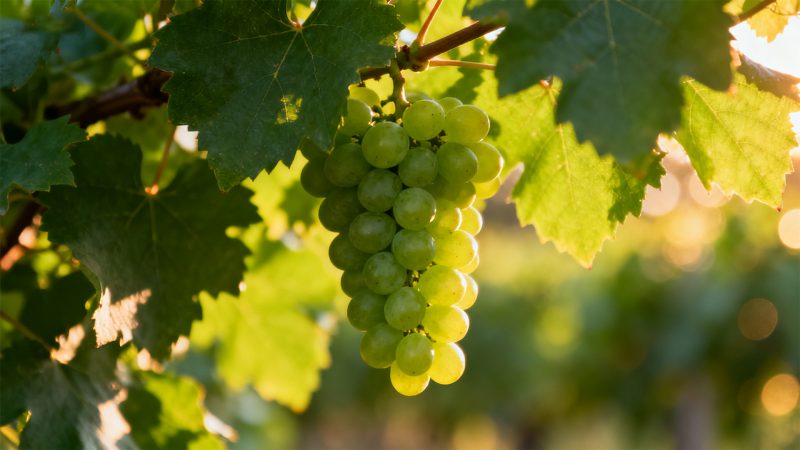
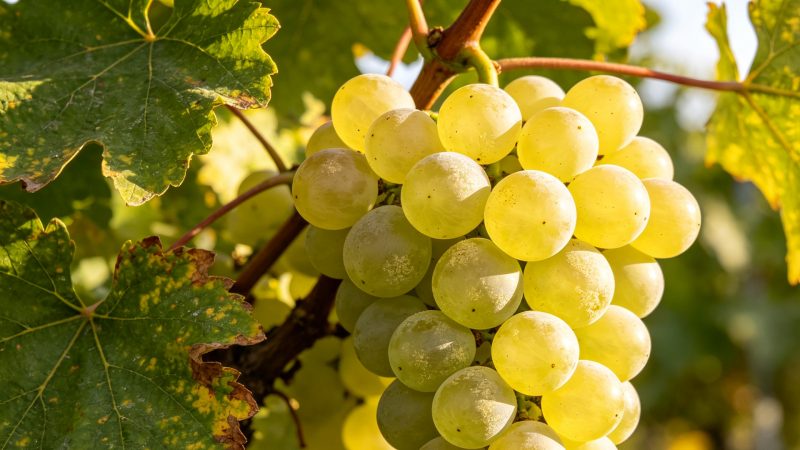
| Cortese | Gavi DOCG (southeast Piedmont) | Crisp, mineral, citrus-and-green-apple driven. The Chablis of Italy—steely, unoaked, built for seafood. Better producers (La Scolca, Villa Sparina) produce wines that age 5–8 years. | $15–30 |
| Arneis | Roero DOCG | The “little rascal”—from a dialect word meaning difficult. Aromatic, medium-bodied, with notes of pear, almond, white flowers, and a slightly bitter finish. Once nearly extinct; revived in the 1980s. Best examples (Bruno Giacosa, Vietti) have real weight and complexity. | $18–35 |
| Moscato Bianco | Asti DOCG / Moscato d’Asti DOCG | The world’s most misunderstood sweet wine. Moscato d’Asti is low-alcohol (5.5%), lightly sparkling (frizzante), intensely aromatic—peach, orange blossom, honeysuckle—and genuinely world-class when made by serious producers. Asti Spumante is the fully sparkling, cheaper, less interesting version. Don’t confuse the two. | $12–25 |
| Nascetta | Langhe DOC (Novello) | Piedmont’s indigenous aromatic white—herbal, citrus, white pepper. A tiny cult following. Elvio Cogno makes the reference version (Anas-Cëtta). | $20–35 |
| Timorasso | Colli Tortonesi DOC (eastern Piedmont) | A nearly extinct variety resurrected by Walter Massa in the 1980s. Full-bodied, mineral, age-worthy—think white Burgundy meets Rhône. One of Italy’s most exciting white revivals. | $25–50 |
4. Barolo DOCG: The King of Wines, the Wine of Kings
Barolo is the wine that justifies everything else Piedmont makes. It’s 100% Nebbiolo, grown in exactly eleven communes, aged a minimum of 38 months (18 in wood) for the base Barolo, or 62 months for Riserva. Those numbers tell you very little about what Barolo actually tastes like, because no appellation in Italy—and arguably none in the world—produces such a wide range of styles within a single name.
4.1 The Eleven Communes: A Village-by-Village Portrait
Barolo’s eleven communes are often compared to Burgundy’s villages, and the comparison is more useful than it is lazy. Each commune has a distinct terroir signature that shows through regardless of the winemaker’s hand. Knowing the communes is the first step to knowing Barolo.
| Commune | Soil Type | Signature Style | Famous Crus / MGAs | Benchmark Producer |
| La Morra | Tortonian | The most aromatic, elegant, and approachable Barolo. Dried rose, red cherry, licorice, anise. Silky tannins. The “Volnay” of Barolo. | Cerequio, Brunate, Rocche dell’Annunziata, Arborina | Roberto Voerzio, Elio Altare |
| Barolo | Tortonian | The namesake commune. More structured than La Morra but still aromatic. Classic balance of fruit, earth, and tannin. The “Vosne-Romanée” of the zone. | Cannubi, Cannubi Boschis, Sarmassa, Brunate (shared with La Morra) | Bartolo Mascarello, Marchesi di Barolo |
| Castiglione Falletto | Tortonian + Serravallian (transition) | The goldilocks commune—aromatic and structured in equal measure. Combines La Morra’s perfume with Serralunga’s backbone. Arguably the most complete Barolo. | Monprivato, Villero, Rocche di Castiglione, Bricco Boschis | Giacomo Conterno, Vietti |
| Serralunga d’Alba | Serravallian | The powerhouse. Darkest color, most tannic, most age-worthy (30–40+ years from great vintages). Black cherry, tar, iron, leather. The “Gevrey-Chambertin” of Barolo. | Vigna Rionda, Francia, Lazzarito, Falletto, Gabutti | Giacomo Conterno, Bruno Giacosa |
| Monforte d’Alba | Both (split: west=Tortonian, east=Serravallian) | The most diverse commune. Ginestra and Bussia are Serravallian powerhouses; western blocks are softer. Wide style range from elegant to massive. | Bussia, Ginestra, Mosconi, Gramolere | Aldo Conterno, Domenico Clerico |
| Verduno | Tortonian | The smallest Barolo commune. Delicate, floral, with a distinctive spicy note (white pepper, cardamom). Softer tannins, earlier maturing. Often overlooked—a mistake. | Monvigliero, Massara | Comm. G.B. Burlotto, Alessandria |
| Novello | Tortonian | Elevated (400–450m), producing lighter, cooler, more aromatic wines. Often blended into multi-commune bottlings. | Ravera, Cerviano-Merli | Elvio Cogno |
| Cherasco, Diano d’Alba, Grinzane Cavour, Roddi | Mixed | Minor communes. Grinzane Cavour produces solid wines. The others contribute mostly to negociant blends. Modest prices, variable quality. | Various | N/A |
4.2 Cannubi: The Hill That Launched a Thousand Arguments
If the Barolo zone has a Grand Cru, it’s Cannubi. The hill sits directly north of the town of Barolo, with a south-southeast exposure and a unique soil profile—a mix of Tortonian marl and sand that doesn’t match either end of the geological spectrum. The wines are famously aromatic, elegant, and long-aging, combining the perfume of La Morra with the grip of Serralunga in a single glass.
Cannubi is also the most politically charged vineyard in Italy. In 2013, a consortium of producers in the surrounding area petitioned to expand the Cannubi MGA to include adjacent hillside plots—Cannubi Boschis, Cannubi San Lorenzo, Cannubi Valletta, Cannubi Muscatel. The reasoning was commercial: the Cannubi name sold wine faster. Traditionalists, led by Bartolo Mascarello and Chiara Boschis (E. Pira), fought the expansion, arguing that the sub-crus had distinct terroirs that deserved separate recognition. The battle went to court. In 2019, the original smaller Cannubi MGA was restored, with the sub-crus given their own names. The result: Cannubi on the label now means fruit from the original historic hill, and that designation is guarded jealousy. Expect to pay $100–300+ for a bottle from a top producer—and expect it to be worth it.
4.3 Traditionalist vs Modernist: The War & the Peace
The Barolo Wars were never just about barrels. They were about the soul of the wine. Traditionalist Barolo is fermented long (25–50+ days) and aged in botti grandi—huge Slavonian or Austrian oak casks holding 1,000–10,000 liters. The large volume minimizes the ratio of wine-to-wood-surface, imparting oxidative stability and slow, gentle evolution without oak flavor. The result is a wine of pale garnet color, soaring aromatics, and tannins that require a decade to resolve. Traditionalist producers: Bartolo Mascarello (the standard-bearer), Giacomo Conterno (the most famous), Bruno Giacosa (a traditionalist in spirit, though he used some barrique for his white-label Riservas), Giuseppe Rinaldi, and G.B. Burlotto.
Modernist Barolo is fermented short (7–15 days) and aged in barrique—225-liter French oak barrels that season the wine rapidly. The result is a darker, softer, more immediately accessible wine with vanilla, toast, and chocolate notes from the new oak. Modernist producers: Elio Altare (the original provocateur), Domenico Clerico, Luciano Sandrone (who started modern but has moved toward a middle path), Roberto Voerzio, and the late Enrico Scavino of Paolo Scavino.
Today’s most exciting Barolo comes from neither camp exclusively. The synthesis generation—producers like Vietti, G.D. Vajra, Cavallotto, and the newer releases from Sandrone and Scavino—uses shorter macerations for aromatic purity but ages in large neutral oak, avoiding barrique entirely or using very old ones for oxygenation without flavor transfer. These wines have the aromatic transparency of traditionalism and the textural accessibility of modernism. If you’re buying Barolo blind in 2026, this middle path is your safest bet.
5. Barbaresco DOCG: The Queen
If Barolo is the king—powerful, demanding, built for the long haul—Barbaresco is the queen: more graceful, more aromatic, slightly more forgiving. The comparison is overused and gendered in a way that makes modern wine writers twitch, but the underlying truth is real enough: Barbaresco produces Nebbiolo of slightly lighter body, softer tannin, and earlier drinkability than Barolo, without sacrificing complexity or aging potential.
Barbaresco’s DOCG requirements are slightly less demanding than Barolo’s: 26 months minimum aging (9 in wood) for the base wine, 50 months for Riserva. The zone is centered on three communes—Barbaresco, Neive, and Treiso—plus the San Rocco Seno d’Elvio hamlet of Alba. The soils are predominantly younger Sant’Agata Fossili marls with higher sand content, which produce wines that are less ferociously tannic than Barolo’s and more immediately aromatic.
5.1 The Crus of Barbaresco
| Cru | Commune | Character | Top Producer |
| Asili | Barbaresco | The most famous Barbaresco cru—elegant, floral, and impeccably balanced. Often called the “Musigny of Barbaresco.” Produces wines of haunting perfume and silky texture. | Bruno Giacosa, Produttori del Barbaresco |
| Rabajà | Barbaresco | The “Chambertin” of Barbaresco—more powerful, structured, and mineral-driven than Asili. Darker fruit, firmer tannins. Bruno Giacosa’s Rabajà Riserva (red label) is among Italy’s most collectible wines. | Bruno Giacosa, Giuseppe Cortese |
| Martinenga | Barbaresco | A single monopole owned by the Tenute Cisa Asinari dei Marchesi di Grésy family. A natural amphitheater with south-southwest exposure, producing wines of extraordinary elegance and longevity. | Marchesi di Grésy |
| Montestefano | Barbaresco | One of Barbaresco’s most powerful crus—dark, brooding, tannic, needing a decade to open. The “Serralunga” of Barbaresco. | Produttori del Barbaresco |
| Pajè | Barbaresco | A tiny, steep cru producing some of Barbaresco’s most elegant and aromatic wines. Roagna’s Pajè is a benchmark for the traditional style. | Roagna |
| Santo Stefano | Neive | The heart of Neive’s Barbaresco zone. Structured, mineral wines that need time. Bruno Giacosa’s Santo Stefano is legendary. | Bruno Giacosa, Castello di Neive |
| Gallina | Neive | South-facing, calcareous soils. Produces approachable, aromatic Barbaresco with softer tannins—a good entry point for the appellation. | La Spinetta |
| Pora | Treiso | Treiso’s best cru—elevated, cooler, producing perfumed, mineral-driven wines with excellent acidity and aging potential. | Produttori del Barbaresco |
6. Beyond Barolo & Barbaresco: Piedmont’s Other Wine Zones
Piedmont has more DOCGs than any other Italian region. Barolo and Barbaresco get the headlines, but the supporting cast is where drinking value lives. If you only drink Barolo, your wallet is suffering unnecessarily.
6.1 Roero: Nebbiolo on Sand
North of the Tanaro River, the Roero hills produce Nebbiolo from sandier, younger soils that yield a lighter, more aromatic, earlier-drinking version of the grape. Roero DOCG Nebbiolo is an excellent entry point—$20–40 for wines that express the floral, tar-tinged soul of Nebbiolo without Barolo’s decade-long waiting period. The best producers: Matteo Correggia, Malvirà, and Giovanni Almondo. Roero Arneis DOCG is the white counterpart and the reference standard for the Arneis grape.
6.2 Barbera d’Asti & Barbera d’Alba: The Daily Drinkers
Barbera d’Asti DOCG is the larger, more commercially important appellation—softer, fruitier wines from the Asti region. Barbera d’Alba DOC is the more serious sibling, often grown on declassified Nebbiolo sites and producing wines with more structure and aging potential. The Superiore designation requires lower yields and a year of aging; the best single-vineyard Barbares (Bricco dell’Uccellone from Braida, La Crena from Vietti) are world-class. Price: $12–40. The value play in Piedmont.
6.3 Gavi: Italy’s White Wine Secret
Gavi DOCG, in the southeast corner of Piedmont near the Ligurian border, produces Italy’s most age-worthy dry white wine from the Cortese grape. The best examples—from La Scolca (the “Black Label” is aged in steel for years before release), Villa Sparina, and Broglia—combine searing minerality, citrus precision, and a saline finish that makes them absurdly flexible with food. Gavi di Gavi is the commune designation for wines from the original Gavi township (more mineral, more age-worthy). Price: $15–35. If you’re drinking $30 Sancerre with your oysters, try a Gavi and see if you notice the difference.
6.4 Asti & Moscato d’Asti: Not Your College Sweet Wine
Moscato d’Asti DOCG is one of the wine world’s most abused categories. Most of what’s exported is industrial, insipid, and sweet in the way that soda is sweet. Proper Moscato d’Asti, from producers like Vietti, Saracco, and La Spinetta (Bricco Quaglia), is a different universe: 5.5% alcohol, gentle frizzante bubbles, and an aromatic payload of peach, apricot, orange blossom, and sage that stops conversation at the table. It’s the perfect wine for fruit desserts, blue cheese, and anything spicy. Asti Spumante is the fully sparkling, higher-volume, lower-quality version. Know the difference before you buy.
6.5 Gattinara & Ghemme: Nebbiolo’s Northern Outpost
In the far north of Piedmont, in the foothills of the Alps, the appellations of Gattinara DOCG and Ghemme DOCG produce Nebbiolo-based wines (called Spanna locally) that are among Italy’s most underrated. The soils here are volcanic and granitic, not calcareous, and the wines are more mineral, earthy, and austere than their Langhe cousins. Prices are absurdly low for the quality: $25–50 for wines that age 20–30 years. Look for Nervi (Gattinara) and Antichi Vigneti di Cantalupo (Ghemme). These are the wines that Piedmont insiders drink when they want great Nebbiolo without the Barolo price tag.
7. How to Buy Piedmont Wine: Price Tiers, Strategies & Pitfalls
Buying Piedmont wine is harder than buying Bordeaux. Bordeaux is a classified system: you know what a First Growth costs, what a Fifth Growth costs, and the range is relatively tight. Piedmont’s appellations and cru designations were adopted decades or centuries after Bordeaux’s, production is fragmented (thousands of tiny growers who sell fruit to negociants), and the most famous name on the label—Barolo—covers everything from $25 entry-level wine to $1,000+ single-cru Riservas. The producer matters more than anything else.
7.1 Price Tiers: What You Get at Every Level
| Price | What You Get | Wine Profile | Benchmark Buy |
| $12–20 | Barbera d’Asti/Dolcetto d’Alba; entry Gavi; entry Moscato d’Asti | Everyday drinking that outpunches its price. Barbera from a good producer tastes like a $30 wine. Dolcetto is the best pizza wine in Italy. | Vietti Barbera d’Asti Tre Vigne, Saracco Moscato d’Asti, La Scolca Gavi |
| $20–40 | Barbera d’Alba Superiore; Langhe Nebbiolo; Roero Nebbiolo; Gavi di Gavi; top Moscato d’Asti | The value sweet spot. Langhe Nebbiolo from top producers (Conterno, Mascarello, Vajra) is declassified Barolo/Barbaresco fruit at a third of the price. Roero Nebbiolo is elegant, aromatic, and ready to drink. | G.D. Vajra Langhe Nebbiolo, Produttori del Barbaresco Langhe Nebbiolo, Malvirà Roero Nebbiolo |
| $40–75 | Entry-level Barolo & Barbaresco; top Barbera Superiore single-vineyard; Gattinara/Ghemme | Where Barolo and Barbaresco become accessible. You’re getting basic Barolo from top producers, or top crus from smaller houses. Serious wines that need 5–10 years. Gattinara at this price is the smartest buy in Italian wine. | Vietti Barolo Castiglione, Produttori del Barbaresco (base or single-cru), Nervi Gattinara |
| $75–150 | Single-cru Barolo & Barbaresco from good to excellent producers; entry-level wines from icons | You can buy commune-level Barolo from Giacomo Conterno, Bartolo Mascarello, or Bruno Giacosa at the bottom of this range. Single-cru wines from second-tier producers and entry crus (Cannubi from smaller houses, Montestefano, Pora) fill the top. | Bartolo Mascarello Barolo, Giacomo Conterno Barbera (yes, it exists, and it’s $80+), G.B. Burlotto Monvigliero |
| $150–300 | Icon single-cru Barolo & Barbaresco Riserva; benchmark wines from the Langhe’s top names | This is serious collecting territory. Giacomo Conterno’s Cerretta, Bruno Giacosa’s Falletto, Bartolo Mascarello’s single-bottling Barolo. These are wines for the cellar, not for Tuesday night. | Giacomo Conterno Cerretta, Bruno Giacosa Falletto (white label), Giuseppe Rinaldi Brunate |
| $300–800+ | Giacomo Conterno Monfortino; Bruno Giacosa red-label Riservas; legendary back-vintages | The grail wines. Monfortino is Italy’s most collectible wine—aged 7+ years in botti grandi, released when the Conterno family decides it’s ready. Giacosa’s red-label Riservas (only made in great vintages) are the Nebbiolo equivalent of DRC. Buy these only if you have a proper cellar and the patience of a saint. | Giacomo Conterno Monfortino Riserva, Bruno Giacosa Barbaresco Asili Riserva (red label), Bartolo Mascarello Barolo (collectible vintages) |
7.2 The Piedmont Buying Playbook
- 1. Start with Langhe Nebbiolo from a great producer. G.D. Vajra’s Langhe Nebbiolo ($25) is declassified Barolo fruit—the same vines, the same winemaking, a fraction of the price, and ready to drink tonight. This is the most efficient way to learn what Nebbiolo tastes like without spending $80 and waiting ten years.
- 2. Produttori del Barbaresco is the best cooperative in the world—and the number-one Piedmont value buy. Their single-cru Barbarescos (Asili, Montestefano, Pora, Rabajà, etc.) sell for $45–65 and outperform $100 Barolo from lesser producers. Buy a mixed case of their crus and taste the terroir differences side by side. No other $300 investment will teach you more about Piedmont.
- 3. In any given vintage, buy Barbaresco before Barolo. Barbaresco ripens earlier, is generally more consistent in difficult years (2014, 2018, 2021), and reaches its drinking window 3–5 years sooner. If you’re building a cellar you want to drink from in this decade, not the next one, Barbaresco is the smarter allocation.
- 4. Barbera from Barolo producers is the secret menu. When Giacomo Conterno, Vietti, G.D. Vajra, or Elio Altare make Barbera, they’re applying Barolo-level viticulture and winemaking to a $20–30 bottle. These wines have no business being this good at this price. Buy by the case.
- 5. Look for “Vigna” on the label. It means the wine comes from a single, named vineyard, and while it’s not legally equivalent to a Grand Cru, it’s the closest thing Barolo has. A Barolo labeled “Vigna Rionda,” “Vigna Cannubi,” or “Vigna Bussia” is almost always a step up in quality from the producer’s standard bottling.
- 6. Buy Gattinara and Ghemme now, before the world catches on. These are Nebbiolo-based wines from volcanic soils in northern Piedmont, trading at $25–50 for quality that rivals $75–100 Barolo. The sleeping giants of Italian wine.
- 7. Classico on the label for Barolo/Barbaresco means nothing—it’s just the historic core of the production zone, and nearly all quality Barolo qualifies. The words that matter are: Vigna (single vineyard), Riserva (extended aging), and the producer’s name. Focus on those three.
8. Piedmont Vintage Guide: Barolo & Barbaresco, 2001–2021
Vintage matters enormously in Piedmont—more than in Tuscany, more than in Bordeaux, more than in almost any fine-wine region outside Burgundy. Nebbiolo is transparent: a bad year tastes like a bad year, not like winemaking. The following table covers the modern era with separate evaluations for Barolo and Barbaresco, because they often diverge.
| Year | Barolo | Barb. | Character | Drink Window | Advice |
| 2021 | 8.5 | 9.0 | A classic, cool vintage. Rains complicated harvest but the best sites produced structured, elegant wines. Barbaresco—harvested earlier—got the better end of the deal. | Barolo 2030–2045+; Barbaresco 2028–2040+ | Buy Barbaresco; buy Barolo from top crus only |
| 2020 | 8.5 | 8.5 | Warm, healthy vintage without the heat extremes of 2017. Wines are ripe, approachable, and relatively early-drinking. Good across the board but not a benchmark. | Barolo 2028–2038; Barbaresco 2027–2035 | Solid. Buy for mid-term drinking |
| 2019 | 9.5 | 9.5 | A masterpiece. Cool nights, warm days, perfectly paced harvest. Barolo of extraordinary perfume and structure. Barbaresco equally stunning. The best vintage since 2016, possibly 2010. | Barolo 2028–2050+; Barbaresco 2027–2040+ | Buy everything. A reference vintage |
| 2018 | 8.0 | 8.5 | Cool, late-ripening vintage. Hail in parts of Castiglione Falletto and Monforte. Wines are elegant, aromatic, and lighter in body—charming now but less age-worthy. Barbaresco is the star. | Barolo 2027–2035; Barbaresco 2026–2035 | Buy Barbaresco; Barolo from top producers only |
| 2017 | 8.0 | 8.0 | Hot, dry, early-harvested. Wines are ripe, powerful, and sometimes rustic—more brawn than finesse. Approachable young but the best will age. A producer’s vintage: buy selectively. | Barolo 2026–2035; Barbaresco 2025–2032 | Buy from top producers who managed the heat well |
| 2016 | 10 | 10 | The modern benchmark. A long, cool, perfect growing season produced wines of monumental structure and ethereal perfume. Universally outstanding. The 2016 Barolo will still be drinking beautifully in 2066. | Barolo 2025–2060+; Barbaresco 2023–2045+ | The vintage of a generation. Buy any and all |
| 2015 | 9.0 | 9.0 | Warm, ripe, generous. Wines are powerful, opulent, and approachable—labeled “hedonistic” by critics. Less structured than 2016 but more immediately gratifying. Buy for pleasure, not the museum. | Barolo 2024–2040; Barbaresco 2023–2035 | Excellent—riper style. Buy for drinking, not hoarding |
| 2014 | 7.0 | 8.0 | Wet, cool, difficult. Barolo is dilute and early-drinking—many producers skipped bottling entirely. Barbaresco fared better thanks to earlier harvest. A Barbaresco-only vintage. | Barolo drink now–2028; Barbaresco 2022–2032 | Skip Barolo. Barbaresco from top producers is pleasant |
| 2013 | 9.0 | 9.0 | Classic, structured, old-school Nebbiolo. Cool year produced wines of austerity, grip, and great aging potential. Opening now but still young. A traditionalist’s dream vintage. | Barolo 2023–2050; Barbaresco 2023–2040 | Excellent. Buy back-vintages if you can find them |
| 2012 | 8.0 | 8.0 | Warm, early-harvested, approachable. Wines are soft, ripe, and ready to drink. Good but not great. A restaurant-list vintage. | Drink now–2030 | Solid, unspectacular |
| 2011 | 8.5 | 8.5 | Hot but balanced by cool nights. Ripe, structured wines that opened early but have staying power. An underrated vintage that’s drinking beautifully now. | Drink now–2035 | Underrated. Buy back-vintages for current drinking |
| 2010 | 10 | 9.5 | The other all-time great. Cool, structured, impossibly balanced. The 2010 Barolo is the reference point for the traditional style—wines of soaring perfume, ethereal tannins, and a century of life ahead. Just entering its prime. | Now–2060+ | One of the all-time greats. Buy any 2010 you can find |
| 2009 | 8.5 | 8.5 | Warm, ripe, early-drinking. Overshadowed by 2010 but a charming, generous vintage that’s perfect for current consumption. | Drink now–2030 | Good for drinking now |
| 2008 | 8.0 | 7.5 | Cool, uneven. Some excellent wines from top crus, but quality is variable. Barolo is the better bet. | Drink now–2030 | Selective. Top producers only |
| 2007 | 8.5 | 8.5 | Warm, ripe, plush. Wines are soft and generous—a “heat vintage” before climate change made heat vintages routine. Drinking beautifully now. | Drink now–2025 | Good for current drinking from top producers |
| 2006 | 9.0 | 9.0 | Structured, tannic, built for the long haul. Overshadowed by the 2004–05 hype. Wines from good producers are entering their prime now. | Now–2040 | Excellent. Look for back-vintages |
| 2004 | 9.5 | 9.0 | Legendary. Cool, classic, structured. Wines are at peak maturity and drinking spectacularly now. If you see 2004 Barolo on a restaurant list at a fair price, order it. | Now–2040 | Classic vintage drinking perfectly now |
| 2001 | 9.5 | 9.0 | The foundational modern vintage. Perfectly balanced, long-aging, and finally entering its prime. The 2001 Conterno Monfortino is legendary. | Now–2045 | Reference vintage. Buy at auction if you can |
9. Serving, Food Pairing & Collecting Piedmont Wine
Piedmont wines are food wines. They were built for the Piedmontese table—tajarin pasta with shaved white truffle, brasato al Barolo (beef braised in Barolo), bollito misto, and the region’s extraordinary cheese tradition. If you’re drinking Barolo without food, you’re missing half the point.
9.1 Temperature & Decanting
| Wine Type | Serving Temp | Decanting |
| Young Barolo & Barbaresco (< 10 years) | 16–18°C | Decant 2–4 hours before serving. Young Nebbiolo needs aggressive aeration—the tannins are polymerizing, and oxygen accelerates the process. Don’t be gentle: pour it into a wide-bottom decanter and let it breathe. If you’re short on time, double-decant (pour into decanter, back into bottle, repeat). |
| Mature Barolo & Barbaresco (10–20+ years) | 16–18°C | Stand the bottle upright for 24–48 hours before opening to settle sediment. Decant gently 30–60 minutes before serving, stopping when sediment reaches the neck. Do NOT aggressively aerate old Nebbiolo—it’s fragile and can collapse with too much oxygen. Taste immediately upon decanting and monitor every 15–20 minutes. |
| Barbera & Dolcetto | 15–17°C | No decanting necessary. Open and pour. Barbera Superiore from a top producer may benefit from 30 minutes in the glass. |
| Gavi & Arneis | 8–10°C | Serve cold, straight from the fridge. No decanting. Higher-quality Gavi benefits from 10–15 minutes out of the fridge to lose the chill—too cold and the minerality vanishes. |
| Moscato d’Asti | 6–8°C | Serve well-chilled. Don’t age Moscato d’Asti—it’s meant to be drunk young, within 1–3 years of vintage, when the fruit is at its most explosive. |
9.2 Food Pairing: The Piedmont Table
Piedmont’s cuisine is among Italy’s richest—butter and meat-based, not olive oil and tomato. The wines evolved alongside these dishes, and the pairings are among the world’s most natural.
- Barolo & Barbaresco: Tajarin (thin egg pasta) with white truffle; brasato al Barolo; roast lamb; aged Castelmagno cheese; wild mushroom risotto. Nebbiolo’s high acid and tannin cut through the richness of butter, meat, and truffle. This is one of the great wine-food pairings on Earth.
- Barbera: Pizza, pasta with tomato-based sauces, grilled sausages, burgers, barbecue. Barbera’s high acid is a tomato-sauce savant—the acidity of the wine and the acidity of the tomatoes lock together. This is why Barbera is the everyday red on every table in Alba.
- Dolcetto: Charcuterie, salumi, simple pasta, hard alpine cheeses. Dolcetto’s soft tannins and dark fruit handle cured meats effortlessly. The classic Piedmontese pairing is Dolcetto with agnolotti del plin—tiny meat-filled pasta parcels.
- Gavi: Seafood, raw oysters, crudo, pesto, light salads. Gavi’s searing minerality and lemon-pith bitterness make it a better seafood wine than most white Burgundy. Ligurian seafood—anchovies, sardines, octopus—is a natural fit.
- Moscato d’Asti: Fruit desserts (peach, apricot), panettone, Gorgonzola, spicy Asian cuisine. Moscato d’Asti with Szechuan food is one of those pairings that shouldn’t work on paper and is transcendent in practice. The low alcohol (5.5%) means you can drink it throughout the meal.
9.3 Collecting Piedmont: What to Cellar & How
Barolo and Barbaresco are among the world’s longest-lived red wines, rivaling top Bordeaux and Burgundy. The key variables for cellaring:
- Temperature: 12–15°C, stable. Piedmont wine does not tolerate temperature swings—the tannins can degrade and the aromatics flatten. A consistent 13°C is ideal.
- Humidity: 60–70%. Barolo sealed with natural cork needs humidity to prevent drying. Screwcap Barolo is rare but increasing; if you find it, it’s a reliable hedge against cork taint.
- Drink windows: Base Barolo/Barbaresco: 8–20 years from vintage. Single-cru: 12–30 years. Riserva: 15–40+ years. Top producers in great vintages (Conterno, Giacosa, Mascarello): 20–60+ years. These are conservative estimates—1964 and 1971 Barolo from good cellars are still drinking brilliantly in 2026.
- The single most collectible wine in Piedmont: Giacomo Conterno Barolo Monfortino Riserva. Made only in exceptional vintages, aged 7+ years in botti grandi before release, widely considered Italy’s greatest red wine. Current release prices: $400–800 on allocation. Auction prices for mature vintages (1990, 1999, 2004, 2010): $1,000–4,000+.
- For mortal budgets: Produttori del Barbaresco single-cru Riservas ($60–90 on release) age 20–30+ years and are underpriced by a factor of two. G.B. Burlotto Monvigliero ($100–150) is one of the most age-worthy wines in Piedmont at its price point. Giacomo Conterno’s Cerretta ($200–300) is the “affordable” Conterno—same winemaking as Monfortino, shorter aging, earlier drinking.
10. Frequently Asked Questions
What’s the difference between Barolo and Barbaresco?
Both are 100% Nebbiolo, both are DOCG, both come from the Langhe hills of Piedmont. The differences: (1) Barolo’s soils are older and more compacted—Tortonian marls in the west, Serravallian sandstones in the east—producing more structural, longer-aging wines. Barbaresco’s soils are younger, sandier, and closer to the Tanaro River, producing slightly softer, more aromatic wines. (2) Barolo requires 38 months minimum aging; Barbaresco requires 26. (3) Barbaresco ripens earlier and is generally more approachable in its youth. In a blind tasting, Barolo is darker, tanner, more ferocious; Barbaresco is more floral, elegant, and giving. Both can age 20–40+ years from top vintages.
Why is Barolo called “the wine of kings, the king of wines”?
The phrase is usually attributed to the House of Savoy, which ruled Piedmont (and later unified Italy) from Turin. Barolo was the wine served at the Savoy court, and the phrase captures its historical status as the preeminent wine of the Italian aristocracy. The Marchesi Falletti di Barolo—the noble family that gave the wine its name—worked closely with the French enologist Louis Oudart in the 1840s to create a dry, stable Barolo (until then, Nebbiolo wines from the region were often sweet or frizzante). The modern Barolo we know dates from this collaboration.
Is Nebbiolo always this tannic?
Yes—and that’s the point. Nebbiolo’s structural ferocity is its evolutionary strategy. The tannins polymerize and soften over decades, and the payoff is a wine of extraordinary aromatic complexity and length. That said, not all Nebbiolo is equally tannic: Langhe Nebbiolo (often from younger vines or less prestigious sites) is softer and earlier-drinking. Roero Nebbiolo is lighter and more approachable. Gattinara and Ghemme, from volcanic soils, are more mineral and austere. And modern Barolo—made with shorter macerations—is generally more accessible than traditional Barolo. If you want to learn Nebbiolo without the full tannin assault, start with a Langhe Nebbiolo from G.D. Vajra or Produttori del Barbaresco.
How long does Barolo actually need to age?
The honest answer is “it depends on the producer.” Traditional Barolo (Bartolo Mascarello, Giacomo Conterno, Giuseppe Rinaldi): do not open before age 12–15 years, and it will peak at 20–40+. Modern Barolo (Elio Altare, Domenico Clerico): approachable at 6–8 years, peak at 12–20. Middle-path Barolo (Vietti, G.D. Vajra, Cavallotto): approachable at 8–10 years, peak at 15–25. If you’re buying a bottle today and plan to drink it this weekend, aim for 2011, 2012, 2015, or 2018—these are the currently approachable vintages. If you’re cellaring, 2016 and 2019 are the target vintages.
What’s the deal with “Barolo Boys” and the Barolo Wars?
In the 1980s and 1990s, a generational conflict reshaped Barolo. Traditionalists (Bartolo Mascarello, Giacomo Conterno, Bruno Giacosa) made wine with long macerations (30–50+ days) and large Slavonian oak botti, producing pale, tannic, enormously age-worthy wines. Modernists—nicknamed the “Barolo Boys”—used short macerations (7–15 days), rotary fermenters, and small French barrique barrels, producing darker, softer, oak-influenced wines that were drinkable young. The conflict was personal and bitter, but today’s best producers have synthesized both approaches: shorter macerations for aromatic purity, neutral large-format oak for aging, and a focus on terroir transparency. If you were to buy a single Barolo in 2026, you’d get a wine balanced between the two camps.
What’s better value than Barolo from Piedmont?
Four categories: (1) Barbaresco—same grape, similar quality, 20–30% cheaper on average. (2) Langhe Nebbiolo from top Barolo producers—declassified fruit at a third of the price. (3) Barbera d’Alba Superiore from elite producers—$20–35 for wines that think they’re from a much more expensive postcode. (4) Gattinara and Ghemme—volcanic-soil Nebbiolo at $25–50 that ages brilliantly. If you drink all four and never spend more than $50, you’ll know Piedmont better than most people who only buy Barolo.
How do I read a Barolo label?
A Barolo label has, at maximum, five pieces of information (and none of them are grape variety—it’s always Nebbiolo): (1) The producer’s name (most important). (2) “Barolo DOCG” (guarantees origin). (3) The commune (e.g., “Barolo,” “Serralunga d’Alba”). (4) The MGA/cru name (e.g., “Cannubi”—optional, but signals single-vineyard wine). (5) “Riserva” (if present, means 62+ months aging and should be better). The label may also say “Vigna” plus a vineyard name, which is Piedmont’s version of a single-vineyard designation. What you won’t see: grape variety, because Barolo is always 100% Nebbiolo. What doesn’t matter much: “Classico” (means nothing useful). The producer’s name is the single most reliable indicator of quality.
Written by Eric Bennett | WSET Level 4 Diploma (DipWSET) | Yearts.com

No comments yet