



Willamette Valley Wine Region: Oregon’s Pinot Noir Heartland — A Complete Guide
Key Takeaways
- The Willamette Valley wine region sits at 45°N — the same latitude as Burgundy’s Côte d’Or — and produces Pinot Noir that placed in the top ten at the 1979 Gault-Millau Wine Olympiad in Paris, beating dozens of French Burgundies in a blind tasting judged by French experts
- David Lett founded Eyrie Vineyards in 1965 after UC Davis professors told him Oregon was “too cold and too wet” for wine grapes; today the valley holds more than 700 wineries and 1,061 vineyards across 11 nested AVAs
- Three radically different soil types define the region: iron-rich volcanic Jory (Dundee Hills), ancient marine sedimentary Willakenzie (Yamhill-Carlton, Ribbon Ridge), and windblown loess Laurelwood (Chehalem Mountains) — each producing Pinot Noir with a distinct personality
- Robert Drouhin was so convinced the 1979 result was a fluke that he staged a rematch in 1980; Eyrie finished second by two-tenths of a point, and Drouhin was impressed enough to establish Domaine Drouhin Oregon in the Dundee Hills in 1987, sending his daughter Véronique to make the wine
- Climate change is reshaping the region: harvests now finish up to three weeks earlier than a generation ago, pushing pioneering winemakers to experiment with Gamay, Grüner Veltliner, and Cabernet Franc alongside the valley’s signature Pinot Noir
Introduction
The Willamette Valley wine region shouldn’t exist — at least not as one of the world’s premier Pinot Noir zones. In 1965, when a 26-year-old UC Davis graduate named David Lett told his professors he planned to plant wine grapes in Oregon, they called it a terrible idea. The data said Oregon was too cold, too wet, too far north. No one had ever made serious wine there. The textbooks said it couldn’t work.
Fifty-nine years later, the Willamette Valley holds more than 700 wineries. It was named VinePair’s top wine destination for 2025, beating Champagne, Santorini, and Mendoza. Its Pinot Noirs routinely trade blind-tasting blows with Grand Cru Burgundy — and sometimes win. Its Chardonnays are the most Burgundian being made anywhere outside France. And it all started with one young man, a rented U-Haul truck, and the conviction that the 45th parallel meant something.
For European wine lovers, Willamette Valley is the New World region that makes the most sense. The comparison to Burgundy isn’t marketing copy — it’s geological, climatic, and historical. Same latitude. Same grape. Same obsessive attention to soil and site. And yet, the wines are unmistakably their own: brighter, more openly fruity, underpinned by volcanic energy rather than ancient limestone. Understanding why requires understanding the stories in the ground, the air, and the people who took a gamble on both.
This guide approaches the Willamette Valley from a European perspective. We’ll trace the improbable origin story, decode the terroir that makes six core AVAs taste different from each other, compare Oregon Pinot side by side with Burgundy, and look at what climate change and a new generation of winemakers are doing to the region’s future. Whether you’re planning a visit, hunting for bottles, or just curious why everyone keeps talking about Oregon, by the time you finish you’ll know exactly what makes this valley special — and what to drink from it.
Love deep regional guides? Our German wine regions guide takes you through all 13 Anbaugebiete with the same level of detail. And if Pinot Noir is your thing, don’t miss our Burgundy region guide.
1. A Burgundian Dream on the 45th Parallel
The Willamette Valley’s origin story isn’t a story about money, corporate investment, or centuries of monastic tradition. It’s a story about one person looking at a map and trusting his instincts over the entire wine establishment.
1.1 The U-Haul That Changed Wine History (1965)
David Lett was 26 years old in 1965. He’d just finished a dentistry degree before switching to viticulture at UC Davis — the University of California program that was, and remains, the most influential wine school in North America. His professors taught that fine wine in America belonged in California. Napa. Sonoma. Maybe the Central Coast. Oregon, they said, was a non-starter: too much rain, not enough heat, a growing season too short to ripen anything worthwhile.
Lett wasn’t convinced. He’d spent time studying Burgundy’s climate records and noticed something his professors hadn’t emphasized: the Côte d’Or sits at roughly 47°N. The area around Dundee, Oregon — about 30 miles southwest of Portland — sits at approximately 45°N. The latitudes overlap within a band where Pinot Noir has historically thrived. Lett reasoned — correctly, as it turned out — that Oregon’s position between the Pacific Ocean and the Coast Range would moderate temperatures in a way that mimicked Burgundy’s continental climate with a maritime buffer.
So he did something that sounds almost reckless: he and his wife Diana loaded a U-Haul trailer with vine cuttings — Pinot Noir, Chardonnay, Pinot Gris, and a handful of other varieties — and drove north from California. They found 20 acres of south-facing hillside in the Dundee Hills, an area that was then mostly orchard land. Lett planted 3,000 cuttings by hand. His first vintage, 1970, produced a Pinot Noir that almost no one tasted and fewer took seriously.
🕮 Mini-Story: The Professor Who Bet Against Oregon
Lett liked to tell a story about a specific UC Davis professor — widely believed to be the legendary Maynard Amerine, the man who literally wrote the textbook on California viticulture. When Lett outlined his Oregon plan, the professor dismissed it with three words: “Too cold. Too wet.”
Years later, after Eyrie Vineyards had stunned the French wine establishment and Lett had become “Papa Pinot” — the founding father of an entire wine region — he ran into the same professor at a conference. The professor had just tasted an Eyrie Pinot Noir. “David,” he said, “I was wrong.”
Lett replied that it was the sweetest three words he’d ever heard.
By 1975, Eyrie had produced only a handful of vintages. Lett was selling wine out of the back of his station wagon. The Willamette Valley was still, by any reasonable measure, a viticultural nowhere. That was about to change.
1.2 The Paris Tastings (1979–1980)
In 1979, the French food and wine magazine Gault-Millau organized what it called the “Wine Olympiad” — a massive blind tasting in Paris involving 330 wines from 33 countries, evaluated by 62 experts from ten nationalities. It was, in effect, a follow-up to the 1976 Judgment of Paris, which had humiliated the French establishment when California wines took top honors.
In the Pinot Noir category, the judges tasted through dozens of Burgundies — the great names, the domaines whose reputations stretched back centuries. Then they came to bottle number 73: Eyrie Vineyards 1975 South Block Reserve Pinot Noir, from a region most of the judges had never heard of, in a state most of them couldn’t place on a map.
When the scores were tallied, Eyrie placed in the top ten. A Pinot Noir from a six-year-old winery in Oregon — a state with essentially no wine history — had beaten almost all of Burgundy in a blind tasting judged by French palates, on French soil.
🕮 Mini-Story: The Burgundian Who Couldn’t Let It Go
Robert Drouhin was not happy. As the head of Maison Joseph Drouhin, one of Burgundy’s most respected négociants, he had every reason to dismiss the 1979 result as an anomaly — a one-off fluke. But Drouhin wasn’t the kind of person who dismissed things. He was the kind of person who investigated them.
In 1980, he organized a rematch. Same blind tasting format. Same judges. This time, Drouhin brought his own wines to the table — including his 1959 Chambolle-Musigny Les Amoureuses, a wine from one of Burgundy’s most hallowed Premier Cru vineyards. He was certain the Oregon upstart would be exposed.
When the scores came in, Drouhin’s own Grand Cru took first place. The Eyrie 1975 South Block finished second — by two-tenths of a point. Two-tenths. On a 20-point scale. The margin was statistical noise. The kid from Oregon had done it twice.
Drouhin’s reaction was not what anyone expected. Instead of doubling down, he bought a plane ticket to Oregon. He walked the Dundee Hills. He tasted the soil — literally, picking up handfuls of that red volcanic dirt. And in 1987, he did something that sent shockwaves through the wine world: Maison Joseph Drouhin purchased land in the Willamette Valley and established Domaine Drouhin Oregon. He sent his daughter Véronique, fresh out of enology school, to be the winemaker. A Burgundian family with roots in Beaune dating to 1880 had just bet its reputation on Oregon.
Véronique Drouhin still makes every wine for Domaine Drouhin Oregon today — splitting her time between Beaune and the Dundee Hills, making Pinot Noir and Chardonnay on two continents, in two hemispheres, from two expressions of the same grape. There is no equivalent story anywhere else in wine. No other Old World dynasty made this bet, at this level, on a New World region. And the wines — the DDO Pinot Noir “Laurène” and the Chardonnay “Arthur” — are consistently among Oregon’s finest. In 2013, the Drouhins doubled down again, purchasing the Roserock vineyard in the Eola-Amity Hills.
1.3 From One Winery to 700
In 1970, the Willamette Valley had exactly five bonded wineries and about 35 acres of wine grapes. When David Lett harvested his first crop, you could count the region’s total production in hundreds of cases.
Today, the Oregon Wine Board reports more than 700 wineries in the Willamette Valley alone, 1,061 vineyards, and approximately 33,634 planted acres — representing 71% of Oregon’s total vineyard area and 77% of the state’s wine production. Pinot Noir accounts for 84% of Oregon’s total Pinot Noir output, making the Willamette Valley not just a Pinot Noir region, but arguably the most Pinot Noir-concentrated quality wine region on earth outside Burgundy itself.
The growth wasn’t just quantitative. Alongside the founding generation — David Lett (Eyrie), Dick Ponzi (Ponzi Vineyards), David Adelsheim (Adelsheim Vineyard), the Campbell family (Elk Cove), Bill Sokol Blosser and Susan Sokol Blosser (Sokol Blosser) — a second wave arrived in the late 1980s and 1990s: Ken Wright, Beaux Frères, Cristom, Domaine Serene. Then the Burgundians: Drouhin in 1987, Louis Jadot (Résonance) in 2013. Then a third wave of younger winemakers experimenting with organic farming, alternative varieties, and minimal-intervention winemaking.
The Willamette Valley wine region went from “Oregon makes wine?” to “Oregon makes some of the best Pinot Noir in the world” in roughly two generations. No other New World region has compressed that trajectory into such a short span.
2. Understanding the Terroir
If you’re going to understand why Willamette Valley Pinot Noir tastes the way it does — and why wines from the Dundee Hills are different from wines from the Eola-Amity Hills, which are different from wines from Ribbon Ridge — you need to start underground. And in the wind. And at 45 degrees north.
2.1 The Climate Equation
The Willamette Valley is a cool-climate region by any objective measure — but “cool” here doesn’t mean cold. It means “barely warm enough.”
Using the Winkler Scale, the standard measure of growing-season heat accumulation, the Willamette Valley falls into Region I — the coolest category suitable for quality wine production. The valley accumulates approximately 2,285 degree-days (Fahrenheit) during the April-to-October growing season, according to data from the Willamette Valley Wineries Association. For context, that’s cooler than most of Bordeaux, cooler than Napa (Region III–IV), and directly comparable to Burgundy, Chablis, and Champagne.
Average growing-season temperatures (June to September) hover around 79°F (26°C) during the day and 50°F (10°C) at night. The diurnal shift — that 29-degree swing between daytime warmth and nighttime chill — is critical. It allows grapes to develop sugar and phenolic ripeness during the warm afternoons while preserving acidity during the cool nights. This is the mechanism that produces Pinot Noir with both fruit intensity and structural freshness.
Rainfall is moderate but well-distributed: 29 inches annually in McMinnville (the heart of wine country) and 39 inches in Portland, with the vast majority falling between November and April. Summers are bone-dry — typically less than an inch of rain between June and September, a pattern remarkably similar to Mediterranean-climate wine regions. This dry summer pattern, combined with the Coast Range’s rain-shadow effect, means fungal disease pressure (a constant threat in Burgundy) is significantly lower in Oregon.
The growing season is long by cool-climate standards. Bud break typically starts in April; harvest stretches from late August (for sparkling wine grapes) through mid-to-late October (for late-ripening Pinot Noir in cooler sites). On average, Pinot Noir spends 100 to 115 days on the vine from flowering to harvest — a window long enough for full phenolic development but short enough to avoid the over-ripeness that can plague warmer regions.
2.2 Three Soils, Three Personalities
The Willamette Valley sits on top of one of the most geologically chaotic patches of ground in North America. Unlike Burgundy, where a single ancient seabed deposited relatively uniform clay-limestone across the Côte d’Or, the Willamette Valley was built by three entirely different geological processes, laid down over hundreds of millions of years and then scrambled by Ice Age floods.
| Soil Type | Geological Origin | Dominant AVAs | Wine Personality | European Analogue |
|---|---|---|---|---|
| Jory (volcanic basalt) | Ancient basalt lava flows from the Columbia River Basalt Group (~15 million years ago), weathered into deep, iron-rich red clay-loam | Dundee Hills, Eola-Amity Hills (parts), Chehalem Mountains (south slopes) | Bright red fruit (cherry, raspberry, pomegranate), floral lift, silky tannins, spice-driven finish. The most immediately seductive of the three. | Volcánic soils of Etna (Sicily) or parts of Somló (Hungary), expressed through Pinot Noir |
| Willakenzie (marine sedimentary) | Compressed ancient seabed — sandstone, siltstone, and shale uplifted by tectonic activity. Named after the Willakenzie soil series | Yamhill-Carlton, Ribbon Ridge, McMinnville | Darker fruit (black cherry, plum, blackberry), savory depth, more pronounced structure and grip, earthy/mushroom notes | The savory, structured side of Burgundy’s Côte de Nuits — Gevrey-Chambertin or Morey-Saint-Denis |
| Laurelwood (windblown loess) | Fine, wind-deposited silt (loess) blown in over tens of thousands of years and layered over older volcanic basalt on the Chehalem Mountains | Chehalem Mountains (north and east slopes), Laurelwood District AVA | Aromatic, lifted, perfumed wines with bright acidity, fine-grained tannins, and pronounced floral/spice character | Loess soils of Austria’s Kamptal or Wagram — but expressed through Pinot Noir rather than Grüner Veltliner |
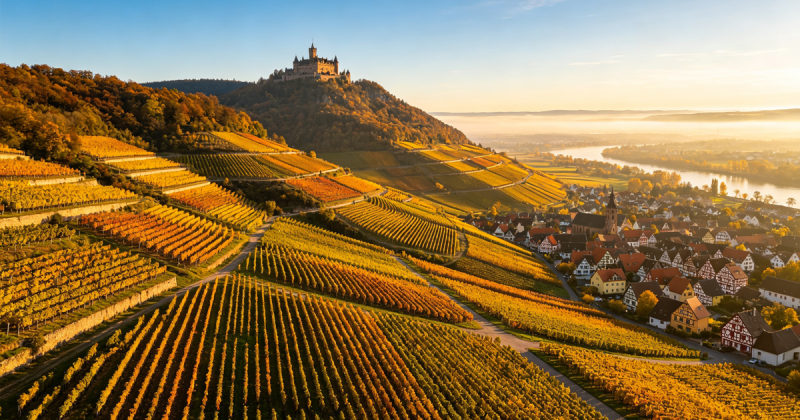
Jory soil is so emblematic of Oregon that it is the state’s official soil. It’s deep — often 6 feet or more before hitting bedrock — and exceptionally well-drained. The iron content gives it that distinctive rusty-red color. Vines in Jory soils tend to produce wines of immediate charm and accessibility: this is where you find the classic “Oregon cherry” Pinot profile, bright and lifted with a spine of acidity and subtle spice. The Dundee Hills, almost exclusively Jory, is the most densely planted AVA in the valley for exactly this reason.
Willakenzie soils tell a different story. These are the compressed remains of an ancient ocean floor, uplifted and pushed to the surface during the same tectonic processes that built the Coast Range. The resulting soils are shallower, lower in nutrients, and significantly more stressed for the vine — which, in wine terms, translates to concentration. Marine-sediment Pinot Noirs tend toward darker fruit profiles, firmer tannins, and a savory, almost umami character that Burgundy lovers often find the most familiar. If you like Gevrey-Chambertin’s structure and earthy undertow, you should be drinking Willakenzie-soil Pinot Noir.
Laurelwood is the wildcard. Loess — pronounced “luss,” rhyming with “bus” — is fine, wind-deposited silt that blanketed the Chehalem Mountains during the last Ice Age. Layers of pale, powdery loess sit on top of older volcanic basalt, creating a “soil within a soil.” The wines from Laurelwood sites are typically the most aromatic and lifted of the valley, with pronounced floral and spice notes, bright acidity, and a lighter footprint on the palate. The Laurelwood District AVA, established in 2020 and championed by Ponzi Vineyards, is the only AVA in the world defined by loess soil.
The wild card in all of this is the Missoula Floods. At the end of the last Ice Age — roughly 15,000 years ago — an ice dam holding back glacial Lake Missoula failed repeatedly, sending walls of water hundreds of feet high racing across the Pacific Northwest. The floods dumped rich sediment across the valley floor but left the hillsides — where the best vineyards are planted — untouched. This is why the valley floor is agricultural but produces unremarkable wine, while the slopes above the 200-foot flood line produce some of the most distinctive Pinot Noir in the world. The Missoula Floods drew the line, literally and figuratively, between where you plant wheat and where you plant Pinot.
2.3 The Van Duzer Effect
Driving through the Coast Range from the Pacific Ocean toward the Willamette Valley, you pass through a geological anomaly: a gap in the mountains. It’s called the Van Duzer Corridor, and it’s one of the most important features in Oregon wine.
The Coast Range runs north-south and normally acts as a rain shield, blocking moist oceanic air from reaching the valley. But at the Van Duzer Corridor — a low-elevation breach in the mountains southwest of McMinnville — there’s nothing to block the wind. Every afternoon, as the inland valley heats up and creates a low-pressure zone, cool Pacific air is drawn through this gap like a bellows.
The result: in the Eola-Amity Hills, which sit directly in the path of this wind tunnel, vineyard temperatures can drop 10 to 15°F (5.5 to 8°C) in a matter of minutes as the afternoon wind arrives. Winemakers describe it with almost poetic language: the vines “shut down” in the late afternoon, photosynthesis slows, and the grapes get an extended, cooler ripening window that preserves acidity while building phenolic complexity.
This cooling effect is so distinctive that the Van Duzer Corridor AVA was established as a standalone appellation in 2019, specifically to recognize the influence of this wind pattern on grape growing. Wines from Eola-Amity Hills and Van Duzer Corridor tend to be the most structured, acid-driven, and age-worthy Pinot Noirs in the Willamette Valley — the ones that Burgundy purists gravitate toward. If Dundee Hills Pinot is a silk scarf, Eola-Amity Hills Pinot is a finely woven wool blanket: more grip, more architecture, more intellectual demand.
3. The Six Core AVAs: A Terroir-by-Terroir Guide
The Willamette Valley AVA (established 1983) is enormous — 3,438,000 acres stretching more than 100 miles from Portland south toward Eugene. Within this broad designation sit 11 nested AVAs, each with distinct geology, mesoclimate, and wine personality. For the European wine lover trying to get oriented, six of these sub-AVAs matter most. Think of them as the Willamette Valley’s village appellations — the equivalent, in conceptual terms, of knowing that Gevrey-Chambertin generally produces more structured wines than Chambolle-Musigny.
Want a deeper dive into how terroir shapes wine? Our Burgundy guide explores the original climat system that inspired Oregon’s single-vineyard obsession.
3.1 Dundee Hills AVA
| Attribute | Detail |
|---|---|
| Established | 2005 (first planted 1965) |
| Total Area | 12,500 acres |
| Planted Area | ~2,225 acres |
| Soil | Almost exclusively Jory volcanic basalt |
| Elevation | 200–1,067 ft |
| Signature | Red-fruited, silky, immediately charming Pinot Noir |
This is ground zero for Oregon wine. The first vines went into the Dundee Hills in 1965, and it remains the most densely planted AVA in the state. If you’ve had exactly one Oregon Pinot Noir in your life, there’s a strong chance it came from Dundee Hills fruit — even if the label just said “Willamette Valley.”
The soil here is almost entirely Jory: that deep, rusty-red, iron-rich volcanic clay-loam that drains beautifully and stresses vines just enough. The resulting wines are the valley’s friendliest — bright cherry, raspberry, and pomegranate fruit, often with a backdrop of baking spice (cinnamon, clove), floral lift (violet, rose petal), and an earthy undertone that Oregon winemakers sometimes call sous bois — “forest floor,” directly borrowing the French term.
Dundee Hills Pinot Noir tends to be the most immediately accessible of the valley’s AVAs. The tannins are fine and silky, the acidity is present but integrated, and the wines show well young — typically hitting their stride at 3 to 7 years from vintage. That doesn’t mean they can’t age; top single-vineyard bottlings from warm vintages can evolve gracefully for a decade or more.
If you like… Chambolle-Musigny or Volnay — wines built on finesse, perfume, and red-fruit purity — try… Dundee Hills Pinot Noir from Domaine Drouhin Oregon, Archery Summit, or Stoller Family Estate.
Recommended Producers — Dundee Hills:
| Tier | Producer | Why |
|---|---|---|
| Discovery | Stoller Family Estate | The entry-level Dundee Hills Pinot is one of the best values in Oregon — pure, precise, consistently over-delivers. |
| Collector | Domaine Drouhin Oregon | The “Laurène” cuvée is the flagship, but even the entry-level Dundee Hills Pinot shows what happens when Burgundian winemaking meets Oregon fruit. Véronique Drouhin’s touch is unmistakable. |
| Cult | Archery Summit “Arcus Estate” | Single-vineyard, tiny production, prices north of $100. Made for the cellar. When it’s on, it’s one of Oregon’s most profound Pinots. |
3.2 Eola-Amity Hills AVA
| Attribute | Detail |
|---|---|
| Established | 2006 |
| Planted Area | ~2,400 acres |
| Soil | Volcanic basalt (Jory) with marine sedimentary influences, generally shallower and rockier than Dundee Hills |
| Key Influence | Van Duzer Corridor — afternoon ocean winds that drop temperatures 10–15°F |
| Signature | Structured, acid-driven, age-worthy Pinot Noir with darker fruit and pronounced minerality |
If Dundee Hills is about charm, the Eola-Amity Hills are about structure. The defining feature here isn’t the soil — though the mixture of volcanic basalt and marine sediment contributes complexity — it’s the wind.
Every afternoon during the growing season, the Van Duzer Corridor funnels cool Pacific air directly into the Eola-Amity Hills. Vineyards facing southwest toward the gap get the brunt of it. The vines respond by slowing photosynthesis in the late afternoon, extending the ripening window and producing grapes with higher acidity, thicker skins, and more developed phenolic compounds. The resulting wines are darker-fruited, more tannic, and built for the cellar.
Eola-Amity Pinot Noir typically shows black cherry, blackberry, and plum rather than the red berry spectrum of Dundee Hills. There’s often a pronounced mineral streak — wet stone, graphite — and a savory, herbal edge that some tasters describe as garrigue (the wild-herb character more commonly associated with the Southern Rhône). These wines reward patience: five to ten years of bottle age transforms their youthful intensity into something layered and complex.
If you like… Gevrey-Chambertin or Nuits-Saint-Georges — wines with backbone, mineral drive, and the structure to age — try… Eola-Amity Hills Pinot Noir from Cristom, Bethel Heights, or Walter Scott.
Recommended Producers — Eola-Amity Hills:
| Tier | Producer | Why |
|---|---|---|
| Discovery | Bethel Heights “Estate” Pinot Noir | A benchmark for the AVA at a fair price — consistently well-made, expressive of the cooler, wind-swept character of the hills. |
| Collector | Cristom “Jessie Vineyard” or “Eileen Vineyard” | Cristom’s single-vineyard series — each named after a family matriarch — is one of the great values in serious Oregon Pinot. Winemaker Steve Doerner trained at Calera. |
| Cult | Walter Scott “La Combe Verte” and single-vineyard Chardonnay | Ken Pahlow and Erica Landon make some of the most Burgundian-leaning wines in Oregon. Their Chardonnays are arguably as compelling as their Pinot Noirs. |
3.3 McMinnville AVA
| Attribute | Detail |
|---|---|
| Established | 2005 (updated 2025) |
| Planted Area | ~1,200 acres |
| Soil | Marine sedimentary (Willakenzie) over fractured basalt bedrock |
| Elevation | 200–1,000 ft, on the eastern foothills of the Coast Range |
| Signature | Dark, savory, structured Pinot Noir with pronounced tannic grip |
McMinnville sits west of the town of the same name, climbing the foothills of the Coast Range. It’s the highest-elevation AVA among the six core appellations, and the vineyards here face east and southeast — meaning they catch morning sun but are shadowed by the Coast Range in the late afternoon. Combined with the marine sedimentary Willakenzie soils and the influence of Pacific air flowing through the Van Duzer Corridor (which sits just to the southwest), McMinnville produces some of the valley’s most distinctive wines.
The signature here is darkness and depth: black fruits, licorice, earth, mushroom. The tannins are more pronounced than in any other Willamette Valley AVA — sometimes described as “grippy” or “granular” — and the wines tend to need time. A young McMinnville Pinot can feel almost forbidding in its structure, but five to eight years of bottle age reveals a wine of extraordinary complexity and savory appeal.
This is the AVA for Burgundy lovers who crave the darker, more structured end of the spectrum — the wines that make you think of Pommard or a particularly mineral-driven Nuits-Saint-Georges.
If you like… Pommard or Nuits-Saint-Georges — structured, age-demanding wines with savory depth — try… McMinnville Pinot Noir from Eyrie Vineyards (the original, still one of the best) or Youngberg Hill.
Recommended Producers — McMinnville:
| Tier | Producer | Why |
|---|---|---|
| Discovery | Youngberg Hill “Jordan Block” | Organic farming, panoramic views, and Pinot Noir that captures the savory, structured McMinnville character at a fair price. |
| Collector | Eyrie Vineyards “Original Vines” or “Daphne” | From the vines David Lett planted in 1965 — literally the oldest Pinot Noir vines in the Willamette Valley. These are wines of history, finesse, and quiet power. |
| Cult | Brittan Vineyards | Robert Brittan — former winemaker at Stags’ Leap Winery in Napa — makes tiny quantities of fiercely individualistic Pinot from the estate’s basaltic soils. |
3.4 Ribbon Ridge AVA
| Attribute | Detail |
|---|---|
| Established | 2005 |
| Total Area | 3,350 acres (planted: ~500 acres) |
| Soil | Almost exclusively Willakenzie marine sedimentary |
| Elevation | 200–680 ft |
| Signature | Intensely aromatic, silky-textured Pinot Noir with fine-grained tannins and a distinct spice-box character |
Ribbon Ridge is tiny — at just 3,350 acres total, only about 500 of them planted, it’s smaller than many single Burgundian domaines’ total holdings. But what it lacks in size it makes up in distinctiveness.
Geologically, Ribbon Ridge is a spur of the larger Chehalem Mountains AVA — a narrow ridge of uplifted marine sedimentary soil that rises above the valley floor. The soil here is almost purely Willakenzie, but unlike other Willakenzie sites, the ridge’s unique topography creates a warmer, more protected mesoclimate. Vines on the ridge catch full sun exposure, and the shallow, nutrient-poor soils stress them just enough to produce intensely concentrated fruit.
The resulting wines are a paradox: they combine the aromatic intensity and floral lift of the Chehalem Mountains with the darker fruit and structure of marine sedimentary soil. Think black raspberry, exotic spice (star anise, cardamom), violet, and a silky, fine-grained tannin structure that feels polished rather than rustic. Ribbon Ridge Pinot Noirs are consistently some of the most elegant and expressive wines in the valley.
If you like… Vosne-Romanée — wines that balance aromatic complexity with silky power — try… Ribbon Ridge Pinot Noir from Beaux Frères or Brick House.
Recommended Producers — Ribbon Ridge:
| Tier | Producer | Why |
|---|---|---|
| Discovery | Patricia Green Cellars “Ribbon Ridge” | The late Patricia Green was a legend of Oregon winemaking, and her estate’s Ribbon Ridge bottling remains a benchmark for the AVA’s aromatic, spice-driven character. |
| Collector | Brick House “Les Dijonnais” | Doug Tunnell — a former CBS News correspondent — farms biodynamically and makes some of Oregon’s most Burgundian-leaning wines. The “Les Dijonnais” is 100% Dijon-clone Pinot Noir from a single block. |
| Cult | Beaux Frères “The Beaux Frères Vineyard” | Founded by Michael Etzel and wine critic Robert Parker (who is no longer involved), Beaux Frères produces some of Oregon’s most sought-after Pinot Noirs — powerful, complex, built for the long haul. |
3.5 Yamhill-Carlton AVA
| Attribute | Detail |
|---|---|
| Established | 2005 |
| Total Area | ~59,000 acres (planted: ~2,400 acres) |
| Soil | Willakenzie marine sedimentary — coarse, well-drained, ancient seabed |
| Elevation | 200–1,000 ft |
| Signature | Dark-fruited, broad-shouldered, generous Pinot Noir with a savory, umami undertone |
Yamhill-Carlton sits in the rain shadow of the Coast Range, protected by the Chehalem Mountains to the north and the Dundee Hills to the east. The result is a warmer, drier mesoclimate than most of the valley — one of the reasons the wines here tend toward generosity and breadth.
The soil is classic Willakenzie marine sedimentary — but here it’s particularly coarse-textured and fast-draining, almost gravelly in places. Vines have to work hard, sending roots deep in search of water and nutrients. The stress produces concentrated fruit, but the warmer conditions mean the concentration expresses as richness rather than austerity.
Yamhill-Carlton Pinot Noirs are often described as “broad-shouldered”: dark cherry, plum, and blackberry fruit, often with notes of cocoa, earth, and dried herbs. There’s a savory, almost umami character that distinguishes them from the brighter, more fruit-forward wines of the Dundee Hills. Alcohol levels tend to be slightly higher (often 13.5–14%), and the wines feel more generous on the palate — less about tension, more about texture.
If you like… Pommard or Corton — wines with breadth, richness, and earthy depth — try… Yamhill-Carlton Pinot Noir from Ken Wright Cellars, Shea Wine Cellars, or Soter Vineyards.
Recommended Producers — Yamhill-Carlton:
| Tier | Producer | Why |
|---|---|---|
| Discovery | Ken Wright Cellars “Yamhill-Carlton” | Ken Wright was the founding winemaker at Panther Creek and has been mapping single-vineyard Oregon Pinot for decades. His AVA-designated bottling is a masterclass in Yamhill-Carlton typicity. |
| Collector | Shea Wine Cellars “Shea Vineyard” | Dick Shea’s vineyard is one of the most famous in Oregon, selling fruit to many top producers. The estate wines — made from the best blocks — are powerful, age-worthy, and definitive. |
| Cult | Soter Vineyards “Mineral Springs Ranch” | Tony Soter founded Etude in Napa before moving to Oregon. His biodynamic estate produces Pinot Noir of extraordinary refinement — and price tags to match. |
3.6 Chehalem Mountains AVA
| Attribute | Detail |
|---|---|
| Established | 2006 |
| Total Area | ~62,000 acres (planted: ~2,700 acres) |
| Soil | A mosaic: Jory basalt on south slopes, Laurelwood loess on north and east slopes, marine sediment in lower elevations |
| Elevation | 200–1,633 ft (Ribbon Ridge sits within it) |
| Signature | The valley’s most diverse AVA — wines range from red-fruited and silky (basalt) to aromatic and lifted (loess) to dark and structured (marine sediment) |
The Chehalem Mountains AVA is the Willamette Valley in miniature. It’s the largest of the six core AVAs by planted area (~2,700 acres across 62,000 total acres), and it contains within its boundaries all three of the valley’s major soil types. This makes it the most diverse AVA in terms of wine styles — and the hardest to summarize.
On the south-facing slopes, where Jory volcanic basalt dominates, the wines lean toward the Dundee Hills profile: bright red fruit, floral lift, silky tannins. On the north- and east-facing slopes, where Laurelwood loess blankets the basalt, the wines are more aromatic, lighter-bodied, and spice-driven — Ponzi Vineyards and the Laurelwood District AVA (nested within Chehalem Mountains, established 2020) are the reference points here. And in the lower elevations, where marine sediment outcrops, the wines take on darker fruit and more structure.
This diversity makes the Chehalem Mountains an excellent hunting ground for wine lovers who want to explore the full range of what Willamette Valley Pinot Noir can express, all within a single AVA.
If you like… The diversity of the Côte de Nuits — where every village has a distinct personality — try… Chehalem Mountains Pinot Noir from Adelsheim, J.K. Carriere, or Ponzi (for Laurelwood/loess expression).
Recommended Producers — Chehalem Mountains:
| Tier | Producer | Why |
|---|---|---|
| Discovery | Adelsheim “Breaking Ground” | David Adelsheim was one of Oregon’s original pioneers. This entry-level Chehalem Mountains blend is a perfect introduction — balanced, honest, delicious. |
| Collector | Ponzi Vineyards “Avellana” or Laurelwood District bottling | The Ponzi family literally wrote the petition for the Laurelwood District AVA. Their single-vineyard Laurelwood Pinots are benchmarks for the loess-derived style. |
| Cult | J.K. Carriere “Provocateur” | Tiny production, fiercely individualistic winemaking, and Pinot Noir that walks the line between power and elegance. Jim Prosser’s wines have a devoted following. |
AVA Comparison: At a Glance
| AVA | Soil | Signature Fruit | Tannin | Best For | Burgundy Parallel |
|---|---|---|---|---|---|
| Dundee Hills | Jory (volcanic) | Red cherry, raspberry | Silky, fine | Immediate pleasure | Chambolle-Musigny / Volnay |
| Eola-Amity Hills | Mixed volcanic + marine | Black cherry, plum | Structured, firm | Cellaring, complexity | Gevrey-Chambertin |
| McMinnville | Marine sedimentary | Black fruit, earth | Grippy, granular | Patient cellaring | Pommard |
| Ribbon Ridge | Marine sedimentary | Black raspberry, spice | Silky, polished | Elegance seekers | Vosne-Romanée |
| Yamhill-Carlton | Marine sedimentary | Dark cherry, cocoa | Broad, generous | Texture lovers | Corton / Pommard |
| Chehalem Mountains | All three soil types | Varies by site | Varies | Exploration, diversity | The entire Côte de Nuits |
4. Willamette Valley vs. Burgundy: A European Drinker’s Guide
So far, we’ve been dancing around the central question. Let’s address it directly: how does Oregon Pinot Noir actually differ from Burgundy — and, if you’re a European wine drinker, why should you care?
The comparison isn’t superficial. At their best, both regions produce Pinot Noir of finesse, transparency, and site-specific expression. But the path from vineyard to glass, and the character that emerges, is different in ways that matter.
Same Latitude, Different Worlds
Both the Willamette Valley and Burgundy’s Côte d’Or sit at roughly 45–47°N latitude. They share the fundamental climatic condition that makes great Pinot Noir possible: a growing season that’s warm enough to ripen the grapes but cool enough to preserve acidity and aromatic complexity.
But the type of cool climate differs. Burgundy is continental: cold winters, hot summers, and sharp, unpredictable shifts — spring frosts, summer hailstorms, harvest rains. The Willamette Valley is maritime-influenced: moderated by the Pacific Ocean 50 miles to the west, with mild winters, warm (but rarely hot) summers, and a long, dry autumn that allows for unhurried harvest decisions. The Coast Range acts as a buffer, stripping moisture from Pacific storms before they reach the vineyards.
The result? Oregon Pinot Noir is generally more consistent from vintage to vintage. You don’t get the Burgundian drama — the 2016 April frost that wiped out half the Côte de Beaune, the 2018 harvest that was so hot some producers lost weeks of picking time. Oregon’s vintages vary, sometimes significantly (2011 was cool and challenging; 2018 was warm and generous), but the swings are narrower. A bad year in Oregon is still pretty good. A bad year in Burgundy can be catastrophic.
Clone Wars: The Dijon Connection
Here’s something that surprises many European drinkers: a significant portion of Oregon’s Pinot Noir vines are literally Burgundian clones. When Oregon vineyards were planted and replanted in the 1980s and 1990s, many growers selected Dijon clones — the numbered clonal selections developed at the University of Dijon, including the famous Dijon 113, 114, 115, 667, and 777. These are the same clones planted in Burgundy’s top vineyards.
Clone 777, for example — prized for its small berries, thick skins, and intense color — is planted in both the Côte de Nuits and the Dundee Hills. Clone 115 — known for producing aromatic, elegant wines — appears in both Chambolle-Musigny and the Eola-Amity Hills. The genetic material is the same. What’s different is everything else: soil, climate, rootstock, canopy management, harvest decisions, and winemaking philosophy.
Soil: The Fundamental Divide
This is where the comparison gets most interesting — and where Oregon’s distinctiveness is rooted.
Burgundy’s soils are overwhelmingly clay-limestone (argile-calcaire), the legacy of a Jurassic seabed that formed 200–250 million years ago. The exact ratio of clay to limestone shifts meter by meter across the Côte d’Or, producing the 1,247 precisely mapped climats that define the region’s complexity. Limestone is fundamental to Burgundy’s character: it provides excellent drainage, contributes calcium to the vines, and is widely associated with the mineral tension and age-worthiness of top Burgundy.
Oregon has essentially no limestone. Instead, the valley’s soils are built on volcanic basalt (Jory), marine sediment (Willakenzie — compressed ancient seabed but chemically distinct from Burgundy’s limestone), and windblown loess (Laurelwood). The dominant base material is basalt, not calcaire.
This matters enormously. Volcanic soils tend to produce wines with brighter fruit, lower pH, and a different type of minerality — more ferrous, smoky, and earthy than the chalky, saline mineral notes associated with limestone. Marine sedimentary soils in Oregon, while derived from an ancient ocean floor just like Burgundy’s, are sandstone- and siltstone-based rather than limestone-based, producing wines that are savory and structured but not limestone-driven.
For the European drinker: if you love the chalky tension of Chablis or the mineral precision of Puligny-Montrachet, you may find Oregon Chardonnay and Pinot Noir from limestone-loving Burgundy to be a different experience — not worse, just different. Try Willamette Valley wines from marine sedimentary soils (Ribbon Ridge, Yamhill-Carlton) first — they’ll feel closest to what you know. Then explore Jory-based wines for something completely new.
Style, Price, and Accessibility
| Dimension | Willamette Valley | Burgundy |
|---|---|---|
| Climate type | Maritime-influenced cool | Continental |
| Latitude | ~45°N | ~47°N |
| Dominant soil | Volcanic basalt (Jory), marine sediment, loess | Clay-limestone (argile-calcaire) |
| Pinot Noir style | Bright red-to-dark fruit, pronounced floral/spice, silky tannins, moderate alcohol (12.5–14%) | Ethereal red fruit, earth/forest floor, fine tannins, moderate alcohol (12.5–14%) with more savory evolution |
| Chardonnay style | Lean, mineral, restrained — closer to Chablis or Côte de Beaune than California | The global benchmark: from Chablis austerity to Meursault richness |
| Entry-level price | $15–25 | $15–25 (Bourgogne Rouge) |
| Sweet spot | $25–50 (sub-AVA and single-vineyard) | $40–80 (Village and Premier Cru) |
| Top tier | 50–120(rarelyexceeds120) | 150–10,000+ (Grand Cru, top domaines) |
| Vintage consistency | High — narrower swings year to year | Variable — some vintages are dramatically better or worse |
| Tasting access | Walk-in friendly, many tasting rooms, $15–30 per tasting | Appointment-only at top domaines, often trade-focused |
| Classification | AVA system, 11 nested sub-AVAs, no official quality hierarchy within AVAs | Four-tier AOC pyramid: Régionale → Village → Premier Cru → Grand Cru, UNESCO World Heritage |
| Aging window (Pinot Noir) | 5–10 years (top wines 10–15+) | 5–20+ years depending on tier, Grand Cru 20+ |
The price gap is the most immediately obvious difference. For €40–60 in Burgundy, you’re getting a solid Village wine, maybe a modest Premier Cru from a less-famous appellation if you’re lucky. For the same money in Oregon, you’re getting a top single-vineyard bottling from a star producer. The value proposition is real and substantial.
That doesn’t make Oregon “better” than Burgundy. It makes it different — and, for everyday drinking and exploration, incredibly appealing. Burgundy remains the reference point for what Pinot Noir can achieve at its absolute peak. But Oregon is writing a new chapter, in a different soil, with a younger voice. For the European drinker who already knows Burgundy, Willamette Valley offers the thrill of discovery — a region still finding its limits, still defining its grands crus, still producing wines that can genuinely surprise.
Oregon Pinot ≠ California Pinot
One final note for European drinkers: please don’t confuse Oregon Pinot Noir with California Pinot Noir. They are different species.
California Pinot Noir — the best of it, from cooler pockets like the Sonoma Coast, Santa Lucia Highlands, or Anderson Valley — tends toward ripeness, higher alcohol (13.5–15.5%), darker fruit, and often a cola or root-beer note that’s distinctly Californian. It can be excellent, but it’s a different animal: richer, bolder, less about tension and more about texture.
Oregon Pinot Noir is fundamentally a cool-climate wine. It shares more DNA with Burgundy than it does with California. The fruit is brighter, the alcohol lower, the acidity higher, the relationship to the soil more transparent. If you’ve tried California Pinot Noir and found it too heavy or too sweet-fruited, don’t write off Oregon. They’re telling different stories.
5. Beyond Pinot Noir
Pinot Noir accounts for roughly 70% of the Willamette Valley’s vineyard acreage and an even higher percentage of its reputation. But the valley’s wine identity is broadening — and for European drinkers, the “other” varieties often provide the most interesting discoveries.
Chardonnay: The Quiet Revolution
For decades, Oregon Chardonnay was an afterthought. Growers planted it because David Lett had included it in his original 1965 U-Haul shipment, not because anyone was excited about it. The wines were competent but forgettable — too lean, too green, too obviously trying to be something they weren’t.
That changed in the 2010s. A new generation of winemakers, many of whom had trained in Burgundy or worked harvests at domaines like Leflaive and Roulot, started treating Oregon Chardonnay seriously. They planted Dijon clones (76, 95, 96, 548), moved to earlier picking dates to preserve acidity, experimented with barrel fermentation and lees aging, and — crucially — started selecting vineyard sites specifically for Chardonnay, not just planting it in the corners of Pinot Noir blocks.
The results are the most Burgundian Chardonnays being made outside Burgundy. Oregon Chardonnay today is typically lean, mineral, and tense — closer to Chablis or a restrained Meursault than to the opulent, buttery style of California. The fruit profile runs toward green apple, lemon curd, and white flowers rather than tropical fruit, with a saline-mineral finish that’s increasingly distinctive. Top producers include Walter Scott, Lingua Franca, Domaine Drouhin Oregon, Bergström, and Morgen Long (the latter making what many consider Oregon’s finest Chardonnay from purchased fruit).
If you love white Burgundy but your wallet doesn’t, Oregon Chardonnay should be your new best friend. For €30–50, you can buy Oregon Chardonnay that, blind, could easily pass for a Côte de Beaune wine at twice the price.
Pinot Gris: The Alsace Connection
If there’s one white variety that’s genuinely Oregonian rather than borrowed from elsewhere, it’s Pinot Gris. David Lett planted it in 1965, and it has thrived in the Willamette Valley’s cool climate ever since.
The style is different from both Italian Pinot Grigio (which tends to be lean, neutral, and high-volume) and Alsatian Pinot Gris (which can be rich, spicy, and off-dry to sweet). Oregon Pinot Gris falls somewhere in the middle, with more weight and texture than Italian versions and more freshness than many Alsace examples — think ripe pear, honeydew melon, white flowers, and a hint of almond, with enough acidity to stay lively.
It’s the workhorse white of Oregon wine country: reliable, food-friendly, affordable ($15–25), and widely available. Elk Cove, Ponzi, King Estate, and A to Z Wineworks all make solid versions. For European drinkers, Oregon Pinot Gris offers a fascinating third way between the Italian and French expressions of the grape.
The Experimenters: Gamay, Grüner, Cabernet Franc
Climate change is accelerating interest in alternative varieties, and some of the most exciting wines in Oregon today aren’t Pinot Noir at all.
Gamay Noir has found a particularly receptive home. The Beaujolais grape thrives in the same cool-climate conditions that Pinot Noir loves, ripens reliably, and produces wines of crunchy red fruit and lifted aromatics. Producers like Brick House, Division Winemaking Company, and Evening Land are making Gamay that would be perfectly at home at a Beaujolais-Villages tasting — fresh, vibrant, and dangerously drinkable.
Grüner Veltliner might seem like an odd choice for Oregon, but the grape’s affinity for loess soils (which it shares with its Austrian homeland) makes the Laurelwood sites of the Chehalem Mountains a natural fit. Human Cellars — the project of climate researcher and winemaker Bryan Berenguer — has been producing Grüner from the Dundee Hills that shows the grape’s classic white-pepper-and-citrus character.
Cabernet Franc is perhaps the most intriguing development. Bree and Chad Stock of Limited Addition Wines in Gaston argue that Cabernet Franc — which ripens later and more slowly than Pinot Noir, with looser clusters that resist rot and smoke taint — is ideally suited to Oregon’s warming climate. Their Cabernet Franc shows the grape’s herbal, bell-pepper, graphite side, with a freshness that warmer-region versions often lack.
These are niche wines with tiny production volumes — you’re unlikely to find Human Cellars Grüner in a European wine shop. But for the traveler who visits Oregon, they’re essential stops. They represent the cutting edge of a region still defining itself.
6. Climate Change and the Future of the Willamette Valley
The Willamette Valley was built on a simple premise: the 45th parallel, with a cool maritime climate, is perfect for Pinot Noir. That premise is now under active renegotiation.
The Numbers
A 2024 study by Brian Skahill and Bryan Berenguer — “Temperature-Based Climate Projections of Pinot Noir Suitability in the Willamette Valley AVA” — analyzed more than 70 years of weather data and concluded that average growing-season temperatures could rise by more than 3°C (5.4°F) by the end of this century. Grapes are already ripening about three days earlier each decade. Harvests that once finished in mid-to-late October now wrap up by early October — a shift of roughly three weeks from a generation ago.
The 2025 growing season was among the warmest on record for western U.S. wine regions, with growing degree days running 7–18% above the 1991–2020 average. Greg Jones, the vineyard climatologist and CEO of Abacela Vineyards, called 2025 “extremely close to the warmest ever.” Sparkling wine grapes historically picked in late September were harvested in August. Triple-digit temperatures stressed vineyards across the valley. And yet — most producers reported solid yields, thanks to a warm, dry spring that set a strong crop.
The pattern is clear: warmer springs, more frequent heat spikes, earlier harvests, and a tightening window for Pinot Noir to achieve both sugar ripeness and phenolic maturity without tipping into over-ripeness.
Pinot Noir Under Pressure
The near-monoculture of Pinot Noir in the Willamette Valley — nearly 70% of all vineyard acreage — is both the region’s strength and its vulnerability. When conditions are perfect, the valley produces a flood of high-quality Pinot Noir, driving down prices and making Oregon one of the world’s best Pinot Noir values. When conditions are challenging — heat spikes, smoke events from wildfires (as in 2020), or excessive rain at harvest — producers are stuck with a single grape that may not have performed.
Skahill, the climate study’s co-author, has gone so far as to suggest the Willamette Valley should stop branding itself as a “cool climate” region — at least in the traditional sense. He urges growers to consider replanting with varieties better suited to warmer conditions, particularly as older Pinot Noir vines planted in the 1970s and 80s reach the end of their productive lives.
The New Pioneers
Some winemakers are already ahead of the curve.
Bryan Berenguer — the climate researcher who co-authored the 2024 study — also runs Human Cellars in Dundee. He decided not to plant any Pinot Noir at all. Instead, his vineyard grows Gamay, Grüner Veltliner, Chenin Blanc, and Lagrein — varieties he believes are better adapted to where Oregon’s climate is heading, not where it was in 1965.
Bree and Chad Stock of Limited Addition Wines are making Cabernet Franc from their Gaston vineyard, arguing that the grape’s later ripening and looser clusters make it naturally resilient to the climate challenges Pinot Noir increasingly faces. Bree Stock, who holds a Master of Wine qualification, believes Cabernet Franc could become Oregon’s next premium red wine — offering the kind of complexity and age-worthiness that appeals to serious collectors while being genetically better suited to a warmer, more volatile growing season.
These are not isolated experiments. Greg Jones encourages all growers to diversify their vineyards as a risk-management strategy, pointing to Bordeaux’s multi-variety model: when one grape struggles in a given year, others can compensate. The shift doesn’t mean abandoning Pinot Noir — it means evolving beyond the single-grape identity that has defined the region since David Lett’s U-Haul rolled into Dundee.
The next 20 years will determine whether the Willamette Valley wine region remains a “Pinot Paradise” or becomes something more complex: a multi-variety cool-climate zone where Pinot Noir shares the stage with Gamay, Cabernet Franc, Grüner Veltliner, and varieties not yet widely planted. The adventurous drinker has reason to be excited.
Curious how other regions are adapting? Our German wine regions guide explores how Mosel and Rheingau producers are responding to the same warming trends — from higher-altitude plantings to experimental varieties.
7. Planning Your Visit
The Willamette Valley is one of the most visitor-friendly wine regions in the world — approachable, affordable, and free of the pretension that can make wine country feel like a velvet-rope experience. For European wine travelers accustomed to the formal, appointment-only culture of Burgundy or Bordeaux, Oregon can feel refreshingly relaxed. But that doesn’t mean you should show up without a plan.
Getting There and Getting Around
The Willamette Valley stretches roughly 100 miles from just south of Portland to just north of Eugene. The core wine country — the six AVAs covered above — is concentrated in a triangle roughly bounded by the towns of McMinnville, Newberg, Dundee, and Carlton, all within about an hour’s drive southwest of Portland International Airport (PDX).
This is the single most important thing to know: there is essentially no Uber or Lyft in wine country. The ride-sharing services that make Napa and Sonoma easy to navigate without a designated driver simply don’t operate at scale in the Willamette Valley. COVID gutted the driver pool, and it never recovered.
Your options:
- Designated driver: The most flexible option, and many tasting rooms offer excellent non-alcoholic alternatives.
- Private wine tour: Services like Pinotcar and NW Wine Shuttle run $400–600 for a full day (4–6 people), which splits well among a group. Book well in advance for harvest season.
- Walkable tasting: The town of McMinnville has more than 20 tasting rooms within walking distance of its historic downtown. You can have a full wine day without ever starting a car.
- Bike: Tommy’s Bicycle Shop in McMinnville rents bikes. The terrain is rolling but manageable, and the roads are generally quiet.
Where to Stay
| Option | Location | Why |
|---|---|---|
| Atticus Hotel | McMinnville | The valley’s best boutique hotel — walk to dinner, walk to tasting rooms, genuinely stylish. Book early. |
| The Dundee Hotel | Dundee | Convenient for Dundee Hills tastings, recently renovated, solid mid-range option. |
| Youngberg Hill Inn | McMinnville AVA | A hilltop B&B on a working vineyard — panoramic views, wine with breakfast, the most romantic option. |
| Allison Inn & Spa | Newberg | The luxury pick — a proper resort with a spa, fine dining, and prices to match. |
When to Go and What to Expect
| Season | Months | What to Expect |
|---|---|---|
| Harvest | September–October | The sweet spot: golden vineyards, harvest energy, ideal weather, fewer crowds than summer. Book tastings 2–4 weeks ahead. |
| Summer | June–August | Best weather (warm, dry, long days), but busiest and most expensive. Tastings fill up. |
| Spring | April–May | Wildflowers, green vineyards, less crowded. Some rain possible. |
| Winter | January–March | “Cellar Season” — quiet, intimate, winemakers have time to talk. Lowest rates. Some tasting rooms close or reduce hours. |
Tasting fees typically run 15–30perpersonatmostwineries,oftenwaivedwithabottlepurchase.ThisissignificantlylessthanNapa(40–75) and roughly comparable to many European regions at current exchange rates. A full day of 3–4 tastings plus lunch should run under $150 per person — excellent value by global wine tourism standards.
Pro tip for European visitors: Alaska Airlines, the dominant carrier at PDX, offers a “Wine Flies Free” program — if you’re a Mileage Plan member (free to join), you can check a case of wine at no charge on flights departing Portland. That’s a $20–40 savings and makes it practical to bring Oregon bottles home.
Already planning a trip? Check out our Riesling guide for ideas on what to drink when you’re back home — or join the conversation in our wine community forum to share your Oregon discoveries.
Frequently Asked Questions
How do you pronounce “Willamette”?
Wil-LAM-it — rhymes with “dammit,” not with “play.” The emphasis is on the second syllable. Say “Will-AM-it” and you’re close enough to pass. Say “WILLA-met” and every Oregonian in the room will wince.
What is the Willamette Valley known for?
The Willamette Valley is known primarily as one of the world’s great Pinot Noir regions, producing wines of elegance, finesse, and site-specific character from cool-climate vineyards at the 45th parallel. It’s also recognized for Chardonnay (increasingly Burgundian in style), Pinot Gris, and a growing range of alternative varieties including Gamay and Grüner Veltliner.
How does Willamette Valley Pinot Noir differ from Burgundy?
The key differences: Willamette Pinot tends toward brighter, more overt fruit (cherry, raspberry, pomegranate) with a silkier texture and slightly less earthy/forest-floor evolution in youth, while Burgundy — on its classic clay-limestone soils — often shows more savory, mineral, and tertiary character earlier. Oregon Pinot is typically more consistent vintage to vintage, with less extreme swings, and offers better value at every price tier. The soils are fundamentally different: volcanic basalt vs. limestone.
How many wineries are in the Willamette Valley?
More than 700 wineries, with 1,061 vineyards across approximately 33,634 planted acres. The valley spans 11 nested AVAs, with the six core sub-regions being Dundee Hills, Eola-Amity Hills, McMinnville, Ribbon Ridge, Yamhill-Carlton, and Chehalem Mountains.
What’s the best time to visit Willamette Valley wine country?
September and October (harvest season) offer the best combination of ideal weather, vineyard activity, and manageable crowds. Memorial Day weekend (late May) and Thanksgiving weekend (late November) feature special events where many wineries open their doors — some that are otherwise closed to the public. Winter (January–March) is the quietest and most affordable, with intimate “Cellar Season” experiences.
Is Willamette Valley wine tourism expensive?
Compared to Napa Valley, it’s remarkably affordable. Tasting fees run 15–30(oftenwaivedwithpurchase),afulldayof3–4tastingspluslunchtypicallycomesinunder150 per person, and there are excellent accommodation options from budget-friendly to luxury. It’s one of the best-value premium wine tourism destinations in the world.
What grapes are grown in the Willamette Valley besides Pinot Noir?
Chardonnay is the second most important variety, followed by Pinot Gris. Other varieties include Pinot Blanc, Riesling, Gamay Noir, Grüner Veltliner, Chenin Blanc, Cabernet Franc, and a handful of experimental plantings including Lagrein and Tempranillo. Sparkling wine production — from Pinot Noir and Chardonnay — is a growing category.
How is climate change affecting Willamette Valley wine?
Growing-season temperatures are projected to rise more than 3°C by end of century. Harvests now finish roughly three weeks earlier than a generation ago. The 2025 season was among the warmest on record. In response, some producers are experimenting with later-ripening varieties (Cabernet Franc), heat-tolerant grapes (Gamay, Grüner Veltliner), and alternative vineyard management techniques. The long-term viability of Pinot Noir as the region’s dominant variety is an active subject of research and debate.
Conclusion: Why the Willamette Valley Matters
The Willamette Valley wine region represents something increasingly rare in the wine world: a major quality region still actively writing its story. Burgundy’s narrative is a thousand years deep, its climats mapped and classified, its Grand Crus enshrined in UNESCO World Heritage. Oregon’s narrative is just two generations old — and the final chapters haven’t been drafted.
That youthfulness is the region’s greatest asset. It means the best vineyard sites may not yet be identified. The perfect grape for Yamhill-Carlton’s coarse marine sediment or the Chehalem Mountains’ loess may not yet be planted. The region’s hierarchy — which producers, which vineyards, which winemaking philosophies will define the next 50 years — is still being negotiated, in real time, through every vintage.
For European wine lovers, the Willamette Valley offers three things that don’t often coexist: world-class Pinot Noir and Chardonnay with genuine terroir expression, at prices that make Burgundy look extravagant, produced in a region where you can walk into a tasting room and have the winemaker pour for you personally.
The valley’s founding myth — David Lett’s U-Haul, the 1979 blind tasting, Robert Drouhin’s pilgrimage — has the quality of legend because it actually happened. But the more interesting story is what’s happening now: the single-vineyard experiments, the Chardonnay revolution, the climate-change pioneers planting Gamay and Cabernet Franc in ground that was once exclusively Pinot Noir territory.
If you’ve never explored Oregon wine, start with a bottle of Dundee Hills Pinot Noir from a producer like Stoller or Domaine Drouhin Oregon. Then taste an Eola-Amity Hills wine — something from Cristom or Walter Scott — and see how the same grape, grown 20 miles apart, produces a dramatically different wine. That’s the Willamette Valley proposition: same latitude, same grape, same ambition — and a hundred different ways to express it.
Further Reading
- German Wine Regions: The Complete Guide to All 13 Anbaugebiete — Our flagship 7,800-word guide covering Germany’s wine regions with the same depth and European perspective
- Riesling: The Ultimate Guide — From bone-dry Trocken to TBA, everything you need to know about the world’s greatest white grape
- Burgundy Wine Region Guide — The Old World benchmark that inspired Oregon’s pioneers
- Chardonnay: A Complete Guide — Explore the grape that’s driving Oregon’s quiet white wine revolution
- Tuscany Wine Region Guide — Another European perspective on terroir-driven wine
Join the conversation. What Willamette Valley wines have you tried? Which AVA style appeals most to your Burgundy-loving palate? Share your discoveries in our wine community forum — we’d love to hear from you.

No comments yet