





Key Takeaways
- Port was invented by accident. In the 1670s, the Anglo-French wars cut off England’s Bordeaux supply. English merchants followed the Douro River upstream looking for alternatives. The local red wine was too coarse to survive the sea voyage—so they added brandy to stabilize it. Port is a logistics solution that became a legend.
- The Douro is the world’s most physically extreme wine region. Summer temperatures hit 45°C. Vineyards are planted on schist terraces angled at 30–60 degrees. Annual rainfall in the hottest sub-zone (Douro Superior) drops below 400 mm. Yields are among the lowest in Europe—sometimes under 20 hl/ha, less than one-third of Bordeaux’s average.
- The schist is everything. Douro’s metamorphic bedrock splits vertically—roots can penetrate 10–15 meters deep to find water. Without schist’s unique fracture pattern, viticulture on these slopes at these temperatures would be biologically impossible.
- Port is not a grape variety. It’s a process—fermentation interrupted by the addition of grape spirit (aguardente) at 77% ABV, killing the yeast and preserving half the grape sugar. The magic of Port is the marriage of residual sweetness, high alcohol (~20%), and the tannic backbone of Douro red grapes.
- The unfortified Douro red wine revolution is real—but overhyped. The best single-vineyard dry reds from Touriga Nacional and old-vine field blends can be world-class ($40–80). But many $60+ bottlings are outclassed by a $22 Late Bottled Vintage Port. Buy selectively, and never pay more for a dry Douro red than you’d pay for the equivalent producer’s Vintage Port.
- Vintage Port is one of the world’s greatest age-worthy wines—and one of the last remaining value plays in collectible wine. A top Vintage Port from a declared year ($80–120 on release) ages 30–50+ years and trades at a fraction of what classified Bordeaux or top Barolo costs for equivalent prestige and longevity.
1. Introduction: The War That Invented Port
In 1678, England was in the middle of its third war with France in thirty years—and running out of wine. The Royal Navy’s blockade of French ports had choked off the Bordeaux supply that had sustained English cellars for centuries. Desperate merchants looked south. They’d heard reports of robust red wine being made upriver from Porto, in a wild valley where the river cut through mountains of black rock. They sent ships to investigate.
What they found was not promising. The wine was dark, tannic, and unstable—it turned to vinegar before the ships reached London. Some enterprising merchant—history doesn’t record exactly who—had an idea: add a bucket of brandy to the barrel before loading it onto the ship. The alcohol would kill any remaining yeast, stop fermentation in its tracks, and preserve the wine across months at sea. It worked. The wine arrived not just intact but transformed: sweet (because the brandy had stopped fermentation before all the sugar was consumed), powerfully alcoholic, and unlike anything England had ever tasted.
The discovery that fixing the wine’s sweetness at the point of fortification produced something not merely stable but actively delicious took another generation to codify. By the 1730s, the practice was formalized, and the Port shippers—British, Scottish, and German merchant families with names like Taylor, Graham, Dow, Warre, Symington—were building lodges across the river from Porto in Vila Nova de Gaia. The Douro Valley became, for the next two centuries, an extractive colony: grape growers in the valley sold to British shippers in the city, and Port flowed north to London and beyond.
That history created a paradox that defines the Douro to this day. The region’s greatest wine is globally famous. The region itself is almost unknown. Most wine drinkers can name a Port brand. Almost none can name a Douro grape variety. This guide aims to fix that. Because the Douro is not just the source of Port—it’s the most extreme viticultural landscape in Europe, home to more than 80 indigenous grape varieties, and undergoing a transformation that has produced some of the most exciting dry red wines of the last twenty years—alongside the most overpriced.
2. The Douro’s Terroir: Schist, Heat & the River That Carved a Valley
The Douro River rises in north-central Spain and flows west for 897 kilometers before emptying into the Atlantic at Porto. Along roughly 100 kilometers of its middle course—from the Spanish border to the village of Barqueiros—the river has carved a gorge through the ancient metamorphic rocks of the Iberian Massif. This is the demarcated Douro wine region, established in 1756 as the world’s second appellation (after Tokaj). The river doesn’t just provide the name. It provides the geology.
2.1 Schist: The Rock That Makes Viticulture Possible
Douro’s bedrock is schist—a metamorphic rock formed from compressed clay and silt under immense heat and pressure. Schist is what makes wine possible here. Unlike granite, which weathers into a hard, impenetrable surface, schist fractures vertically into thin plates. Vine roots can penetrate through these fracture planes 10–15 meters deep, accessing water reserves that surface rainfall doesn’t provide. The schist also absorbs heat during the day and radiates it back at night, moderating temperature swings in a climate that would otherwise swing violently.
The color of the schist matters. In the Baixo Corgo (the westernmost sub-zone), the rock is darker and richer in organic material, holding more water. In the Douro Superior (the easternmost, hottest sub-zone), the schist is lighter and more friable, draining faster. The best vineyards—the ones that produce Vintage Port and top dry reds—are on south-facing schist slopes at 150–400 meters elevation, where the rock reflects maximum sunlight onto the vines and the drainage keeps yields punishingly low.
There is a saying in the Douro: “The vine does not live from water. It lives from the rock.” This is not poetry. The schist is the water source, the thermal regulator, and the mineral matrix that produces one of the most distinctive terroirs in the world. If you taste minerality in Douro wine—a ferrous, stony, almost dusty quality—you’re tasting schist.
2.2 The Three Sub-Zones: Baixo Corgo, Cima Corgo, Douro Superior
The demarcated Douro is divided into three climatic sub-zones, running west to east with increasing heat and decreasing rainfall:
| Sub-Zone | Climate | Rainfall | Elevation | Soils | Wine Style | Key Producers |
| Baixo Corgo | Mildest (Atlantic influence) | ~900 mm/yr | 50–350 m | Darker schist, more organic matter, higher moisture | Lighter wines. Most Ruby and Tawny Port originates here. Increasingly good dry whites. | Niepoort, Quinta do Crasto |
| Cima Corgo | Transitional (Atlantic < Mediterranean) | ~600 mm/yr | 100–500 m | Classic schist, best-drained, highest quality | The heart of Vintage Port and top dry reds. The finest terroir in the Douro. Pinhão is the epicenter. | Quinta do Noval, Taylor’s, Graham’s, Dow’s, Fonseca, Niepoort |
| Douro Superior | Hottest (continental/Mediterranean) | ~350 mm/yr | 150–600 m | Lighter, friable schist with granite outcrops | Powerful, ripe, concentrated wines. Increasingly important for top dry reds and old-vine field blends. | Quinta do Vale Meão, Quinta da Leda, Ramos Pinto |
2.3 The Vineyards: Socalcos, Patamares & Vinha ao Alto
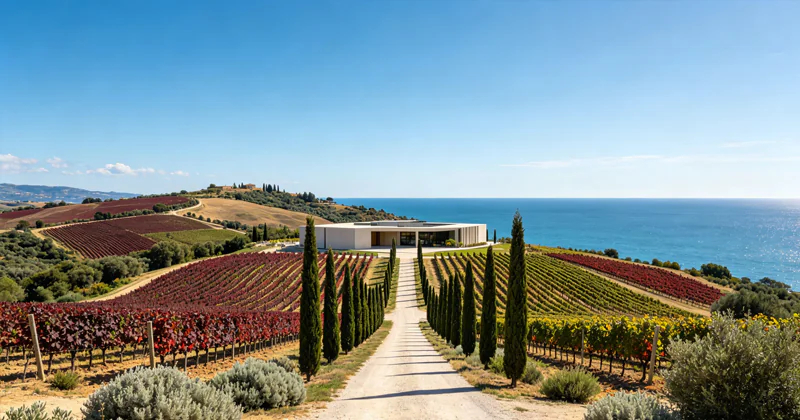
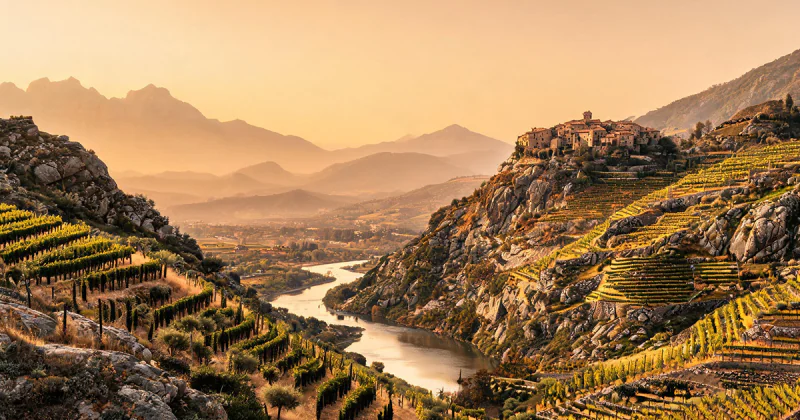
The Douro’s vineyards don’t look like vineyards anywhere else. On slopes that tilt at 30–60 degrees—so steep that mechanization is physically impossible—three types of vineyard construction define the landscape:
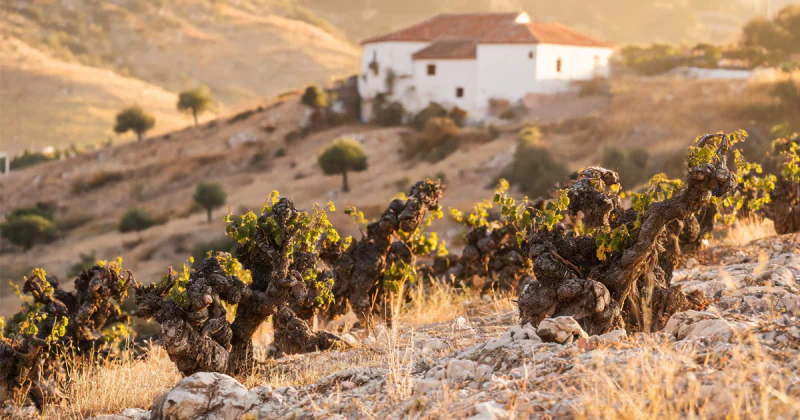
- Socalcos: The ancient pre-phylloxera terraces, narrow stone-walled platforms hacked into the mountainside by hand over centuries. Each terrace holds one or two rows of vines. Impossible to mechanize; maintained by hand. The socalcos produce the most concentrated, lowest-yielding fruit—and the greatest wines. They are also dying out, because the cost of labor to maintain them exceeds the price of Port from all but the top quintas.
- Patamares: Wider, bulldozed terraces built in the 1970s–80s, allowing limited tractor access. Higher yields, easier farming, less distinctive wine. The majority of modern Port and bulk dry wine comes from patamares.
- Vinha ao Alto: Vertical-planting rows running up and down the slope (not terraced). Expensive to establish, expensive to maintain, but produces the most even ripening. Increasingly used for top single-vineyard dry reds.
The vineyard construction type matters more than most consumers realize. Socalcos produce 20–25 hl/ha in a good year. Patamares produce 35–45 hl/ha. Vinha ao Alto splits the difference in yield but surpasses both in grape quality consistency. When a Douro dry red label says “old vines” (vinhas velhas), it almost always means socalcos planted with mixed varieties—the most traditional, least productive, and potentially greatest vineyards in the region.
2.4 Climate Change: Heat, Drought & the Future of Port
The Douro has been getting hotter and drier for a generation. Average summer temperatures in Pinhão have risen 1.5°C since 1980. Days above 40°C are increasing in frequency and duration. Annual rainfall, especially in the Douro Superior, is declining. The 2017 and 2022 vintages both saw heat spikes that pushed vineyards past their physiological limits—photosynthesis shut down for hours at a time, sugar accumulated without phenolic ripeness, and some producers lost 30–40% of their crop.
The responses are visible across the valley: planting at higher elevations (400–700m, historically considered marginal for Port) to find cooler nighttime temperatures; increasing reliance on old-vine field blends (the genetic diversity of 30+ varieties interplanted in one vineyard acts as an insurance policy against climate stress); and experimental irrigation—long illegal but now permitted in limited form—to keep vines alive through drought. The long-term question is whether the Baixo Corgo, the traditional heartland, will continue to produce Port of sufficient concentration as temperatures rise, or whether the future of great Douro wine lies upslope in the Cima Corgo and Superior.
3. The Grapes of the Douro: 80+ Varieties, Five That Matter
The Douro is one of the world’s great reservoirs of indigenous grape diversity. More than 80 varieties are authorized for Port and Douro DOC wine. In the old socalcos, these varieties are interplanted—Touriga Nacional next to Tinta Barroca next to a grape nobody has bothered to name—and harvested together as a field blend. This practice, vinhas velhas (old vines), produces some of the most complex wines in the world, because the genetic diversity of a single vineyard’s field blend creates aromatic and structural complexity that a monoculture can’t replicate.
That said, five red varieties and two whites matter most:
3.1 Touriga Nacional: The Queen
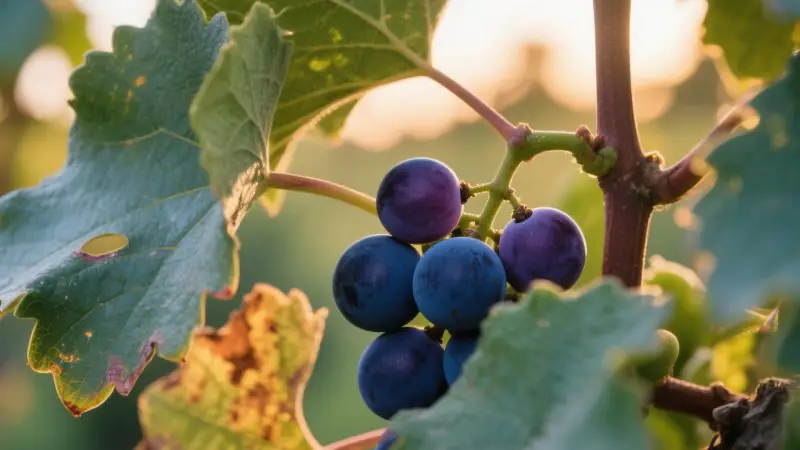
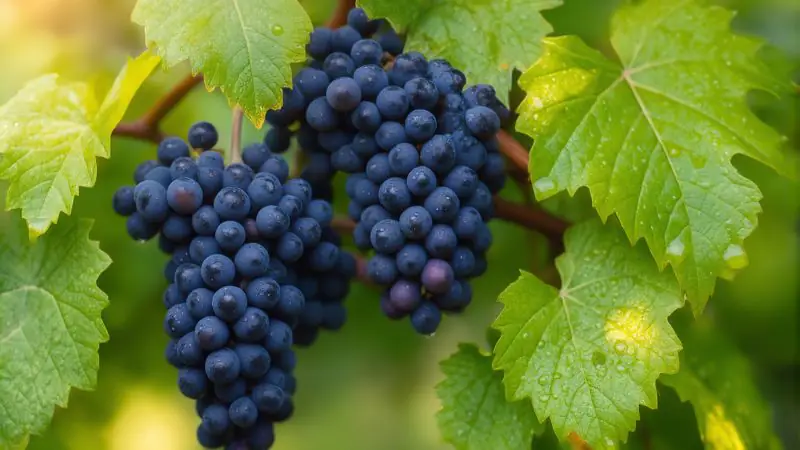
Touriga Nacional is the Douro’s greatest red grape—and Portugal’s answer to Cabernet Sauvignon. Small berries, thick skins, intensely aromatic: blackberry, violet, bergamot, sometimes a distinct note of mint or eucalyptus. High tannin, high acid, exceptional aging potential. Touriga Nacional was nearly extinct in the 1970s because it’s a nightmare to farm—low yields, irregular fruit set, disease-prone. A replanting program saved it, and today it’s the backbone of most top Vintage Ports and single-variety dry reds. The best expressions come from the Cima Corgo, where the Atlantic–Mediterranean climate balance preserves the floral aromatics without sacrificing ripeness.
3.2 Touriga Franca: The Workhorse
Touriga Franca is the most planted red variety in the Douro, and for most of the twentieth century nobody talked about it. It’s easier to farm than Nacional—higher yields, more disease-resistant—and contributes softer tannins and floral lift (rose, lavender) to blends. In Port, it provides the aromatic top notes. In dry reds, it’s increasingly used as the lead variety in single-vineyard wines (Quinta do Crasto’s Touriga Franca is a reference point). Touriga Franca is the variety that makes the unfortified Douro revolution possible at accessible prices ($15–25).
3.3 Tinta Roriz: The Spanish Intruder
Tinta Roriz is Tempranillo—the same grape that defines Rioja. In the Douro, it’s darker, more tannic, and less elegant than in Spain. It contributes structure, color, and the specific flavor of wild strawberry to Port blends. High-quality Tinta Roriz on its own can be magnificent (Quinta da Leda’s single-variety wines are benchmarks), but it’s vulnerable to over-ripeness in hot years—the strawberry note turns jammy fast. Tinta Roriz is one of the reasons the cooler Baixo Corgo still matters: at lower elevations with Atlantic influence, it produces fresher, more elegant wines.
3.4 The Supporting Cast
| Grape | Role in the Douro | Character |
| Tinta Barroca | Early-ripening, high-yielding. The drought-insurance grape—thrives in the hottest sites where other varieties struggle. Adds body and sweetness to Port blends. Critical in Douro Superior. | Black cherry, chocolate, soft tannins. Prone to rapid oxidation if not managed carefully. |
| Tinto Cão | Low-yielding, late-ripening, deeply concentrated. The ‘secret weapon’ in Vintage Port—adds longevity, aromatic complexity, and acidity. Only 1% of plantings but disproportionately important in top wines. | Blueberry, black pepper, graphite. High acid, high tannin, enormous aging potential. |
| Sousão | Deepest color of any Douro grape—the flesh itself is red, not white. Adds inky darkness and acidity to Port blends. Rarely bottled alone; unforgettable when it is. | Blackberry, gaminess, electric acidity. A wine you remember. |
| Viosinho | Douro’s finest white grape. Low-yielding, aromatic, high in acidity. Produces white Port and increasingly excellent dry white wines with real aging potential. The future of Douro white. | Citrus, white peach, honeysuckle, mineral. The Chablis of the Douro—if such a thing can exist at 35°C. |
| Rabigato | High-acid white variety, historically blended with Viosinho in white Port. Increasingly bottled alone as a crisp, mineral dry white. Small plantings, outsized potential. | Green apple, lime, wet stone, saline finish. The most electric white in the Douro. |
The old-vine field blends deserve their own category. A vinhas velhas vineyard might contain 30, 40, even 50 different red and white varieties interplanted, some of them botanical relics that exist nowhere else in the world and have never been individually vinified. When these vineyards are harvested together and fermented as a field blend, the resulting wine—whether Port or dry—has a complexity that single-variety wines simply cannot achieve. This is the genetic heritage of the Douro, and it’s irreplaceable.
4. Port: The Styles, the System & the Madness of Vintage
Port is not a single wine. It’s a family of styles produced from the same grapes and the same fortification process, diverging at the point the wine leaves the fermenter. The two fundamental branches are Ruby (aged in large neutral vessels, preserving fruit and color) and Tawny (aged in small oak casks, developing oxidation, nuttiness, and amber color). From these two branches, the specific categories branch out.
4.1 Ruby Port & Its Derivatives
| Style | Aging | Description | Price | Benchmark |
| Ruby | 2–3 years in large tank/wood | The entry-level Port. Deep purple-red, jammy, simple, sweet. Fortified young, bottled young, drunk young. Honest, unpretentious, and the cheapest way to taste the Douro’s power. Serve with chocolate or blue cheese. | $10–18 | Graham’s Six Grapes, Taylor’s Fine Ruby |
| Reserve Ruby | 4–6 years in large wood | A step up—better fruit selection, longer aging, more integration. Still fruit-driven but with the beginnings of complexity. The best value in everyday Port. | $18–30 | Niepoort Ruby Reserva, Quinta do Noval Black |
| Late Bottled Vintage (LBV) | 4–6 years in wood, single vintage | The single most useful category in Port. LBV is made from a single year’s harvest, aged longer than Reserve Ruby, and bottled ready to drink. It delivers 80% of Vintage Port’s quality at 25% of the price. Drink now; no decanting required (filtered LBV) or minimal (unfiltered). The gap between a top LBV and a mid-tier Vintage Port is smaller than most producers want you to know. | $20–35 | Taylor’s LBV (2017, 2018), Graham’s LBV, Niepoort LBV |
| Crusted Port | 2–3 years in wood, then bottle-aged | A blend of multiple vintages, bottled young without filtration, developing a heavy sediment (the ‘crust’). Essentially a non-vintage Vintage Port. Must be decanted. An insider’s category—cheaper than Vintage Port, remarkably similar drinking experience. | $20–30 | Dow’s Crusted, Graham’s Crusted |
| Vintage Port | 18–36 months in wood, then decades in bottle | The pinnacle. Made only in declared years (roughly 3–4 per decade), from the best fruit, bottled unfiltered, and meant to age 20–50+ years. The greatest Vintage Ports—Taylor’s 1994, Fonseca 1985, Quinta do Noval Nacional 1963—are among the world’s greatest wines, period. Price on release: $80–120. At auction after 30 years: $200–500. For the quality, that’s a bargain. | $80–300+ | Taylor’s, Fonseca, Graham’s, Dow’s, Quinta do Noval |
| Single Quinta Vintage | Same as Vintage, from a single estate | In non-declared years, the top shippers release Single Quinta Vintage Ports—Vintage Port made from a single estate’s fruit. Made in the same way, aged the same way, priced at half ($40–70). The value play in collectible Port. Quinta do Noval’s single-quinta wines (produced almost every year) are benchmarks. | $40–70 | Quinta do Noval (annual), Taylor’s Quinta de Vargellas, Graham’s Quinta dos Malvedos |
4.2 Tawny Port: The Wine of Time
Tawny Port is aged in small wooden casks (typically 550-liter pipes) where controlled oxygen exposure gradually transforms the wine: the deep purple fades to amber-tawny, the primary fruit evolves into nuts, dried fruit, caramel, and spice, and the texture becomes silky and seamless. Tawny is aged longer than Ruby—sometimes much longer—and the aging vessel is the fundamental difference: large neutral wood for Ruby (no oxygen), small permeable casks for Tawny (lots of oxygen).
| Style | Aging | Description | Price | Benchmark |
| Tawny | 3–5 years in small oak | The entry-level Tawny—amber color, nutty, dried fruit, lighter-bodied than Ruby. A “Tawny” with no age statement is the simplest and cheapest version. Fine for casual drinking; not for contemplation. | $10–18 | Taylor’s Fine Tawny, Graham’s Fine Tawny |
| Reserve Tawny | 6–7 years in small oak | A serious step up. Deeper amber color, more concentration, real complexity—walnut, dried apricot, toffee, orange peel. The daily-drinking sweet spot for Tawny lovers. | $18–30 | Niepoort Tawny Reserve, Graham’s 10 Year Old Tawny |
| Aged Tawny (10/20/30/40+ Years) | 10–40+ years in small oak | The age-statement Tawnies are the pinnacle of the oxidative style. The stated age is an average, not a minimum. A 20 Year Old Tawny ($50–70) is one of the world’s great after-dinner wines—caramel, roasted nuts, dried fig, orange marmalade, a finish that lasts a full minute. A 40 Year Old ($150–250) is a meditation. These are not wines to ‘cellar.’ They’re released when ready and should be drunk within a year of bottling (though they’ll keep for several months after opening, thanks to the oxidative aging). | $25–250+ | Graham’s 20 Year Old, Taylor’s 30 Year Old, Kopke 40 Year Old |
| Colheita | Single vintage, 7–50+ years in small oak | A Tawny from a single harvest year. Colheita is Vintage Port’s oxidative twin—the same year on the label, but aged in cask rather than bottle. A 1995 Colheita today tastes like a 30-year-old Tawny from a specific vintage. The category has exploded in the last decade, and prices have followed. The best values: 15–25-year-old Colheitas from less-famous houses. | $35–200+ | Kopke Colheita (multiple vintages), Niepoort Colheita, Quinta do Noval Colheita |
4.3 Special Categories: White Port & Rosé Port
White Port is made from white grapes (Viosinho, Rabigato, Malvasia Fina, Gouveio), fermented and fortified in the same way as red Port. It comes in styles from dry to very sweet and is served chilled—mixed with tonic water and a lemon slice (Porto Tônico) or simply over ice as an aperitif. The best producers (Niepoort, Quinta do Noval) make aged White Ports with 10–40+ years of cask aging, developing honey, almond, and herbal complexity that rivals aged Tawny. White Port aged 10+ years is one of the wine world’s most underrated categories.
Rosé Port is a recent invention (Croft launched the first in 2008) and a marketing success. Made from red grapes with minimal skin contact, it’s pink, fruity (strawberry, raspberry), lightly sweet, and served cold. Purists hate it; consumers love it. At $15–20, it’s harmless fun—a gateway drug to Port for people who think Port is their grandfather’s drink.
5. Unfortified Douro Wines: The Revolution—and the Hype
For most of the Douro’s history, table wine was an afterthought—rough, rustic, consumed by the people who made it, never exported, never considered. That changed in the 1990s, driven by two forces: the entry of Portugal into the European Union brought investment and access to international markets, and a new generation of winemakers—Dirk Niepoort chief among them—began asking what the Douro’s extraordinary raw material could produce if treated like fine wine rather than fortification feedstock.
The answer was spectacular and, occasionally, disappointing in equal measure.
5.1 The Success Stories
The best unfortified Douro reds come from old-vine field blends on socalcos in the Cima Corgo—the same vineyards that produce top Vintage Port. These wines combine the concentration that extreme terroir imposes with a freshness and aromatic complexity that the fortification process obscures. Touriga Nacional’s violet perfume, Tinta Roriz’s wild strawberry, Sousão’s electric acidity—all present and transparent in a way that Port’s residual sugar and brandy spirit can mask.
- Niepoort’s Batuta ($50–65) and Charme ($40–55) are the reference points for elegant, age-worthy Douro dry reds—Batuta is old-vine field blend from the Cima Corgo, Charme is a Burgundy-inspired approach to Douro terroir. Both age 10–20 years easily.
- Quinta do Crasto’s Touriga Nacional ($40–50) and Touriga Franca ($25–35) are single-variety benchmarks that prove the Douro’s grapes can stand alone.
- Quinta do Vale Meão ($60–80), in the Douro Superior, produces the most powerful, structured unfortified reds in the region—Cabernet-like density, Douro identity. The 2011 and 2017 vintages are legendary.
- Douro whites are the next frontier. Viosinho and Rabigato from cool-sited vineyards in the Baixo Corgo produce whites with searing acidity, stony minerality, and real aging potential at $15–25. Niepoort’s Redoma Branco ($20–25) is the reference point.
5.2 The Problem
The unfortified Douro boom attracted capital, and capital attracted opportunism. Too many producers launched “premium” Douro reds at $50–80 that are simply over-extracted versions of the same grape material, tricked up with French oak, lacking the structure and freshness that distinguish the best examples. A $60 single-vineyard Touriga Nacional from a producer you’ve never heard of is unlikely to outperform a $22 LBV Port from Taylor’s or Graham’s—and the LBV will age longer. This is not opinion. It’s the dirty secret of the Douro dry red boom.
The rule of thumb: if you’re spending more than $40 on a dry Douro red, buy it from a producer whose Port you respect (Niepoort, Quinta do Crasto, Quinta do Noval, Ramos Pinto) or a producer whose entire business is table wine from great terroir (Quinta do Vale Meão, Quinta da Leda). The rest is marketing.
6. How to Buy Douro Wine: Price Tiers & Strategy
6.1 The Douro Value Ladder
| Price | What You Get | Wine Profile | Benchmark Buy |
| $10–20 | Ruby Port; entry Tawny; basic unfortified reds and whites | Honest, fruit-driven wines. Ruby Port is the world’s cheapest serious dessert wine. Entry-level dry Douro reds and whites from good producers (Niepoort, Quinta do Crasto) are absurdly undervalued. | Niepoort Fabelhaft Douro Tinto, Quinta do Crasto Douro Tinto, Graham’s Six Grapes |
| $20–35 | LBV Port; aged Tawny (10 Year Old); top dry reds and whites | The sweet spot of the entire Douro. LBV from a top house is the best value in fortified wine, period. 10 Year Old Tawny is a perfect after-dinner wine. Dry Douro reds from Niepoort and Crasto at this level outclass $40 wines from anywhere else. | Taylor’s LBV, Graham’s 10 Year Old Tawny, Niepoort Redoma Tinto, Quinta do Crasto Touriga Franca |
| $35–65 | Single Quinta Vintage Port; 20 Year Old Tawny; top single-vineyard dry reds | The secret cellar of the Douro. Single Quinta Vintage Port from a non-declared year costs half of Vintage Port and delivers 90% of the experience. 20 Year Old Tawny is the best value in aged Tawny. Top dry reds (Batuta, Crasto Touriga Nacional) are reference points for the unfortified revolution. | Quinta do Noval Single Quinta Vintage, Graham’s 20 Year Old Tawny, Niepoort Batuta, Quinta do Crasto Touriga Nacional |
| $65–120 | Vintage Port (current release); 30 Year Old Tawny; Colheita; icon dry reds | Vintage Port from a declared year on release. A top Vintage Port at $80–110 is one of the world’s most undervalued collectible wines. 30 Year Old Tawny is an experience wine. Icon Douro reds (Charme, Vale Meão) deliver world-class quality at a fraction of what equivalent wines from Bordeaux or Napa cost. | Taylor’s Vintage Port (declared years), Fonseca Vintage Port, Niepoort Charme, Quinta do Vale Meão |
| $120–250 | Aged Vintage Port (15–30 years from vintage); 40 Year Old Tawny; back-vintages | Vintage Port from great back-vintages (1994, 2000, 2003, 2011, 2016) with 15–30 years of age. 40 Year Old Tawny—the pinnacle of the oxidative style. Grail wines like Quinta do Noval Nacional (small-production, single-parcel, ungrafted vines—priced at $800+ on release). | Taylor’s 1994/2003 Vintage Port, Graham’s 40 Year Old Tawny, Niepoort Bioma Vintage Port |
| $250–800+ | Quinta do Noval Nacional; legendary Vintage Port back-vintages; pre-phylloxera wines | The grail category. Quinta do Noval Nacional—made from a 2.5-hectare parcel of ungrafted pre-phylloxera vines—is the most collectible wine in Portugal ($800–1,200 on release, $2,000–5,000 at auction for mature vintages). Legendary Vintage Port vintages: 1963, 1970, 1977, 1994—the 1963 Nacional is widely considered one of the greatest wines ever made. | Quinta do Noval Nacional (any vintage), Taylor’s 1963/1970/1977 Vintage Port, Fonseca 1985 |
6.2 The Douro Buying Playbook
- 1. LBV is the single best value in fortified wine. Taylor’s, Graham’s, and Niepoort LBV ($20–28) deliver Vintage Port’s concentration and complexity without the price, the wait, or the sediment. Buy a bottle, open it tonight, and if you’re not impressed, you can blame me. You won’t.
- 2. For Vintage Port, buy the declaration, not the brand. All the top shippers make great Vintage Port. The year matters more than the label. The legendary vintages are 1963, 1970, 1977, 1985, 1994, 2000, 2003, 2011, 2016, 2017. If you see any of these years on a bottle of Vintage Port from Taylor’s, Fonseca, Graham’s, Dow’s, or Quinta do Noval at a fair price, buy it.
- 3. Single Quinta Vintage Port from non-declared years is the insider move. Quinta do Noval’s single-quinta wines (produced almost every year, $45–65) are made with the same methods as their Vintage Port, from the same estate, and age 20–30+ years. The 2004, 2008, and 2012 are drinking beautifully now.
- 4. Drink Tawny within a year of purchase. Unlike Vintage Port, which improves in your cellar for decades, aged Tawny and Colheita are released at their peak. The bottling date on the back label is the most important date on the bottle. Buy the freshest bottling you can find and open it within the year. Once opened, a 20 Year Old Tawny stays fresh for 2–3 months (longer than table wine, thanks to oxidative aging and alcohol).
- 5. For dry Douro reds, buy the producer, not the category. A $12 Douro Tinto from Niepoort (Fabelhaft) is a better wine than most $30 Douro reds from obscurity. Stick to producers whose Port business funds their table-wine experimentation: Niepoort, Quinta do Crasto, Quinta do Noval, Ramos Pinto, Quinta do Vale Meão. These are the names that got the revolution right.
- 6. Douro dry whites are the next frontier. Niepoort’s Redoma Branco ($20–25), Quinta do Crasto’s Crasto Branco ($12–18), and the new wave of Viosinho and Rabigato single-variety whites are producing wines of searing minerality and freshness at prices that don’t yet reflect their quality. Buy them now, before the world catches on.
- 7. If you can find it, buy Vinha Velha (old-vine field blend) over single-variety wine. Old-vine field blends are the Douro’s genetic patrimony—irreplaceable vineyards with 30+ varieties interplanted. They produce wines of extraordinary complexity that single-variety bottlings—no matter how well-made—cannot match.
7. Douro & Port Vintage Guide: 2000–2023
Vintage declarations drive the Port market. The top shippers declare a Vintage year only when the quality is exceptional—roughly 3–4 times per decade. The vintage table below covers both declared Vintage Port years and the reality of unfortified Douro wine quality, because they don’t always align.
| Year | Port | Decl. | Character | Drink Window (Port) | Advice |
| 2023 | N/A | No | Too young to rate. Warm, dry year. Good unfortified reds, lighter Port style likely. Wait for declaration decisions (2025–26). | N/A | Wait for declaration |
| 2022 | N/A | No | A heat spike year—temperatures exceeded 45°C in the Cima Corgo. Small crop, high concentration. Mixed quality in dry reds (some cooked, some magnificent). Port declaration uncertain. | N/A | Wait. A producer’s vintage if declared |
| 2021 | N/A | No | Cool, Atlantic year. Elegant, fresh wines. Excellent unfortified reds with lift and energy. Likely a declaration year for the fresher style. | N/A | Excellent dry reds. Likely declaration |
| 2020 | N/A | No | Balanced, warm year without extremes. Very good dry reds with ripeness and freshness. Unlikely to be declared (overshadowed by 2019/2021), but single-quinta wines are excellent. | N/A | Good for single-quinta and dry reds |
| 2019 | N/A | No | Small crop, good concentration. Excellent dry reds. The initial quality assessment was high, but 2019 was not widely declared—the 2017 declaration was too recent. Single-quinta wines from 2019 are outstanding. | Single-quinta: 2030–2050 | Buy single-quinta from top houses |
| 2018 | 9.0 | Yes | A near-unanimous declaration. Elegant, aromatic, early-drinking Vintage Port. Fresher and lighter than 2016/2017—a ‘luncheon’ Vintage Port that will mature earlier. Very good dry reds. | Vintage Port 2030–2045 | Buy for mid-term drinking. Elegant style |
| 2017 | 9.5 | Yes | Widely declared. Hot, dry year produced powerful, concentrated Vintage Ports with high ripeness and massive structure. The 2017s will age for 40–60+ years. Dry reds from 2017 are intense—the best are monumental; the weaker ones are overripe. | Vintage Port 2035–2070+ | Buy for the cellar. A powerhouse vintage |
| 2016 | 9.5 | Yes | A near-universal declaration. Cool nights balanced a warm growing season, producing Vintage Ports of extraordinary elegance and structure. The 2016s are considered by many shippers to be the finest since the legendary 1963s. Dry reds are gorgeous. | Vintage Port 2035–2070+ | The vintage of the 2010s. Buy aggressively |
| 2015 | 9.0 | Yes | Warm, ripe, powerful. Very good Vintage Ports—a touch less finesse than 2016 but massive concentration. Dry reds are opulent and early-drinking. | Vintage Port 2030–2055 | Good for those who prefer power over elegance |
| 2014 | 7.5 | No | Wet, difficult. Most houses skipped declaration. Dry reds are lean and early-drinking. A single-quinta vintage at best. | Single-quinta: drink now–2030 | Skip unless you find a single-quinta bargain |
| 2013 | 8.0 | Partial | Mixed. A few houses declared (Taylor’s made a stunning Quinta de Vargellas). Generally fresh, lively wines. Good dry reds in the Baixo Corgo and cooler sites. | Single-quinta: 2028–2040 | Selective. Good single-quinta wines |
| 2012 | 8.0 | No | Extremely hot summer reduced crops. The best vineyards in the Cima Corgo produced concentrated wines. Not declared, but single-quinta wines (especially Noval) are very good. | Single-quinta: 2028–2040 | Selective. Noval is excellent |
| 2011 | 9.5 | Yes | A legendary declaration—one of the greatest Vintage Port vintages of the modern era. Perfect weather, perfectly balanced wines. The 2011 Vintage Ports have the structure of 1994 and the elegance of 1970. Dry reds are magnificent. | Vintage Port 2035–2070+ | One of the all-time greats. Buy any and all |
| 2010 | 8.5 | No | Good but not declared—outshone by 2011. Excellent dry reds from old vines. Single-quinta Ports are solid. | Single-quinta and dry reds: now–2035 | Good dry reds and single-quinta |
| 2009 | 9.0 | Yes | Ripe, powerful, early-drinking. Warmer year produced generous, plush Vintage Ports that opened earlier than the monumental 2011s. In their drinking window now. | Vintage Port now–2040 | Excellent for current drinking |
| 2008 | 8.0 | No | Cool, elegant, smaller scale. A few single-quinta wines are excellent. Dry reds are fresh and lively. | Single-quinta: now–2035 | Good-value single-quinta if you can find them |
| 2007 | 9.0 | Yes | An excellent if slightly uneven declaration. Taylor’s and Fonseca produced stunning wines. The best 2007s are rich, powerful, and entering their drinking windows now. | Now–2040 | Very good. Buy top houses |
| 2005 | 8.0 | No | Uneven. Some good single-quinta wines but not a declaration year. Dry reds from the Baixo Corgo are pleasant. | Drink now | Skip unless from a top quinta |
| 2004 | 8.5 | No | A sleeper year. Single-quinta wines are excellent—especially Noval, which made a legendary single-quinta 2004. Dry reds from old vines are drinking beautifully now. | Single-quinta: now–2035 | Buy Noval 2004 if you can find it |
| 2003 | 9.5 | Yes | A heatwave vintage that divided opinion. The best 2003s (Taylor’s, Fonseca, Noval) are monumental—immense concentration, massive structure, extraordinary longevity. Lesser wines are jammy and unstructured. A producer’s vintage. | Vintage Port now–2060 | Buy top houses only. The great 2003s are legendary |
| 2000 | 9.0 | Yes | The millennium vintage—widely declared, widely excellent. Ripe, powerful, structured wines that are entering their prime drinking windows now. The 2000s are balanced, generous, and classic. A benchmark modern vintage. | Now–2050 | Excellent for current drinking and cellaring |
8. Serving, Storing & Decanting Port and Douro Wine
8.1 Temperature Guide
| Wine Type | Serving Temp | Glassware | Notes |
| White Port / Rosé Port | 6–8°C | Small white wine glass | Serve well-chilled. White Port + tonic + lemon = Porto Tônico, the perfect aperitif. |
| Tawny & Colheita (all ages) | 10–12°C | Standard Port glass or white wine glass | Slightly chilled—NOT room temperature. Tawny served too warm loses its freshness and becomes cloying. 15 minutes in the fridge before serving is ideal. |
| Ruby / LBV Port | 14–16°C | Standard Port glass or small red wine glass | Cooler than you think. Ruby Port at room temperature (20°C+) tastes hot, soupy, and simple. |
| Vintage Port (young, < 15 years) | 16–17°C | Large-bowled Port glass or Bordeaux glass | Slightly below room temp. The large bowl gives the wine space to open. |
| Vintage Port (mature, 15–40+ years) | 16–17°C | Large-bowled Port glass | Must be decanted for sediment. See decanting guide below. |
| Douro dry red | 16–18°C | Bordeaux glass | Young Douro reds benefit from 30–60 minutes of decanting. Mature ones: treat like aged Bordeaux. |
| Douro dry white | 8–10°C | Standard white wine glass | Serve cold. No decanting. Freshness is the point. |
8.2 Decanting Vintage Port: The Science of Sediment
Vintage Port throws a heavy sediment as it ages—a crust of polymerized tannins and pigment that forms on the inside of the bottle. Decanting is not optional for Vintage Port over 10 years of age. The procedure:
- Stand the bottle upright for 24–48 hours before opening, allowing the sediment to settle to the bottom.
- Open the bottle. Pour in a single, continuous motion into a clean decanter, with a light source (candle or phone flashlight) under the neck so you can see the sediment approaching.
- Stop pouring the instant you see the wine become cloudy. The last inch of wine contains the sediment—leave it.
- For 20+ year old Vintage Ports, decant 2–4 hours before serving. The wine needs oxygen to open but is fragile—too much air for too long and the fruit fades. Taste after 1 hour, then every 30 minutes, until the wine shows its aromatics. Serve when ready.
- Young Vintage Port (less than 10–15 years) is indestructible. Decant 4–6 hours before serving, or double-decant (pour into decanter, back into bottle, let sit) for maximum aeration. The tannins can handle it.
8.3 Storing Port
Vintage Port is one of the world’s most cellar-friendly wines. The combination of high alcohol, residual sugar, and tannin acts as a natural preservative at every level.
- Storage conditions: 12–15°C, stable; 60–70% humidity. Vintage Port sealed with natural cork must be stored on its side to prevent the cork from drying. Aged Tawny and Colheita are sealed with driven corks that are less vulnerable, but horizontal storage is still recommended.
- Drink windows from vintage: Ruby/LBV: drink within 1–3 years of purchase. Aged Tawny/Colheita: drink within 1 year of bottling (check back label). Vintage Port: 15–20 years minimum from vintage; peak at 20–40+ years; drinks beautifully at 50+ from the greatest vintages.
- Once opened: Ruby/LBV Port lasts 2–4 weeks (recork and store in the fridge). Aged Tawny/Colheita lasts 2–3 months (recork, store at room temp—the oxidative aging means they’re built for oxygen exposure). Vintage Port lasts 2–5 days after decanting (recork the decanter or bottle, refrigerate). A bottle of Vintage Port shared among 4–6 people is the ideal serving size—don’t open one alone.
9. Frequently Asked Questions
What’s the difference between Port and regular red wine?
Port is a fortified wine: fermentation is halted partway through by adding grape spirit (77% ABV aguardente), which kills the yeast, stops sugar conversion, and raises the alcohol to ~20%. The result is a sweet, alcoholic red wine with the tannic backbone of Douro grapes. Regular Douro red wine is fermented to dryness (all sugar converted to alcohol) like any other table wine. Same grapes, same region, fundamentally different beverages.
Why is Vintage Port only made in some years?
A Vintage Port “declaration” is a house-by-house decision. There is no central body that declares vintages. Each shipper decides independently whether their fruit quality that year justifies bottling a Vintage Port (rather than using the fruit for LBV, Tawny, or other categories). In practice, the top houses tend to declare in the same years because exceptional growing conditions benefit everyone. A “generally declared” year means most top houses agreed. The pattern is roughly 3–4 declarations per decade. Recent declarations: 2018, 2017, 2016, 2015, 2011, 2009, 2007, 2003, 2000.
What’s the difference between Port and Madeira?
Both are fortified Portuguese wines, but the similarities end there. Madeira is heated deliberately (the estufagem process) and exposed to oxygen throughout its life, producing a wine that is effectively immortal—a 200-year-old Madeira can drink beautifully. Port is not heated. Vintage Port ages reductively in bottle (like fine Bordeaux); Tawny Port ages oxidatively in cask (like Sherry). Both are Portuguese, fortified, and world-class. Neither tastes remotely like the other. Madeira is the wine of baked caramel, roasted nuts, and razor acidity. Port is the wine of dark fruit, chocolate, and warmth.
Is LBV really as good as Vintage Port?
No—but it’s closer than the price suggests. LBV has less concentration, less complexity, and less aging potential than Vintage Port from the same producer in a declared year. But a top LBV (Taylor’s, Graham’s, Niepoort) delivers 80% of the Vintage Port experience at 25% of the price, and you can drink it tonight instead of waiting fifteen years. If you’re new to Port, start with LBV. If you love it, graduate to Vintage—and lay down a case for your future self.
Are unfortified Douro reds worth the price?
The best ones, yes. Niepoort’s Batuta ($55)—an old-vine field blend from the Cima Corgo—is one of Portugal’s greatest dry red wines. Quinta do Crasto’s Touriga Nacional ($45) is a single-variety benchmark. Quinta do Vale Meão ($75) is a Douro icon. But the $40–80 tier is crowded with over-oaked, over-extracted wines from producers with no track record and no great-vineyard holdings. If the producer name is unfamiliar, and the price is over $40, buy an LBV instead. You’ll drink better for less.
What’s the deal with old-vine field blends (vinhas velhas)?
Before the 1970s, most Douro vineyards were planted with dozens of red and white grape varieties intermingled—a strategy born of necessity. No one knew which varieties would survive a given year’s weather, so genetic diversity was insurance. These old vineyards (vinhas velhas) are irreplaceable: the average vine age is 60–100+ years, the varieties are indigenous and mostly unidentifiable, and the resulting wines—when vinified carefully—have an aromatic complexity and structural integration that monoculture vineyards cannot replicate. A vinhas velhas Port or dry red is the purest expression of the Douro’s genetic heritage. It’s also, acre for acre, the most expensive wine in the region to produce. If you see “vinhas velhas” on a Douro label and it’s from a top producer, buy it.
What should my first Douro purchase be?
Three bottles, $60–75 total: (1) Taylor’s Late Bottled Vintage Port ($22–28)—the benchmark LBV, massive concentration, ready to drink tonight, no decanting required. (2) Niepoort Fabelhaft Douro Tinto ($12–15)—a dry red from one of the Douro’s greatest producers, priced like an everyday wine, tasting like a $30 bottle. (3) Graham’s 10 Year Old Tawny ($25–30)—the entry to aged Tawny, nutty, dried fruit, caramel, complex enough for contemplation, simple enough for Tuesday. Three bottles, three styles, three price points. If you finish this flight and don’t understand the Douro, read the guide again.
Written by Eric Bennett | WSET Level 4 Diploma (DipWSET) | Yearts.com

No comments yet