

German Wine Regions: A Complete Guide to All 13 Anbaugebiete
Key Takeaways
- Germany has 13 official wine-growing regions (Anbaugebiete), concentrated along the Rhine, Mosel, Main, and their tributaries — overwhelmingly in the country’s southwest
- Riesling accounts for 24,233 hectares — about 40% of the world’s total plantings — but Germany also produces world-class Spätburgunder (Pinot Noir), the globe’s third-largest planting at roughly 11,500 hectares
- Mosel = electric, mineral-driven Riesling from blue slate slopes; Rheingau = structured, aristocratic dry Riesling; Pfalz = Germany’s sunniest region for full-bodied dry wines; Baden = the country’s Pinot Noir paradise
- German wine classification runs on twin tracks: the traditional Prädikat system (based on grape ripeness at harvest, not sweetness) and the VDP pyramid (a Burgundy-inspired vineyard quality hierarchy)
- Climate change is reshaping the landscape — red wine quality has surged to unprecedented levels, while ice wine (Eiswein) harvests have dwindled from six in 2019 to just a handful annually in recent years
1. Introduction: Why German Wine Matters
If France is wine’s old money, Germany is its most underrated comeback story.
Let me be blunt: for decades, German wine has carried baggage. The legacy of cheap, mass-produced Liebfraumilch in the 1970s and 80s — those blue bottles collecting dust on supermarket shelves — convinced much of the world that Germany made little more than sweet, simple plonk. That reputation has been stubborn to shake. But here’s the truth: Germany today produces some of the most electrifying, terroir-expressive wines on the planet.
The numbers tell a story that branding hasn’t caught up with. German growers tend 24,233 hectares of Riesling (DWI, 2024) — roughly 40% of the world’s total, making Germany the undisputed global capital of the variety. But Riesling is only part of the picture. With approximately 11,500 hectares of Spätburgunder (Pinot Noir), Germany ranks third worldwide for this grape, trailing only France and the United States. And here’s a statistic that surprises even seasoned wine professionals: Germans drink more sparkling wine per capita than any other nation — roughly 4.8 bottles per person annually (2024 data), consuming Sekt with an enthusiasm that rivals Champagne’s domestic market.
The history runs deep, too. Viticulture in Germany stretches back to Roman times — the first documented vineyard on the Mosel dates to the 4th century AD. By the 8th century, Charlemagne was issuing decrees about winegrowing along the Rhine. Schloss Johannisberg in the Rheingau has been producing wine since the year 817 — over 1,200 years of continuous cultivation. In 1720, it became the world’s first estate planted exclusively to Riesling. And in 1775, a delayed courier accidentally invented the Spätlese category, changing wine history forever.
Why German wine is having its moment now. Climate change, ironically, has been an unlikely accelerant. Warmer growing seasons have made dry Riesling and red wines more reliable than ever. The international sommelier community has caught on — Keller’s G-Max Riesling from Rheinhessen is now the most expensive dry Riesling in the world, and German Pinot Noirs are winning blind tastings against Grand Cru Burgundy.
But perhaps the most compelling reason to explore German wine regions is the sheer value. You can still buy world-class, single-vineyard Riesling from legendary sites for €25-40 — a fraction of what equivalent-quality white Burgundy or top Chablis commands. Navigating the 13 Anbaugebiete that make up Germany’s wine regions rewards you with something genuinely different in every corner — from the steep slate slopes of the Mosel to the sun-baked limestone of Baden.
In this guide, I’ll walk you through every single one of Germany’s 13 wine regions, explain the classification systems that govern them, introduce the grapes beyond Riesling, and give you a practical roadmap for buying, tasting, and even visiting. Whether you’re a complete beginner or an intermediate wine lover looking to deepen your knowledge of german wine regions, this is your field manual.
Ready to explore Riesling in depth? Our Riesling grape guide covers everything from TDN (that petrol note) to food pairing, vintage by vintage.
2. Understanding German Wine: Classification & Labels
Before diving into the regions, you need a decoder for German wine labels. And I’ll warn you now: German wine labels are famously intimidating. They pack a dense amount of information into what looks like Gothic typesetting on a narrow bottle. But once you learn to decode them, they become one of the most transparent labeling systems in the world.
German wine classification operates on two parallel tracks: the official Prädikat system (enshrined in German wine law since 1971) and the VDP classification pyramid (a private, quality-focused hierarchy created by Germany’s top estates).
2.1 The Prädikat System: Ripeness, Not Sweetness
This is the single most misunderstood concept in German wine. Repeat after me: Prädikat levels indicate grape ripeness at harvest, not residual sugar in the finished wine.
The system measures the sugar content of grapes at picking time, expressed in degrees Oechsle (°Oe). The logic is simple: riper grapes = more natural sugar = more potential alcohol (if fermented dry) or more natural sweetness (if fermentation is stopped).
| Prädikat | Minimum Must Weight | Literal Meaning | Typical Wine Style |
|---|---|---|---|
| Kabinett | 67-82°Oe (varies by region) | “Cabinet” — wines worthy of the cellar | Light, delicate, often off-dry; 7-10% alcohol. Can also be dry (Kabinett trocken) |
| Spätlese | 76-90°Oe | “Late harvest” | Riper, more concentrated; can be dry (especially from top producers) or off-dry/sweet |
| Auslese | 83-100°Oe | “Selected harvest” | Hand-selected, fully ripe bunches; can be dry (rare, powerful), off-dry, or sweet |
| Beerenauslese (BA) | 110-128°Oe | “Berry selection” | Individually selected overripe berries, often botrytized; lusciously sweet dessert wine |
| Trockenbeerenauslese (TBA) | 150-154°Oe | “Dried berry selection” | Individually selected, botrytis-shriveled berries; intensely sweet, honeyed nectar |
| Eiswein | Same as BA | “Ice wine” | Grapes harvested and pressed while frozen (below -7°C); intensely sweet but piercingly acidic |
The critical shift. In the 1970s and 80s, most Kabinett and Spätlese wines were made with noticeable residual sugar. Today, many of Germany’s best producers — especially VDP members — make their Kabinett and Spätlese wines trocken (dry). A 2024 Spätlese trocken from a top Rheingau estate might taste bone-dry, with 13% alcohol — it earned the Spätlese designation purely because the grapes were harvested at a higher ripeness level, giving the wine more concentration and depth.
The word on the label that tells you what actually happened in the cellar is the sweetness designation:
- Trocken: Dry — maximum 4g/L residual sugar (or up to 9g/L if balanced by acidity)
- Halbtrocken: Off-dry — 4-12g/L (up to 18g/L if balanced)
- Feinherb: An unofficial term (not legally defined) popularized in the Mosel, roughly meaning “off-dry with a fine acidity balance” — usually somewhere between halbtrocken and a touch sweeter
- No designation: If you don’t see trocken or halbtrocken, the wine likely has noticeable sweetness
2.2 The VDP Pyramid: Germany’s Cru System
If the Prädikat system tells you “how ripe were the grapes?”, the VDP classification tells you “how good is the vineyard?”
The VDP (Verband Deutscher Prädikatsweingüter — Association of German Prädikat Wine Estates) is a private club of roughly 200 elite producers. Founded in 1910, it represents Germany’s most quality-obsessed estates. You can explore the full classification rules on the VDP official website. You’ll recognize VDP wines by the eagle emblem on the capsule — a stylized eagle clutching a bunch of grapes, which functions as a guarantee of estate-bottled quality.
In 2012, the VDP introduced a four-tier vineyard classification modeled on Burgundy:
| Tier | Equivalent | Description | Label Example |
|---|---|---|---|
| VDP.Gutswein | Regional/Bourgogne | Estate entry-level; from the producer’s own vineyards; the calling card of the estate | “Keller Riesling trocken” |
| VDP.Ortswein | Village | From a single village’s vineyards; expresses local character | “Westhofener Riesling trocken” |
| VDP.Erste Lage® | Premier Cru | First-class vineyard with distinct character; specific grape varieties mandated | “Niersteiner Pettenthal Riesling Erste Lage” |
| VDP.Grosse Lage® | Grand Cru | Germany’s finest vineyard sites; the apex of the pyramid | “Ürziger Würzgarten Riesling Grosse Lage” |
The GG distinction. When a VDP.Grosse Lage vineyard produces a dry wine, it’s labeled VDP.Grosses Gewächs® (GG) — recognizable by the embossed “GG” on the bottle. This is Germany’s answer to Grand Cru: dry wines from the country’s greatest sites, made with strict yield limits (max 50 hl/ha), hand-harvesting, and traditional methods. The same vineyard might also produce sweet wines (labeled with Prädikat levels: Auslese, BA, TBA) from the same Grosse Lage designation.
Why this matters for buying. If you see the VDP eagle and the word “Grosse Lage” or “GG,” you’re looking at a bottle from one of Germany’s top vineyard sites. These are wines built for aging — a GG Riesling often needs 3-5 years to open up and can evolve beautifully for 15-20.
2.3 How to Read a German Wine Label
Let’s decode a real-world example:
2023 Weingut Robert Weil Kiedricher Gräfenberg Riesling Spätlese VDP.Grosse Lage Rheingau Erzeugerabfüllung · Qualitätswein mit Prädikat
Here’s what each element tells you:
- 2023 — Vintage year
- Weingut Robert Weil — Producer (estate name)
- Kiedricher Gräfenberg — Vineyard name. “Kiedricher” = from the village of Kiedrich; “Gräfenberg” = the specific vineyard site
- Riesling — Grape variety
- Spätlese — Prädikat level (late harvest ripeness)
- VDP.Grosse Lage — VDP classification (Grand Cru vineyard)
- Rheingau — The wine region (Anbaugebiet)
- Erzeugerabfüllung — Estate-bottled (as opposed to Abfüller, meaning bottled by a merchant)
- Qualitätswein mit Prädikat — The legal quality category (QmP), the highest tier in German wine law
Key vocabulary cheat sheet:
| Term | Meaning |
|---|---|
| Erzeugerabfüllung | Estate-bottled (the grower made and bottled it) |
| Gutsabfüllung | Estate-bottled (same meaning, often used by VDP members) |
| Weingut | Wine estate / winery |
| Winzer / Weingärtner | Winegrower |
| Einzellage | Single vineyard (specific named site) |
| Grosslage | Collective vineyard site (a group of vineyards) — generally lower quality indicator |
| Qualitätswein | Quality wine from one of the 13 designated regions |
| Landwein | German equivalent of Vin de Pays; more relaxed rules |
| Sekt | German sparkling wine |
| Winzersekt | Grower-produced Sekt (traditional method, single estate) |
With these decoding tools in hand, let’s get to the regions themselves.
3. German Wine Regions at a Glance
Before we dive into each region, here’s an overview of all 13 Anbaugebiete. This table is your cheat sheet — use it to orient yourself and to compare regions at a glance.
| # | Region | Vineyard Area (2023) | Top White Grapes | Top Red Grapes | Style Keywords | Must-Try Wine | Tier |
|---|---|---|---|---|---|---|---|
| 1 | Rheinhessen | 27,499 ha | Riesling, Müller-Thurgau, Silvaner, Grauburgunder | Spätburgunder, Dornfelder | From Liebfraumilch to world-class GG; diverse, value-driven, reinvented | Keller Riesling von der Fels | Big Four |
| 2 | Pfalz | 23,793 ha | Riesling, Weißburgunder, Grauburgunder, Sauvignon Blanc | Spätburgunder, Dornfelder, Merlot | Sunny, generous, food-friendly; Germany’s largest Riesling and red wine region | Müller-Catoir Haardter Bürgergarten Riesling | Big Four |
| 3 | Baden | 15,679 ha | Grauburgunder, Weißburgunder, Chardonnay | Spätburgunder (5,029 ha — #1 in Germany) | Warm, Burgundian, full-bodied; Pinot paradise with 9 sub-regions | Bernhard Huber Spätburgunder Alte Reben | Rising Star |
| 4 | Württemberg | 11,392 ha | Riesling | Trollinger, Lemberger, Spätburgunder | Red wine heartland; earthy, honest, coop-driven | Schnaitmann Lemberger | Rising Star |
| 5 | Mosel | 8,536 ha | Riesling (5,330 ha), Elbling | Spätburgunder | Electric, mineral, low-alcohol; world’s largest steep-slope vineyard area | Joh. Jos. Prüm Wehlener Sonnenuhr Kabinett | Big Four |
| 6 | Franken | 6,173 ha | Silvaner, Müller-Thurgau, Riesling | Spätburgunder | Earthy, masculine, Bocksbeutel; Silvaner’s spiritual home | Horst Sauer Escherndorfer Lump Silvaner GG | Rising Star |
| 7 | Nahe | 4,250 ha | Riesling, Burgundy varieties | Spätburgunder | Geologic mosaic; overlooked gem between Mosel and Rheinhessen | Dönnhoff Oberhäuser Leistenberg Riesling Kabinett | Rising Star |
| 8 | Rheingau | 3,207 ha | Riesling (76% of area) | Spätburgunder | Aristocratic, structured, dry-focused; historic heartland of German Riesling | Robert Weil Kiedricher Gräfenberg Riesling GG | Big Four |
| 9 | Saale-Unstrut | 853 ha | Müller-Thurgau, Weißburgunder, Riesling | Spätburgunder | Northern, fresh, post-reunification revival; Germany’s northernmost quality wine | Pawis Weißburgunder | Hidden Corner |
| 10 | Ahr | 531 ha | (minimal) | Spätburgunder (342 ha — 79% red) | Northern Pinot Noir at its most aromatic; flood resilience story | Meyer-Näkel Spätburgunder GG | Rising Star |
| 11 | Sachsen | 522 ha | Riesling, Goldriesling (rare) | Spätburgunder | Easternmost, Elbe River terraces; historic and reborn | Schloss Proschwitz Riesling | Hidden Corner |
| 12 | Hessische Bergstraße | 461 ha | Riesling, Grauburgunder | — | Tiny, intimate, spring-blossom charm; Germany’s second-smallest region | Simon-Bürkle Riesling | Hidden Corner |
| 13 | Mittelrhein | 460 ha | Riesling (two-thirds of area) | Spätburgunder | UNESCO World Heritage gorge; steepest, most romantic vineyards | Toni Jost Bacharacher Hahn Riesling | Hidden Corner |
Total: ~103,012 ha across all 13 regions (DWI/Destatis 2023 data, adjusted).
4. The Big Four: Germany’s Iconic Wine Regions
These four regions — Mosel, Rheingau, Pfalz, and Rheinhessen — are the pillars of German wine’s international reputation. They account for roughly 60% of the country’s total vineyard area and include its most famous vineyard names. If you only ever explore four german wine regions, start here.
4.1 Mosel — The Steep Slate Miracle
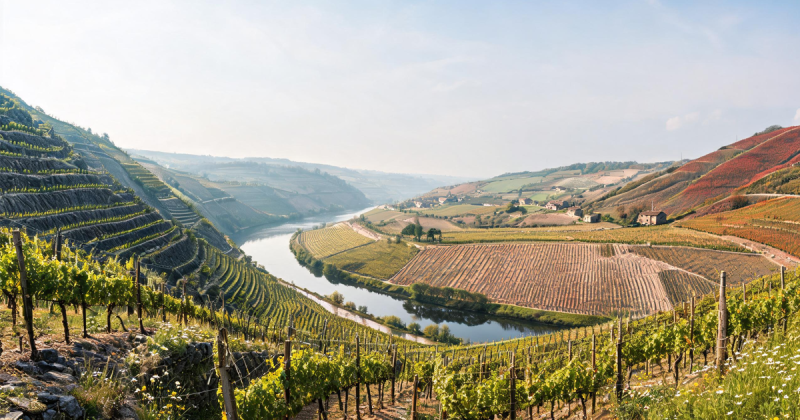
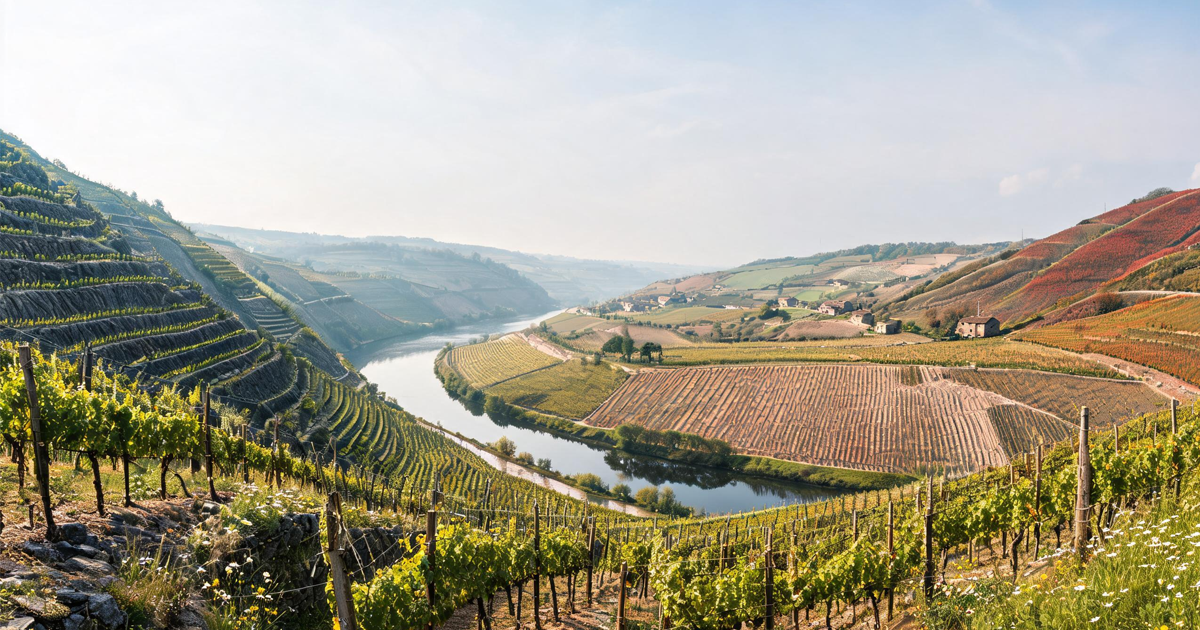
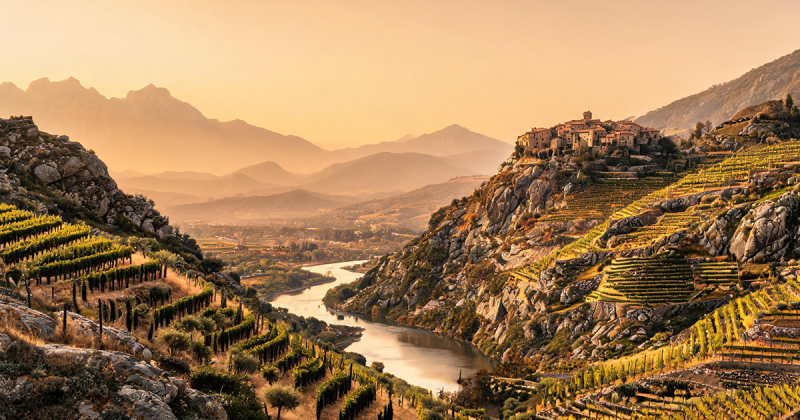
The Mosel is German wine’s poster child — and for good reason. This is a landscape that defies agricultural logic: vineyards clinging to slopes so steep (often 60% gradient or more) that all work must be done by hand, roots plunging into blue and grey Devonian slate that’s over 200 million years old. With roughly 3,400 hectares of vineyards on slopes of 30% gradient or more, the Mosel is the largest steep-slope wine-growing area in the world.
The Mosel River snakes from the Vosges mountains in France northeast to the Rhine at Koblenz. Wine production concentrates along the middle section (Mittelmosel) and its two tributaries, the Saar and Ruwer. Each sub-region has a distinct personality:
- Mittelmosel (Bernkastel to Cochem): The heartland. Blue slate dominates, producing wines of soaring aromatic intensity — white peach, green apple, jasmine, and that signature smoky-mineral “slate” note. The villages of Bernkastel, Wehlen, Graach, Ürzig, and Erden each produce Rieslings with subtly different expressions based on soil composition and aspect.
- Saar: Cooler, later-ripening, producing racy, razor-sharp Rieslings with pronounced acidity and extreme aging potential. The village of Wiltingen is the star here — its Scharzhofberg vineyard is one of Germany’s most legendary sites.
- Ruwer: The smallest tributary, producing delicate, floral, almost ethereal Rieslings. Look for wines from Kasel and Waldrach.
What makes Mosel Riesling distinctive? Low alcohol (often 7-8.5% in Kabinett styles), searing acidity, and a lightness of body that feels almost weightless on the palate. The best Mosel Rieslings have what I can only describe as an “electric” quality — they sparkle with energy, the acidity slicing through any residual sugar to create perfect balance. The slate soils impart a distinctive smoky-mineral character that’s unlike Riesling from anywhere else on earth.
Must-know vineyard names: Wehlener Sonnenuhr, Ürziger Würzgarten, Bernkasteler Doctor, Piesporter Goldtröpfchen, Graacher Himmelreich, Erden Treppchen, Wiltinger Scharzhofberg.
Fun fact: The Riesling vines of the Mosel are predominantly ungrafted — meaning they grow on their own roots rather than American rootstock. This is possible because phylloxera, the root-eating louse that devastated European vineyards in the late 19th century, struggles to survive in the Mosel’s slate soils. Many vines are 60-100+ years old, producing tiny yields of intensely concentrated fruit.
I’ve tasted Mosel Rieslings from the 1990s that still taste astonishingly youthful. There’s a Wehlener Sonnenuhr Kabinett from 1999 that I opened last year — the color was still pale gold, the aromas of petrol and apricot had just begun to emerge, and the acidity was as vibrant as a wine five years old. That’s the Mosel’s superpower: wines that age on a glacial timescale.
Recommendation: If you’re new to Mosel, start with a Kabinett from a top producer. Joh. Jos. Prüm Wehlener Sonnenuhr Kabinett is the reference point — floral, slatey, delicately sweet, and available for around €25-35. For dry styles, seek out Heymann-Löwenstein or Clemens Busch GGs.
4.2 Rheingau — The Aristocratic Heartland
If the Mosel is German wine’s rock star, the Rheingau is its aristocrat. This compact, prestigious region stretches along the Rhine River’s north bank between Wiesbaden and Rüdesheim, with the Taunus hills sheltering the vineyards from cold northerly winds. The Rheingau is Riesling country par excellence — 76% of its 3,207 hectares are planted to Riesling, the highest percentage of any German region.
The Rheingau’s claim to historical primacy rests on Schloss Johannisberg. The story is worth telling in full, because it changed wine history.
🕮 Mini-Story: The Courier Who Invented Spätlese
It’s autumn 1775 at Schloss Johannisberg, a Benedictine monastery-turned-palace overlooking the Rhine. The vineyards have been planted exclusively to Riesling since 1720 — the first estate in the world to take this radical step. Harvest permission must come from the Prince-Abbot of Fulda, who owns the estate, and the courier dispatched to deliver the written authorization — a rider known in local legend as the Traubenkurier (grape courier) — is delayed. For three weeks, the monks wait. The grapes on the vine begin to shrivel. Some are attacked by noble rot (Botrytis cinerea). The monks despair — the crop looks ruined. When the courier finally arrives and harvest begins, the monks press the withered, partially-botrytized grapes anyway. The resulting wine astonishes them: it’s richer, sweeter, and more complex than anything they’ve ever tasted. They’ve accidentally invented Spätlese — “late harvest.” From this discovery, the entire edifice of German Prädikat wine classification would eventually be built. And the Traubenkurier? He’s immortalized in Rheingau folklore — there’s even a bike route named after him today.
Beyond Johannisberg, the Rheingau’s most famous villages include:
- Rüdesheim: The western gateway. Steep south-facing slopes above the Rhine produce some of the region’s most powerful Rieslings. Rüdesheimer Berg Schlossberg is a legendary Grosse Lage.
- Johannisberg: Home to Schloss Johannisberg itself, plus numerous top producers.
- Hochheim: Set back from the Rhine on the Main River, with loess and marl soils producing richer, broader Rieslings — the “Hochheimer” style was so admired in 19th-century England that Queen Victoria was a fan.
- Kiedrich: A tiny village with a remarkable concentration of quality. Robert Weil is the superstar here — his Kiedricher Gräfenberg GGs are among Germany’s finest and most age-worthy dry Rieslings.
Rheingau vs. Mosel: The essential difference. Rheingau Rieslings are generally fuller-bodied, more structured, and more likely to be dry. Where Mosel wines float, Rheingau wines stride. The fruit profile tends toward ripe citrus, stone fruits, and a distinctive spiciness — think tangerine, ripe peach, and ginger. Alcohol levels are higher (12-13% for dry styles vs. Mosel’s 7-8.5%). The Rheingau’s warmer, sheltered position and deeper soils produce wines of greater extract and power.
Where to start: For a classic dry Rheingau, try Robert Weil Kiedricher Gräfenberg Riesling Trocken or GG. For a taste of history, Schloss Johannisberg offers a range of Rieslings at different Prädikat levels. For value, Leitz Rheingau Riesling Trocken (around €12-15) is an excellent entry point.
4.3 Pfalz — Germany’s Sunny South
If you only know one fact about the Pfalz, let it be this: it’s the largest Riesling-growing region in the world (5,954 hectares) and simultaneously Germany’s largest red wine region (7,535 hectares). This 23,793-hectare powerhouse stretches along the Haardt hills for roughly 80 kilometers, just north of the French border, and it’s Germany’s sunniest, warmest major wine region.
The Deutsche Weinstraße (German Wine Route) — the country’s oldest wine tourism route, established in 1935 — winds through the Pfalz, connecting storybook villages of half-timbered houses, chestnut-tree-lined avenues, and more wine festivals than you could attend in a lifetime. The atmosphere here is Mediterranean-leaning: fig trees, almond blossoms in spring, and a cuisine that draws heavily from just across the border — the Pfalz shares the same grape varieties as Alsace, just one Rhine crossing away. Curious how Riesling and Pinot Gris express themselves on the French side? Check our Alsace wine region guide for the full comparison.
The Pfalz’s signature villages are heavyweights:
- Forst: Arguably the Pfalz’s greatest village, with a string of legendary vineyard sites — Kirchenstück, Jesuitengarten, Ungeheuer, Pechstein. The Forster Kirchenstück is often called Germany’s answer to Montrachet.
- Deidesheim: Elegant, aristocratic wines. The Deidesheimer Grainhübel and Herrgottsacker are Grosse Lagen of the first rank.
- Wachenheim: Home to Wachenheimer Gerümpel and other top sites.
- Ruppertsberg: Increasingly recognized for top dry Rieslings.
Pfalz Riesling style. Warmer, riper, and more powerful than Mosel or Rheingau. The fruit profile leans tropical — mango, pineapple, ripe yellow peach — underpinned by Pfalz’s characteristic spice and minerality from the region’s complex sandstone, basalt, and limestone soils. Alcohol levels typically range from 12.5-14% for dry styles. These are gastronomic Rieslings — they want food.
But don’t sleep on Pfalz reds. The region is home to roughly half of Germany’s Merlot, Cabernet Sauvignon, Syrah, and Cabernet Franc plantings — the warm climate allows Bordeaux varieties to ripen reliably. Spätburgunder here tends to be riper, richer, and more new-world in style compared to the cooler-climate expressions from Ahr or Baden.
The bottle I’d grab: Müller-Catoir Haardter Bürgergarten Riesling for structured elegance; Bürklin-Wolf for biodynamic, Burgundian-style GGs; Reichsrat von Buhl for classic Pfalz Riesling. For reds, Friedrich Becker is the reference point for Spätburgunder.
4.4 Rheinhessen — The Giant Reinvented
No German wine region has undergone a more dramatic transformation in the last 30 years than Rheinhessen. Germany’s largest wine region by far (27,499 hectares — more than a quarter of the national total), Rheinhessen was for decades synonymous with Liebfraumilch, the cheap, sweet, mass-produced blend that tanked German wine’s reputation globally. The region’s gently rolling hills of loess and limestone, stretching south and west of the Rhine near Mainz, seemed destined for quantity over quality.
That was then. Today, Rheinhessen produces some of the most sought-after dry Rieslings in the world — including the legendary G-Max from Weingut Keller, which sells for prices that would make a Burgundy collector blush.
🕮 Mini-Story: How Keller Changed Everything
Klaus-Peter Keller’s great-grandfather Georg started selling bottled wine in 1921 — unusual for the time. But it was Klaus-Peter himself, alongside his wife Julia, who transformed the family’s 21-hectare estate in Flörsheim-Dalsheim into arguably Germany’s most famous winery. When they took over in the 1990s, Rheinhessen’s reputation was on the floor. “We never planned any of it; it was all naive,” Klaus-Peter once said about the creation of G-Max. The first vintage, 2001, was sold for €60 a bottle to friends and family. Named after their son Maximillian and great-grandfather Georg, G-Max comes from a single parcel of very old Riesling vines planted on stony limestone soils — the exact location is a closely guarded secret. Today, the wine is almost impossible to buy on the open market. It’s allocated through the “Kellerkiste” — a case containing five bottles of Keller’s Riesling GGs and one bottle of G-Max, priced at over 1,500directfromtheestate,andseveraltimesthatonthesecondarymarket.Ata2024verticaltastingofeveryvintageevermade,thebottles′combinedvaluewasestimatedat100,000. A Rheinhessen wine, worth $100,000. Try telling that to a wine lover from 1980 — they wouldn’t believe you.
The Keller story isn’t isolated. A constellation of top producers — Wittmann, Gunderloch, Wagner-Stempel, Dreissigacker — have similarly elevated Rheinhessen’s quality. The region’s secret weapon is its limestone soils, particularly in the Wonnegau sub-region and the Roter Hang (Red Slope) near Nierstein — a steep, iron-rich, red sandstone slope along the Rhine that produces Rieslings of extraordinary power, spice, and aging potential.
Key villages:
- Nierstein: The Roter Hang is here — Niersteiner Pettenthal, Hipping, and Ölberg are legendary Grosse Lagen.
- Oppenheim: Herrenberg and Sackträger are top sites.
- Westhofen: Home to Keller’s Morstein and Kirchspiel vineyards, plus Wittmann’s holdings.
- Flörsheim-Dalsheim: Keller’s home base.
Rheinhessen Riesling style. Diverse, but the top dry Rieslings from limestone sites show remarkable tension — ripe fruit (apricot, quince, yellow apple) wrapped around a core of saline minerality, with a texture that’s almost chewy. The red slate of the Roter Hang produces spicier, more powerful expressions.
Recommendation: Keller (if you can find it — look for “Von der Fels,” their entry-level Riesling, at around €25). Wittmann Westhofener Morstein GG for classic limestone power. Gunderloch Niersteiner Pettenthal for Roter Hang spice. For exceptional value, look for Wagner-Stempel Siefersheim Riesling.
Want to compare Riesling styles across all these regions? Our Riesling grape guide breaks down the grape profile in detail — from acidity structure to petrol notes (TDN) and food pairing principles.
5. The Rising Stars
These five regions — Baden, Nahe, Franken, Württemberg, and Ahr — are producing wines of exceptional quality that increasingly rival the Big Four. Some (like Baden and Franken) have deep historical roots; others (like the Ahr) are writing remarkable comeback stories. All deserve your attention.
5.1 Baden — Germany’s Warmest Corner
Baden is the outlier in German wine geography. Stretching 400 kilometers along the eastern bank of the Rhine from the Swiss border to Heidelberg, it’s Germany’s warmest region and the only one classified as Zone B in the EU wine-growing zone system (the same as Alsace and Champagne). With 15,679 hectares, it’s the third-largest region, and it’s unequivocally Burgundy country: 62% of its vines belong to the Burgundy family.
Baden is Germany’s Pinot Noir capital (5,029 hectares — the most in the country), its top region for Pinot Blanc (1,660 hectares), and a rising star for Chardonnay. The region encompasses nine distinct sub-regions (Bereiche), each with different soils and climates:
- Kaiserstuhl: A volcanic massif with deep loess and weathered basalt soils; produces Baden’s most powerful, structured Spätburgunders.
- Markgräflerland: Gutedel (Chasselas) country — 1,021 hectares of this light, refreshing variety; a regional specialty served in carafes at every local restaurant.
- Ortenau: Granite and weathered sandstone; elegant, aromatic Spätburgunders.
- Tuniberg: Limestone soils; increasingly recognized for fine Spätburgunder and Burgundy whites.
The Baden Spätburgunder revolution. Until about 20 years ago, Baden Pinot Noirs were often pale, thin, and rustic. Today, led by producers like Bernhard Huber (often called “Germany’s Henri Jayer”), Franz Keller, and Salwey, Baden produces Spätburgunders with depth, structure, and Burgundian finesse — at a fraction of Burgundy prices. Huber’s Spätburgunder Alte Reben and single-vineyard wines from the Malterdinger Bienenberg site are benchmarks. For a broader look at how Spätburgunder performs across Germany’s wine regions, explore our grape variety guide.
If you’re buying one bottle: For Spätburgunder — Bernhard Huber (the estate continues under his son Julian after Bernhard’s passing). For white Burgundy varieties — Dr. Heger Weissburgunder and Grauburgunder. For the classic Gutedel experience — Ziereisen in Markgräflerland.
5.2 Nahe — The Overlooked Gem
The Nahe is German wine’s greatest “if you know, you know” region. Sandwiched between the Mosel and Rheinhessen, its 4,250 hectares are tiny compared to its neighbors. But what the Nahe lacks in size, it makes up for in geological chaos — and this is its superpower.
No other German region packs such soil diversity into such a small area. In the span of a single day’s walk, you can cross volcanic porphyry, blue and grey slate, red sandstone, quartzite, loess, and weathered limestone. Each soil type imprints a different character on the wine. The Nahe River itself — a left-bank tributary of the Rhine — creates a complex mosaic of microclimates.
The undisputed king of the Nahe is Helmut Dönnhoff of Weingut Dönnhoff in Oberhausen. His wines — particularly the single-vineyard GGs from the Oberhäuser Brücke (grey slate), Niederhäuser Hermannshöhle (volcanic melaphyr and slate), and Norheimer Dellchen (quartzite) — are masterpieces of precision, each expressing the voice of a different soil type. His Oberhäuser Leistenberg Riesling Kabinett (around €18-22) is one of the greatest values in all of German wine.
Other top producers: Emrich-Schönleber, Schäfer-Fröhlich, Kruger-Rumpf, Gut Hermannsberg (the former Prussian State Domain).
Nahe Riesling style. Hard to generalize because of the soil diversity, but Nahe Rieslings typically sit between Mosel delicacy and Rheinhessen power — they’re aromatic (often with floral and herbal notes — lavender, thyme, mint), mineral-driven, and built on a fine-boned acid structure.
5.3 Franken — Silvaner Country
Franken is German wine’s proud contrarian. The region’s 6,173 hectares of vines grow along the winding Main River in northern Bavaria, far from the Rhine-centric mainstream of German wine. And while Riesling dominates most German regions, in Franken the king is Silvaner (1,563 hectares) — a variety that elsewhere is often dismissed as neutral and uninteresting, but here achieves heights of mineral expression that rival great white Burgundy.
Franken’s other unmistakable trademark is the Bocksbeutel — the squat, flat, flask-shaped bottle that’s been used here since at least 1726. By law, only wines from Franken (and a handful of villages in northern Baden) may use the Bocksbeutel. Spotting one on a shelf is like a geographic GPS pin: you’re in Franconia now.
The best Franken Silvaners come from the limestone-rich soils of the Maindreieck (Main Triangle) around Würzburg. The legendary sites — Escherndorfer Lump, Würzburger Stein, Randersackerer Pfülben — produce Silvaners of austere, earthy minerality in youth that blossom into richly textured wines with 5-10 years of age.
Climate matters. Franken is one of Germany’s cooler, more continental regions, with cold winters and warm but not hot summers. This produces wines with pronounced acidity and an earthy, herbal character that locals describe as erdig (earthy) — quite different from the fruit-driven styles further west.
Recommendation: Horst Sauer Escherndorfer Lump Silvaner GG for the reference point. Juliusspital and Bürgerspital (two historic charitable foundations in Würzburg) for classic, accessible Franken wines. Rudolf Fürst for outstanding Spätburgunder from the western edge of the region.
5.4 Württemberg — Germany’s Red Wine Heartland
Württemberg is Germany’s second-largest red wine region (7,327 hectares of red varieties — nearly two-thirds of its 11,392 total hectares), and it’s the spiritual homeland of varieties that exist almost nowhere else in the world at scale: Trollinger and Lemberger.
This sprawling region east of the Rhine, centered around Stuttgart and the Neckar River, has a wine culture quite unlike the rest of Germany. The dominant model here is the cooperative (Weingärtnergenossenschaft), and the archetypal Württemberg drinker prefers red wine — the lighter, quaffable Trollinger for everyday drinking, and the more serious Lemberger (known as Blaufränkisch in Austria) for contemplation.
Key grapes:
- Trollinger (1,855 ha): Light-bodied, pale ruby, high acid, bursting with strawberry and red cherry fruit. Served slightly chilled, it’s the perfect summer red — think of it as Germany’s answer to Beaujolais.
- Lemberger (1,757 ha): Darker, spicier, more structured. Black cherry, pepper, leather. Top examples from producers like Schnaitmann and Rainer Wöhrle show real aging potential. This is Blaufränkisch, and it’s seriously good.
- Spätburgunder (1,302 ha): Increasingly important as quality rises.
Württemberg Riesling (2,120 ha) is also significant — it accounts for more than half the region’s white wine production, producing fresh, aromatic, often dry styles.
Recommendation: Schnaitmann for modern, ambitious wines; Graf Neipperg for historic estate character; Weingärtner Cleebronn-Güglingen for well-made cooperative wines.
5.5 Ahr — The Northern Pinot Noir Paradise
The Ahr is tiny. Just 531 hectares — smaller than a single classified growth in Bordeaux. It represents barely 0.5% of Germany’s total vineyard area. But for Spätburgunder lovers, it’s sacred ground: the northernmost Pinot Noir region of significance in Europe, where cool-climate aromatic intensity meets slate-driven minerality.
The Ahr River, a tributary that joins the Rhine near Bonn, carves a narrow valley through the Eifel hills. The vineyards are planted on spectacularly steep, south-facing slate terraces that act like solar panels, capturing and radiating heat. With 79% of its vineyard area planted to red grapes — the highest proportion in Germany — the Ahr is essentially a single-grape, single-purpose region.
The Ahr Spätburgunder style is unique: aromatic and perfumed (red cherry, raspberry, violet, forest floor), with a silky texture, moderate alcohol (12-13%), and a distinctive smoky-mineral undertone from the slate and greywacke soils. It’s Pinot Noir with a rock-and-roll edge.
🕮 Mini-Story: The Flood That United a Valley
On the night of July 14, 2021, the Ahr Valley was hit by a catastrophic flash flood. More than 130 people lost their lives. Entire villages were devastated. For the winegrowers, the destruction was biblical: cellars submerged, barrels swept away, 5-10% of all wines destroyed. Peter Kriechel, president of the local growers’ association, saw 200,000 bottles in his cellar go under water. Paul Schumacher, another producer, spent the night on his roof as the water rose a meter above the first floor. But what happened next defined the region. Linda Kleber, a local restaurateur, began salvaging mud-caked bottles from her flooded cellar. She couldn’t bear to throw them away. Instead, she launched Flutwein (“flood wine”) — selling the silt-covered bottles as they were, with all proceeds going to help affected growers and businesses. The initiative raised over €2 million. Neighboring producers from the Mosel, Pfalz, and Rheingau sent workers, equipment, and moral support. Five years later, the Ahr Valley is still rebuilding, but the 2023 vineyard survey showed growth — 531 hectares, up from post-flood lows, though still short of the pre-disaster 564 hectares. The wines from the 2021, 2022, and 2023 vintages carry an emotional weight beyond their sensory qualities: they’re bottled resilience.
Start here: Meyer-Näkel for elegant, Burgundian Spätburgunder; Jean Stodden for structured, age-worthy wines; Nelles for value. Look for the 2021 vintage as a piece of history — the wines, miraculously, are excellent.
6. The Hidden Corners
Germany’s four smallest regions — Mittelrhein, Hessische Bergstraße, Saale-Unstrut, and Sachsen — together account for barely 2% of the country’s vineyard area. But for the adventurous drinker, they offer some of the most distinctive wines and beautiful landscapes in Europe.
6.1 Mittelrhein — The Romantic Rhine
With just 460 hectares, the Mittelrhein is now officially Germany’s smallest wine region. But what it lacks in scale, it makes up for in drama: the vineyards cling to the sheer slate cliffs of the UNESCO World Heritage Upper Middle Rhine Valley, a 65-kilometer stretch of the Rhine between Bingen and Bonn studded with more castles per kilometer than anywhere else in the world.
Riesling covers nearly two-thirds of the vineyards here. The wines are lean, mineral, and laser-focused — somewhere between Mosel delicacy and Rheingau structure, with a distinctive cool, herbal character from the wind-funneled gorge. The Mittelrhein is also emerging as a surprising source of excellent Spätburgunder on its warmer south-facing slopes.
Key villages: Bacharach, Boppard, Oberwesel. Toni Jost (Bacharach) and Matthias Müller (Spay) are the producers to seek out.
6.2 Hessische Bergstraße — The Spring Garden
At 461 hectares, the Hessische Bergstraße is Germany’s second-smallest region. Tucked along the western edge of the Odenwald hills north of Heidelberg, it’s a sun-trap microclimate — the vineyards face southwest, catching maximum warmth, and the hills block cold easterly winds. The result: almond trees blooming in February, asparagus and strawberries in spring, and Rieslings of remarkable aromatic perfume and elegance.
The region’s best Rieslings (164 hectares) are floral, delicate, and almost impossibly filigree — think white flowers, green apple, and a texture like silk. Simon-Bürkle in Zwingenberg is the standout producer.
6.3 Saale-Unstrut — Northern Outpost
At the 51st parallel, Saale-Unstrut is Germany’s northernmost quality wine region. It’s also a product of German reunification: the vineyard area has more than doubled since 1990, from 390 to 853 hectares (2023). The vines grow on terraced limestone and sandstone slopes along the Saale and Unstrut rivers in Saxony-Anhalt and Thuringia — an area with a winemaking tradition dating back to 998 AD.
The cool, continental climate produces whites with racy acidity and a distinctive herbal-floral character. Müller-Thurgau (122 hectares) and Weissburgunder (117 hectares) are the leading varieties, but Riesling is catching up. The wines from Saale-Unstrut are lean, fresh, and honest — ideal for lovers of crisp, mineral white wines.
Producers to know: Pawis, Lützkendorf, Kloster Pforta.
6.4 Sachsen — The Eastern Frontier
Sachsen (Saxony) is Germany’s easternmost wine region — 522 hectares along the Elbe River around Dresden and Meissen. It’s another region reborn after reunification (up from roughly 300 hectares in 1990). Sachsen has several unique claims: it grows the rare Goldriesling variety (found almost nowhere else), it has a viticultural tradition dating to the 12th century, and its steep Elbe terraces are among the most northerly vineyards in Europe.
Climate change has been transformative here. Riesling (74 hectares), which ripens relatively late, is now Sachsen’s most planted variety — something that would have been unthinkable a generation ago. The wines are typically dry, crisp, and aromatic, with a green-apple freshness.
Schloss Proschwitz — the oldest family-owned winery in Saxony (dating to the 12th century, restored after expropriation under the GDR) — is the region’s flagship producer.
7. German Wine Grapes: Beyond Riesling
It’s easy to imagine that Riesling is the whole story in Germany. It’s not. Germany cultivates a remarkable range of grape varieties, and understanding them will dramatically expand your appreciation of the country’s wine landscape.
White Grapes
| Variety | Area (2023) | Character | Where It Shines |
|---|---|---|---|
| Riesling | ~24,233 ha (2024) | Floral, stone fruit, citrus, mineral; high acid, age-worthy | Every region, most famously Mosel, Rheingau, Pfalz |
| Müller-Thurgau (Rivaner) | ~11,000 ha (est.) | Light, floral, low acid, easy-drinking; often for simple quaffing wines | Rheinhessen, Baden, Franken |
| Silvaner | ~4,300 ha (est.) | Earthy, herbal, subtle; needs limestone to shine; wonderful with food | Franken (spiritual home), Rheinhessen |
| Grauburgunder (Pinot Gris) | ~6,500 ha (est.) | Ripe pear, honey, spice; medium to full body; versatile | Baden, Rheinhessen, Pfalz |
| Weißburgunder (Pinot Blanc) | ~5,500 ha (est.) | Delicate, almond, white flowers; fresh and food-friendly | Baden, Pfalz, Saale-Unstrut |
| Chardonnay | ~2,500 ha (est.) | Increasingly Burgundian in style; vibrant and mineral | Rheinhessen, Baden, Pfalz |
| Sauvignon Blanc | ~1,600 ha (est.) | Herbaceous, gooseberry, elderflower; distinct from Sancerre/NZ | Pfalz (40% of Germany’s plantings) |
Red Grapes
| Variety | Area (2023) | Character | Where It Shines |
|---|---|---|---|
| Spätburgunder (Pinot Noir) | ~11,519 ha | Perfumed, silky, red berry; German expression is aromatic and elegant | Baden, Pfalz, Ahr, Rheingau |
| Dornfelder | ~7,000 ha (est.) | Deep color, soft tannins, black cherry; Germany’s “crossbred workhorse” | Pfalz, Rheinhessen |
| Portugieser | ~3,000 ha (est.) | Light, soft, red fruit; everyday drinking red | Pfalz, Rheinhessen |
| Trollinger | 1,855 ha | Pale, strawberry, crisp; serve slightly chilled | Württemberg (nearly exclusive) |
| Lemberger | 1,757 ha | Black cherry, pepper, structure; Germany’s Blaufränkisch | Württemberg |
Sekt: Germany’s Sparkling Secret
This is the chapter that almost every competitor article skips entirely — and it’s a serious oversight.
Germany is the world’s largest consumer of sparkling wine per capita, and it’s also one of the world’s largest producers of sparkling wine. In 2024, German Sekt production was massive — the country produces over 350 million bottles annually, much of it consumed domestically.
Sekt comes in several quality tiers:
- Sekt (basic): Usually tank-method (Charmat), often made from base wines imported from other European countries. Affordable, for everyday celebration.
- Deutscher Sekt: Made from 100% German-grown grapes. A meaningful step up — the fruit must come from one of the 13 Anbaugebiete.
- Winzersekt: The premium category. Estate-grown, single-producer, traditional method (bottle-fermented, like Champagne), with extended lees aging. This is where German sparkling wine gets seriously good.
- Sekt b.A. (bestimmter Anbaugebiete): Sekt from a specified wine region, with stricter origin rules.
What makes Winzersekt special? The best examples — from producers like Raumland (Rheinhessen, Germany’s only all-Sekt estate), Griesel (Hessische Bergstraße), Reichsrat von Buhl (Pfalz), and Schloss Vaux (Rheingau) — are world-class sparkling wines made predominantly from Riesling, Spätburgunder, and Chardonnay. Riesling Sekt has a unique personality: floral, citrus-driven, with razor-sharp acidity and a mineral backbone that Champagne can’t replicate. And the prices? A top Winzersekt costs €25-40 — roughly half to a third of equivalent-quality Champagne.
The style spectrum:
- Riesling Sekt: Bright, zesty, with green apple, citrus, and distinctive minerality
- Spätburgunder Sekt (Blanc de Noirs): Rounder, red-fruited, with subtle power
- Chardonnay/Weißburgunder Sekt: Creamier, more textural, sometimes with subtle toastiness
- Rosé Sekt: Usually Spätburgunder-based, with delicate strawberry and raspberry notes
If you enjoy the Pinot Gris/ Pinot Grigio profile, our Grauburgunder/Pinot Gris profile explores how this variety expresses itself differently in Germany versus Italy versus Alsace.
8. German Wine & Climate Change
Let’s address the elephant in the vineyard. Climate change — a global crisis in almost every context — has had a paradoxical effect on German wine: for now, it has been largely beneficial for quality. But the long-term outlook is far more complicated.
The Upside: A Quality Revolution
The numbers don’t lie. Over the last 30 years, average growing-season temperatures in Germany have risen by approximately 1.4°C. For a cool-climate wine country where ripeness was historically the limiting factor, this has been transformative:
- Red wine revolution: In the 1980s, German Spätburgunder was often thin, green, and underripe. Today, the best German Pinot Noirs from Baden, Pfalz, and Ahr achieve phenolic ripeness with regularity, producing wines of depth and complexity that are winning international acclaim. Bordeaux varieties (Merlot, Cabernet Sauvignon) are now grown commercially in the Pfalz.
- Dry Riesling reliability: Generations ago, fully ripening Riesling for dry wines was a gamble in all but the warmest sites. Today, dry Riesling (trocken) is the default style for most VDP producers, with consistent ripeness enabling balanced wines at 12-13.5% alcohol.
- Northern expansion: Regions like Saale-Unstrut and Sachsen, once too cold for Riesling, now produce it as their leading variety. The viticultural frontier is shifting northward.
- New varieties: Warmer conditions are enabling successful cultivation of varieties like Syrah, Cabernet Franc, and even Viognier in Germany’s warmest sites.
The Downside: Ice Wine’s Slow Disappearance
The most visible casualty of warming winters is Eiswein. To make ice wine, grapes must be harvested at temperatures below -7°C (19°F) — ideally in December or January — and pressed while still frozen. This concentrates the sugars and acids into a tiny amount of intensely sweet, piercingly acidic nectar.
In the 1980s and 90s, Eiswein harvests were relatively common — sometimes a dozen or more per winter across Germany. In recent years, they’ve become vanishingly rare:
- 2019: 6 successful Eiswein harvests across Germany
- 2020: 2 harvests
- 2021: 2 harvests
- 2022: 3 harvests
- 2023: A few harvests, largely in Franken
- 2024: Only one harvest recorded in Franken (December 28, 2024 — the only confirmed Eiswein harvest that year, confirmed by DWI)
Some regions — notably Sachsen and Saale-Unstrut — have stopped reserving vineyards for Eiswein entirely due to the low probability of suitable conditions. The 2024 harvest was a rarity: in Sachsen and Saale-Unstrut, no wineries kept vineyards aside for ice wine at all after late spring frosts decimated yields.
Eiswein won’t disappear overnight, but the trend is unmistakable. Within a generation, German Eiswein may become a once-per-decade event rather than a reliable category.
The Complex Middle
Climate change also brings increased weather volatility: late spring frosts (like the devastating April 2024 frosts that hit Sachsen and Saale-Unstrut particularly hard), summer hailstorms, and occasional heavy rainfall events. The 2021 Ahr Valley flood — though primarily a rainfall/flash-flood event rather than a direct climate effect on viticulture — illustrated how extreme weather can threaten wine regions in new and catastrophic ways.
The long-term question for German wine is whether the benefits of warmer temperatures will continue to outweigh the costs of increased weather unpredictability. For now, the quality trajectory remains upward — but every winemaker I’ve spoken to acknowledges that this is a borrowed advantage from a process that, unchecked, will eventually undermine it.
9. Where to Start: A German Wine Buying Guide
Enough theory. You came here for a bottle, not a lecture. Here’s a practical roadmap for buying German wine, organized by budget and taste preference.
Price Guide: What to Expect at Each Level
| Price Tier | Typical Price Range | What You Get | Look For |
|---|---|---|---|
| Entry-Level | <€10 | Fresh, simple, honest drinking wines; mostly Qualitätswein or basic estate Riesling | Producer reputation matters enormously — a €9 Riesling from a great estate often outperforms a €15 one from a mediocre source |
| Quality | €10-25 | Village-level wines (Ortswein), entry-level single-vineyard Kabinett/Spätlese; this is the sweet spot for value | VDP Ortswein or “village” wines from top producers |
| Premium | €25-50 | Erste Lage / GG wines from respected producers; age-worthy, terroir-expressive | Look for VDP eagle; expect these to age 5-15 years |
| Top Tier | >€50 | Flagship GGs, cult wines (Keller, Egon Müller, etc.), auction bottlings; for collectors and special occasions | Buy direct from producer allocations; secondary market prices can be extreme |
Once you’ve picked up a bottle, use our AI Wine Tasting Card tool to record your impressions — it helps you build a personal tasting journal and spot patterns in what you enjoy.
“If You Like X, Try Y” Guide
| If You Like… | Try This German Wine | Why |
|---|---|---|
| White Burgundy (Chardonnay) | Rheingau or Pfalz Riesling GG, or Baden Weißburgunder GG | Structured, mineral, age-worthy dry whites with similar weight |
| Sancerre | Mosel Kabinett trocken or Nahe Riesling trocken | Racy acidity, mineral drive, citrus energy |
| Red Burgundy | Baden or Ahr Spätburgunder GG | Silky, aromatic Pinot Noir at a fraction of Burgundy pricing |
| Champagne | Winzersekt (Riesling or Chardonnay-based) | Traditional method, extended lees aging, world-class quality |
| Alsace Riesling | Pfalz or Rheinhessen Riesling trocken | Ripe, powerful, dry; just across the Rhine but with distinctive personality |
| Beaujolais | Württemberg Trollinger | Light, chillable red, bursting with strawberry and cherry |
| Austrian Grüner Veltliner | Franken Silvaner | Earthy, herbal, mineral-driven, food-friendly white |
Vintage Guide (Abridged)
German vintage variation matters — this isn’t a “every year is the same” wine country.
- 2023: Generally excellent across most regions; warm growing season produced ripe, accessible wines. Good for reds and dry whites.
- 2022: Hot, dry summer produced powerful, ripe wines. Some Rieslings lack the usual tension but reds are outstanding.
- 2021: Cool, challenging year — but top producers made wines of crystalline purity and remarkable acidity. Excellent for classic Kabinett styles from Mosel. The Ahr 2021s, miraculously, are strong despite the flood.
- 2020: Warm but balanced; approachable wines across the board.
- 2019: One of the great modern vintages — structured, age-worthy dry Rieslings and superb Spätburgunder. Buy with confidence.
- 2018: Hot, drought year; wines can be broad and lower in acid. Drink sooner rather than later.
- 2017: Late frost devastated yields; the wines that were made are generally excellent and concentrated.
10. German Wine Tourism: Planning Your Trip
If reading about these regions has sparked a desire to visit, good — you should. Germany’s wine regions are among the most beautiful, accessible, and welcoming wine destinations in the world. Here’s how to plan your trip.
Best Time to Visit
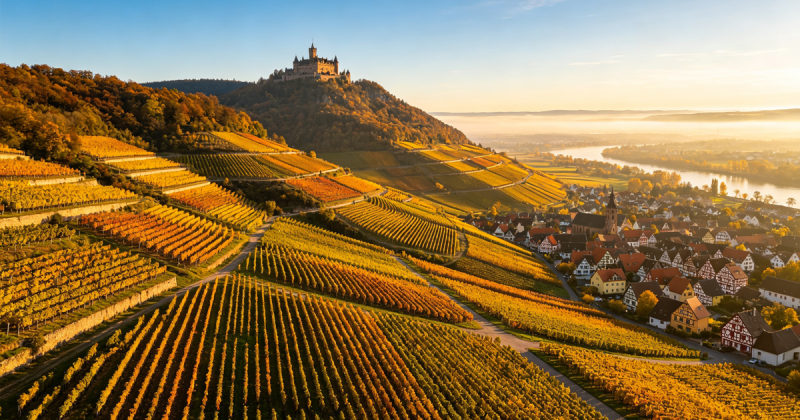
May to October is the prime season. Spring (May-June) brings blossoming orchards, asparagus season (Spargelzeit — a culinary event), and fewer crowds. Summer (July-August) is warm, busy, and festival-heavy. Autumn (September-October) is magical — the harvest is underway, the vineyards turn gold, and every village holds its wine festival.
The Three Great Wine Routes
- Deutsche Weinstraße (German Wine Route) — Pfalz
- Germany’s oldest wine route (established 1935), running 85 km through the Pfalz from Bockenheim to Schweigen-Rechtenbach
- Passes through legendary villages: Forst, Deidesheim, Wachenheim
- March to October is prime; the “Weinfest” calendar peaks in September
- Combine with a side trip just across the Rhine — the Alsace wine route starts about an hour south
- Mosel Weinstrasse — Mosel Valley
- Winding roads along the serpentine Mosel River, from the Luxembourg border to Koblenz
- Highlights: Bernkastel-Kues, Traben-Trarbach (Art Nouveau architecture), Cochem (Reichsburg castle)
- Every village has a Weinstube (wine tavern) — look for Strausswirtschaft signs (temporary taverns opened by growers during the season)
- One of the most beautiful drives in Europe
- Rheingau Riesling Route — Rheingau
- Compact and walkable — the entire region is only about 50 km long
- Key stops: Schloss Johannisberg, Kloster Eberbach (the monastery where The Name of the Rose was filmed), Rüdesheim
- Combine with a Rhine River cruise — the landscape from the water is unforgettable
Wine Festival Calendar (Selected Highlights)
| Festival | When | Where | What to Expect |
|---|---|---|---|
| Deidesheimer Weinkerwe | Mid-August | Deidesheim, Pfalz | One of Germany’s most famous wine festivals; traditional Pfalz food and top estate wines |
| Dürkheimer Wurstmarkt | September | Bad Dürkheim, Pfalz | The world’s largest wine festival (despite the name meaning “sausage market”) — 600,000+ visitors |
| Rheingau Musik Festival | June-September | Rheingau | Classical music in wineries, castles, and monasteries across the region |
| Bernkasteler Weinfest | Early September | Bernkastel-Kues, Mosel | Mosel wines, medieval square, fireworks over the river |
| Stuttgarter Weindorf | Late August-September | Stuttgart, Württemberg | Regional wine and Swabian cuisine in the city center |
11. Frequently Asked Questions
How many wine regions does Germany have?
Germany has 13 official wine-growing regions (Anbaugebiete): Ahr, Baden, Franken, Hessische Bergstraße, Mittelrhein, Mosel, Nahe, Pfalz, Rheingau, Rheinhessen, Saale-Unstrut, Sachsen, and Württemberg. Together they cover approximately 103,000 hectares (2023 data).
What is the best German wine region?
“Best” depends entirely on what you’re looking for. For electric, mineral-driven Riesling, the Mosel is unmatched. For structured, aristocratic dry Riesling, the Rheingau. For full-bodied dry Riesling and red wines, the Pfalz. For world-class Spätburgunder, Baden or the Ahr. For the most dramatic quality transformation and cult-wine excitement, Rheinhessen. The beauty of German wine is that each region offers something genuinely different — there is no single “best.”
What’s the difference between Mosel and Rheingau Riesling?
Mosel Rieslings are typically lighter-bodied, lower in alcohol (7-10%), and higher in perceived acidity, with a distinctive smoky-mineral character from blue slate soils. They’re often made with some residual sugar to balance the searing acidity. Rheingau Rieslings are generally fuller-bodied, more structured, higher in alcohol (12-13.5% for dry styles), and more likely to be vinified dry. The fruit profile leans more toward ripe citrus and stone fruits with a spicy, ginger-like note.
Is German wine only white?
Absolutely not. Germany is the world’s third-largest producer of Pinot Noir (Spätburgunder) with approximately 11,500 hectares planted. Red varieties account for about 35% of Germany’s total vineyard area. The Pfalz and Württemberg are Germany’s largest red wine regions, while Baden and Ahr specialize in world-class Spätburgunder. Germany also produces excellent Dornfelder, Lemberger, and increasingly, international varieties like Merlot and Cabernet Sauvignon.
What does “Trocken” mean on a German wine label?
Trocken means “dry.” By German wine law, a trocken wine may contain no more than 4 grams of residual sugar per liter (or up to 9g/L if balanced by sufficient acidity — defined as acidity in g/L being no more than 2g/L below the sugar level). In practice, most trocken Rieslings taste completely dry, with the residual sugar imperceptible behind the high acidity.
What is the difference between Kabinett and Spätlese?
Both are Prädikat levels that indicate grape ripeness at harvest — not sweetness in the finished wine. Kabinett grapes are harvested at normal ripeness (67-82°Oe) and produce lighter, more delicate wines. Spätlese (“late harvest”) grapes (76-90°Oe) are riper, producing more concentrated wines. Either can be made dry, off-dry, or sweet depending on the winemaker’s decision. A Kabinett trocken and a Spätlese trocken will both taste dry, but the Spätlese will have more body, concentration, and alcohol.
What is VDP and why does it matter?
The VDP (Verband Deutscher Prädikatsweingüter) is a private association of approximately 200 elite German wine estates, founded in 1910. VDP members adhere to a four-tier vineyard classification system (Gutswein → Ortswein → Erste Lage → Grosse Lage) modeled on Burgundy, with strict quality standards including yield limits, hand-harvesting, and traditional winemaking methods. The VDP eagle on a bottle’s capsule is a reliable indicator of quality. Wines labeled VDP.Grosses Gewächs (GG) are dry wines from Germany’s top vineyard sites.
Which region makes the best German Pinot Noir?
Baden is the quantitative and (arguably) qualitative leader, with 5,029 hectares of Spätburgunder and producers like Bernhard Huber achieving world-class status. The Ahr (342 hectares) produces a distinctly aromatic, elegant, cool-climate style that’s unique in the world. The Pfalz produces riper, fuller-bodied Spätburgunder. All three are worth exploring.
Why does Riesling sometimes smell like petrol/gasoline?
That distinctive “petrol” or kerosene note in aged Riesling comes from a compound called TDN (1,1,6-trimethyl-1,2-dihydronaphthalene), which develops as Riesling ages. It’s considered a hallmark of mature Riesling and is generally appreciated by Riesling lovers — though at very high levels it can be a flaw. TDN development is influenced by vineyard site (sun exposure, water stress), vintage conditions, and aging. Not all Rieslings develop it strongly, and some drinkers prefer their Riesling young and petrol-free.
What is Sekt?
Sekt is German sparkling wine. Basic Sekt is often tank-fermented and can be made from imported base wines. Deutscher Sekt must be made from 100% German grapes. Winzersekt is the premium category: estate-grown, traditionally bottle-fermented, and lees-aged — Germany’s answer to grower Champagne. Germany is the world’s largest per-capita consumer of sparkling wine.
Are German wines sweet or dry?
This is the million-euro question with no single answer. Germany produces the full spectrum. In the 1970s-80s, most exported German wines were sweet. Today, the majority of German wine production — particularly from top producers — is dry (trocken). But off-dry and sweet styles (especially Kabinett and Spätlese with residual sugar from the Mosel) remain important and can be world-class. The key is learning to read the label: trocken = dry, halbtrocken = off-dry, feinherb = unofficially off-dry with balanced acidity, and no sweetness designation usually means there’s noticeable residual sugar.
What should I look for when buying German wine?
Three things, in order of importance: 1) The producer. Producer reputation is the single strongest predictor of quality in German wine. Look for the VDP eagle or research top producers in each region. 2) The vineyard. Wines from named single vineyards (Einzellagen), especially designated Grosse Lage or Erste Lage, are generally of higher quality than generic regional blends. 3) The vintage. Germany has significant vintage variation — refer to the vintage guide in Section 9. For absolute beginners, a VDP Ortswein (village-level) Riesling trocken from a top producer in a good vintage is almost always a safe and rewarding choice.
Have a question we didn’t cover? Join the conversation in our wine community forums — share your tasting notes, ask for recommendations, and connect with other German wine enthusiasts.
12. Conclusion & Further Reading
We’ve covered a lot of ground — 13 regions, two classification systems, dozens of grape varieties, a millennium of history, and a climate in flux. If you take away just three things from this guide, let them be these:
- German wine is far more diverse than its reputation suggests. From the electric, low-alcohol Kabinetts of the Mosel to the structured dry GGs of the Rheingau, from the sun-drenched Spätburgunders of Baden to the earthy Silvaners of Franken — there is a German wine for every palate and every occasion.
- The quality-to-price ratio is extraordinary. At €15-30, German single-vineyard Riesling competes with white wines at two to three times the price. At €30-50, German Spätburgunder GG rivals village-level Red Burgundy that costs significantly more. German Winzersekt at €20-35 matches Champagne quality at roughly half the price.
- The producer matters more than the region. A Kabinett from Joh. Jos. Prüm (Mosel) or a village Riesling from Keller (Rheinhessen) will almost invariably outperform a GG from an unknown, quality-indifferent estate. Learn the producer names, follow the VDP eagle, and trust your palate.
The thirteen german wine regions are not just a collection of geographical designations. They represent distinct cultures, cuisines, and winemaking philosophies. The best way to understand them is to taste through them — region by region, producer by producer, vintage by vintage. Start with a Mosel Kabinett and a Rheingau Trocken side by side. Then add a Pfalz Riesling and a Franken Silvaner. The contrasts will teach you more than any guide ever could.
Where to Go Next
This guide is part of a growing library of wine region explorations on yearts.com. If you’re ready to go deeper:
- Riesling Grape Guide — Everything you need to know about the world’s greatest white grape: TDN (the petrol note), food pairing principles, top producers, and vintage ratings
- Browse All Wine Region Guides — Explore our complete library of European wine region guides, from Bordeaux to Burgundy and beyond
- Alsace Wine Region — Our guide to the French region just across the Rhine, where the same grape varieties express themselves in a completely different accent: explore Alsace
- Grauburgunder / Pinot Gris Profile — How German Grauburgunder differs from Italian Pinot Grigio and Alsatian Pinot Gris
- Want to go even deeper? The German Wine Scholar® certification from Wine Scholar Guild is the gold standard for professional-level German wine education.
The best time to start exploring German wine was 20 years ago. The second best time is now. Prost!
Ready to start your German wine journey? Browse our complete collection of regional guides, grape profiles, and tasting tools — all designed to help you drink better, not just drink more.

No comments yet