



No wine region on earth contains a bigger gap between its cheapest and most expensive bottles than Veneto. On one end of the spectrum, you have Prosecco—roughly 600 million bottles a year, poured at every brunch, wedding, and airport lounge from Miami to Mumbai. It is, by volume, the most successful sparkling wine in human history. On the other end sits Amarone della Valpolicella—a wine made by hand-drying grapes on straw mats for three to four months, pressing them in midwinter, and waiting years before release. Production is measured in the thousands of bottles, not millions. Prices start around $50 and head north of $500 for the best names. The two wines share a region, a grape family, and nothing else.
Between those poles, Veneto contains multitudes: Soave, a white wine clawing its way back from decades of overproduction to become genuinely compelling again; Valpolicella Ripasso, a category invented in the late 20th century that’s now one of Italy’s best-value reds; Bardolino, a light red from the shores of Lake Garda that the Italians drink like water; Lugana, a white that has quietly become one of northern Italy’s most reliable bottles.
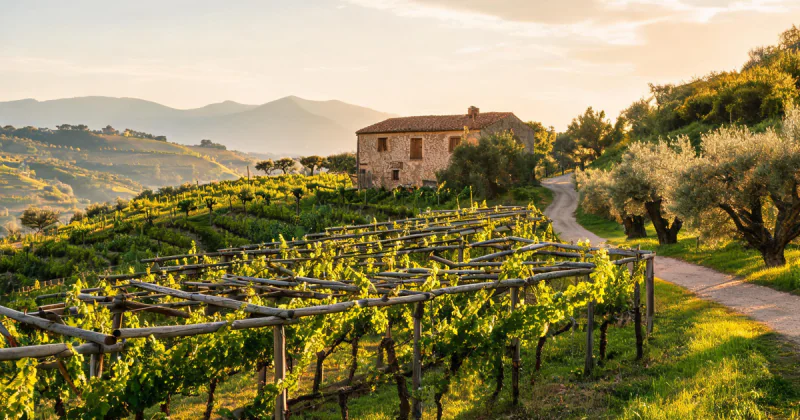
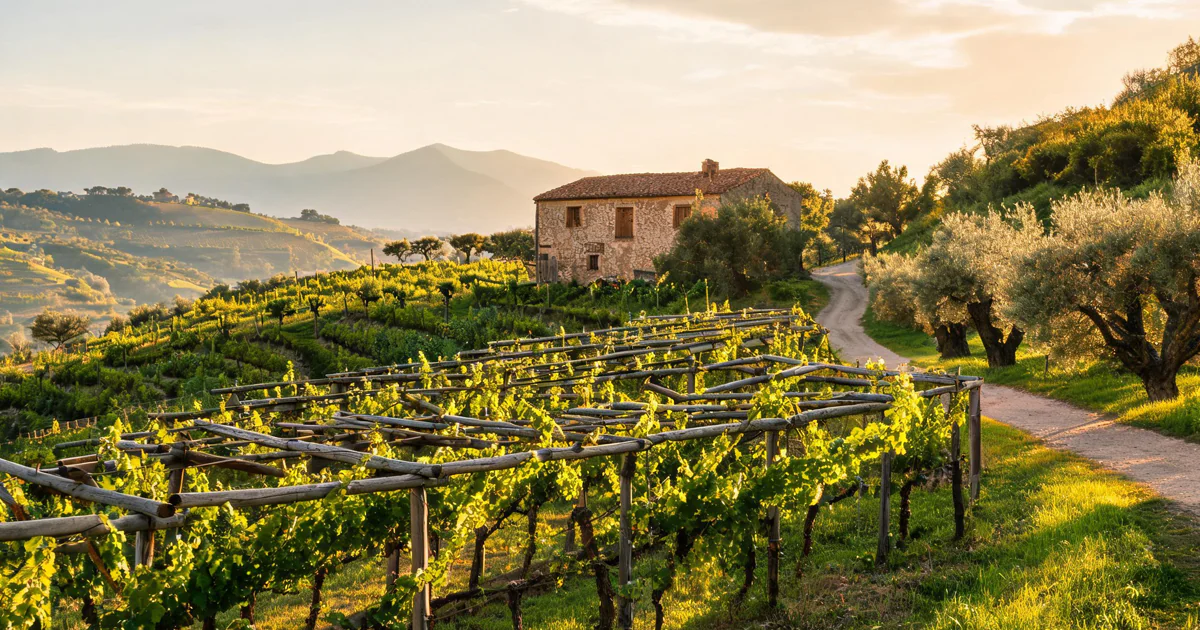
The region owes its diversity to geography. The Dolomites form a northern wall that protects the vineyards from cold Alpine air. Lake Garda—Italy’s largest lake—moderates the western edge, warming winters and cooling summers. The Po plain flattens everything out to the south, while the Adriatic pushes maritime influence up from the east. Four entirely different climate zones, one administrative region. The result: a wine map that reads less like a coherent region and more like four separate ones sharing a border.
And the scale is staggering. Veneto produces more DOC/DOCG wine than any other Italian region—over 8 million hectoliters annually across 14 DOCGs and 29 DOCs. If Veneto were a country, it would rank among the top ten wine-producing nations on earth. The challenge for anyone trying to navigate it isn’t finding a bottle. It’s finding the right one.
Key Takeaways
- Veneto is Italy’s most productive wine region—14 DOCGs and 29 DOCs spanning Prosecco, Soave, Valpolicella, Amarone, Bardolino, and Lugana. More DOC wine than any other Italian region.
- Prosecco has real quality tiers. The $10 supermarket bottle and the $25 Cartizze single-vineyard cuvée are not the same wine. Conegliano Valdobbiadene DOCG is the quality core. Everything labeled simply “Prosecco DOC” is a volume play.
- Amarone is made from raisins. Literally. Grapes are dried for 100–120 days, losing 30–40% of their weight, before fermentation. The process, appassimento, is Veneto’s signature contribution to wine and produces one of the world’s most distinctive reds.
- Soave is in the middle of a renaissance. After decades of bad reputation from flatland overproduction, the volcanic hillside Classico zone is producing white wines with genuine complexity at $15–$25.
- Ripasso is the value move in Veneto reds. Valpolicella re-fermented on Amarone pomace—half the price, much of the personality.
- Producers matter more here than almost anywhere else in Italy. The gap between a cooperative Prosecco and a single-vineyard bottling from a top grower is a canyon. Buy the name, not the appellation.
The Landscape: Four Climates in One Region
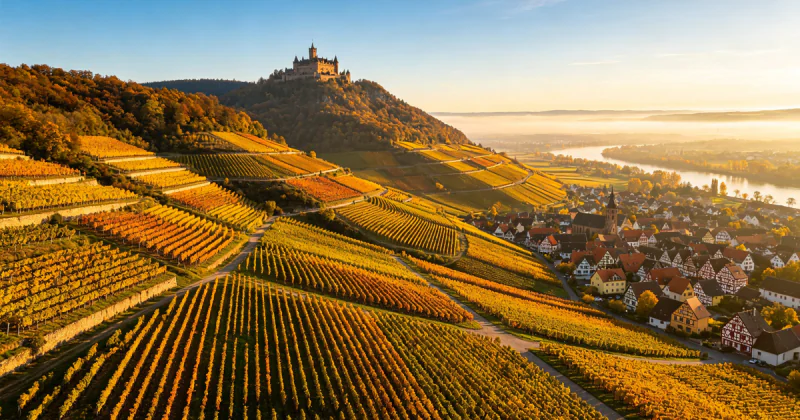
Veneto stretches from the Austrian border to the Po River delta, a landmass shaped by three geological forces: the Alps pushing down from the north, the Po filling the plains with alluvial sediment, and the retreat of ancient glaciers carving out Lake Garda. The wine zones cluster into distinct pockets rather than a continuous band, each with its own climate logic.
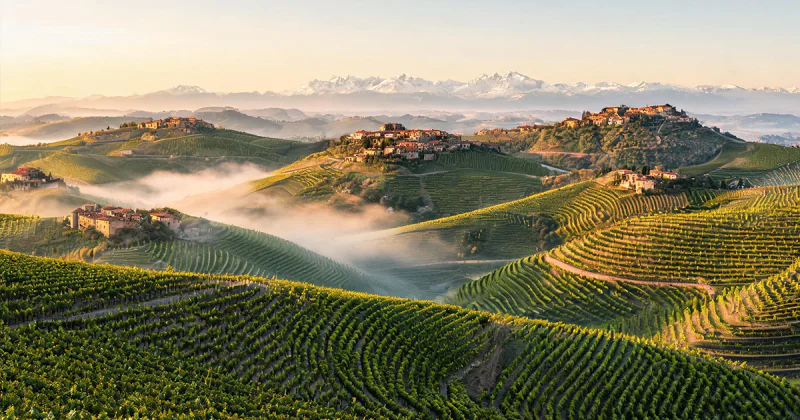
The Prosecco Hills (northeast): The area between Conegliano and Valdobbiadene, about 50 kilometers northwest of Venice. Steep, terraced slopes at 100–400 meters elevation, facing south and southeast. The soil is marine in origin—ancient seabed uplifted, now a mix of marl, sandstone, and conglomerate. This is where the grapes stay cool enough at night to retain the acidity that makes Prosecco more than just a bubble delivery system.
The Soave Hills (east of Verona): Volcanic basalt and tuff overlaid with limestone. The Classico zone—the historic core on the hillsides—produces wines with a mineral spine and genuine aging potential. The expanded DOC, stretching onto the alluvial plain, produces what gave Soave its bad name in the 1970s and 80s: thin, neutral white wine grown for volume. The distinction between Classico hillside and DOC flatland is everything.
Valpolicella (northwest of Verona): A series of parallel valleys running north-south, carved by the Adige’s tributaries. The Classico zone occupies the westernmost valleys—Fumane, Marano, Negrar, Sant’Ambrogio, San Pietro in Cariano—on limestone and volcanic soils. The hills trap warm air during the day and cool at night, creating the diurnal temperature swing that builds aromatic complexity in Corvina, the region’s signature grape.
Lake Garda (western edge): Bardolino and Lugana sit along the lake’s southeastern shore. The lake effect is everything: Garda holds summer heat into November, extending the growing season and moderating temperature extremes. Bardolino (red, from the same grapes as Valpolicella) is lighter, fresher, and more lifted here. Lugana (white, from Turbiana) draws its richness from the clay-limestone soils near the water.
Prosecco: The Bubble That Swallowed the World
Some numbers: global Prosecco sales have doubled in the last ten years. The wine now outsells Champagne roughly three to one by volume. In 2023, Prosecco became the first Italian wine to break 600 million bottles in a single year. The success is so complete that Champagne’s trade body, the CIVC, has officially stopped referring to Prosecco as a competitor—it’s in its own category now.
That success is built on a simple proposition: a cheerful, fruity, affordable sparkling wine that nobody has to think about. And that’s exactly what most Prosecco is. But there’s a second Prosecco—one that comes from a specific hillside, made by a family that has farmed those slopes for four generations, with a complexity and mineral tension that the $9.99 club store bottle deliberately avoids.
The difference comes down to geography and a 2009 legal reform.
The DOCG / DOC Split
Until 2009, Prosecco was a grape variety. The reform did two things: it renamed the grape Glera (freeing the word “Prosecco” to mean a place, not a plant) and it created a quality pyramid with two DOCGs at the top and a vast DOC at the base.
Conegliano Valdobbiadene Prosecco Superiore DOCG is the heart of the matter. Fifteen communes clustered on steep hills between the towns of Conegliano and Valdobbiadene. Yields are lower, the terrain demands hand-harvesting, and the resulting wine has a tension and aromatic focus the DOC wines lack. This is where Prosecco becomes interesting rather than merely pleasant.
Within this DOCG, two sub-categories matter:
- Cartizze: A 107-hectare hillside in Valdobbiadene, south-facing, with a microclimate so consistent that it was recognized as a cru centuries before the DOCG existed. Cartizze wines are almost always Dry (the sweetest Prosecco designation, confusingly—about 17–32 g/L residual sugar), with a creamy, perfumed character and a price tag starting around $30–$40. Production is finite. Demand is not.
- Rive: Single-village or single-slope wines from hand-harvested vineyards with lower yields than standard DOCG. Each Rive must be vintage-dated and come entirely from one commune. Think of Rive as the cru level of Prosecco—the producer’s answer to the question “what does this specific hillside taste like?”
Asolo Prosecco Superiore DOCG is the other DOCG—smaller, less famous, producing Prosecco with a slightly leaner, more mineral profile from hills northwest of Treviso. Worth seeking out for the value: Asolo DOCG costs about the same as bulk Prosecco DOC but delivers considerably more character.
Prosecco DOC covers everything else: nine provinces across Veneto and Friuli-Venezia Giulia, mostly flatland vineyards where machine harvesting is standard and yields can be three times those of the DOCG. This is the Prosecco that conquered the world. Nothing wrong with it—well-made Prosecco DOC is clean, appley, inoffensive, and an honest value at $10–$14. But it’s a different beverage from what’s happening in the hills above Conegliano.
The Sweetness Problem
Prosecco labels use three sweetness terms that don’t mean what English-speakers expect:
| Label | Residual Sugar | What It Actually Tastes Like |
|---|---|---|
| Brut | 0–12 g/L | Dry, crisp, mineral. The quality choice. |
| Extra Dry | 12–17 g/L | Noticeably rounder, faintly sweet. The traditional style. This is what most Prosecco is. |
| Dry | 17–32 g/L | Sweet. Full stop. Cartizze is almost always Dry. |
“Extra Dry” being sweeter than “Brut” is a holdover from 19th-century Champagne labeling conventions. Yes, it makes no sense. Yes, people buy Extra Dry expecting something bone-dry and get a surprise. The practical rule: if you want crisp, mineral-driven Prosecco, look for Brut on the label. If you don’t see a sweetness designation at all, it’s almost certainly Extra Dry.
Who to Buy
- Nino Franco: The reference point for Valdobbiadene. Their “Primo Franco” is a vintage-dated, single-vineyard Prosecco that ages five years on lees—more Champagne in spirit than brunch wine. Their entry-level “Rustico” is still the best $18 Prosecco on most shelves.
- Bisol: Family farming since 1542 on the steepest slopes of Valdobbiadene. The Cartizze is one of the appellation’s benchmarks. The “Crede” Valdobbiadene Brut is the value play—around $22 for a wine with genuine terroir expression.
- Adami: Consistent, elegant Prosecco from family vineyards. The “Bosco di Gica” Valdobbiadene Brut is reliably excellent.
- Ruggeri: Focused on the Valdobbiadene side. Their “Giustino B.” is a serious, structured Prosecco with surprising aging potential.
- Sorelle Bronca: Two sisters farming steep Rive slopes (Rive di Colbertaldo). Organic, low-intervention, producing Prosecco with more texture and complexity than the category generally permits.
Soave: Walking Away From a Bad Reputation
If you’re over 40 and you stopped drinking Soave in the 1990s, I don’t blame you. Soave in that era was a victim of its own success. The Soave DOC expanded dramatically onto the fertile Po plain, where Garganega vines pumped out neutral, watery white wine at high yields. The wine was cheap. It was inoffensive. It was everywhere. By the time the bottom fell out of the market, Soave was shorthand for “forgettable Italian white.”
The comeback has been quiet, steady, and almost entirely driven by a handful of producers who refused to abandon the Classico hills.
Garganega is the grape—70% minimum in Soave, often 100% in the best wines. It’s late-ripening, capable of high acidity and surprising aromatic complexity when yields are controlled. On the volcanic basalt of the Classico zone, it produces wines with a distinct almond-and-citrus character, a saline finish, and a textural richness that develops with a year or two of bottle age. At its best—from old vines on steep terraced slopes—Soave Classico is Italy’s most underpriced white wine.
The Classico Line
Soave Classico (hillside, volcanic soils) and Soave DOC (flatland, alluvial soils) are essentially two different wines wearing the same name. The Classico zone occupies the original historic vineyards in the communes of Soave and Monteforte d’Alpone. The soils are dark, crumbly volcanic basalt shot through with limestone—excellent drainage, low fertility, exactly what Garganega needs to produce character rather than volume.
Within Classico, the Cru system was formalized in 2002, recognizing 33 named vineyard sites (Unità Geografiche Aggiuntive). The most famous include:
- La Rocca (Pieropan): The reference-point single-vineyard Soave. From a limestone-rich hillside below the medieval castle in Soave. Richer, more textural than the house style, with genuine aging potential. $25–$30.
- Calvarino (Pieropan): Volcanic basalt, producing a leaner, steelier wine than La Rocca. The house’s original single-vineyard bottling, made since 1971. $22–$28.
- Froscà (Gini): Old vines on volcanic soil in Monteforte. Gini’s Soave is among the most mineral-driven wines in the appellation—all citrus pith, wet stone, and saline length. $25–$30.
- Monte Grande (Prà): South-facing amphitheater vineyard. Prà’s wines are richer and more tropical than most Classico, with a generosity that separates them from the leaner volcanic styles.
Who to Buy
| Producer | Style | Key Wine | Price Range |
|---|---|---|---|
| Pieropan | The benchmark. La Rocca and Calvarino are the twin poles of Classico. | Calvarino, La Rocca | $20–$35 |
| Gini | Mineral, age-worthy, old vines on volcanic soils. | Soave Classico, Froscà | $20–$35 |
| Inama | Richer style, partial barrique aging. | Vigneti di Foscarino | $25–$40 |
| Prà | Opulent, Monte Grande amphitheater. | Monte Grande | $22–$35 |
| Suavia | All-female estate, Monte Carbonare’s black volcanic soils. | Monte Carbonare | $22–$30 |
| Coffele | Organic, traditional Classico. | Ca’ Visco | $18–$25 |
The value here is almost uncomfortable. Top-tier Soave Classico from a single-vineyard cru costs $25–$35. For comparable quality in white Burgundy, add a zero.
Valpolicella: Four Wines, One Valley, and a Pile of Dried Grapes
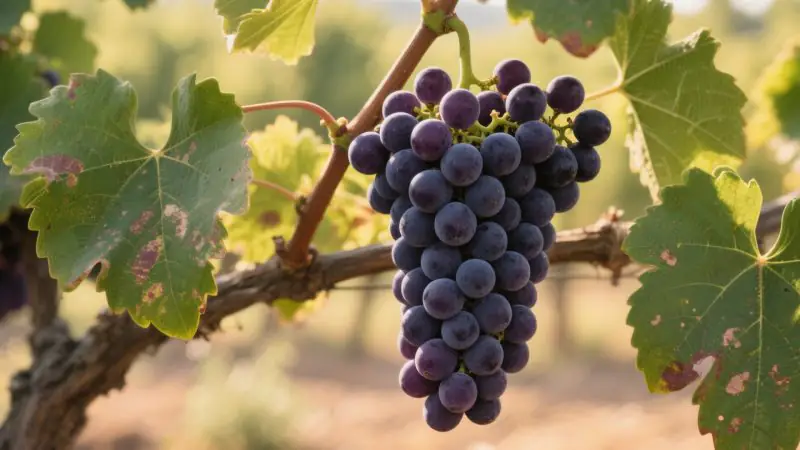
Valpolicella is not a grape. It’s a place—a series of valleys northwest of Verona—and a family of four wines all made from the same raw material: Corvina, Rondinella, and (optionally) Molinara, plus a handful of lesser red varieties.
The four wines exist on a scale of intensity determined entirely by what happens to the grapes after harvest. This is what makes Valpolicella unique: the raw material is the same. The difference between a $12 Valpolicella Classico and a $400 Amarone is a matter of technique and time.
The Appassimento Process
Before explaining the wines, you need to understand appassimento—the drying of grapes before fermentation.
Corvina bunches are harvested slightly early, when acidity is still high. The best bunches—loose, undamaged, with space between berries for air flow—are laid out in single layers on bamboo racks, plastic crates, or straw mats in drying rooms called fruttai. The rooms are ventilated. Temperature and humidity are monitored obsessively. For three to four months, the grapes slowly dehydrate.
During this period, the berries lose 30–40% of their water weight. Sugars concentrate. Acids concentrate. The grape skins undergo complex biochemical changes, developing aromas of dried fig, prune, baking spice, and cocoa. By the time the grapes are pressed—usually late January or early February—they’ve been transformed into something closer to raisins than fresh berries. The juice that comes out of them is syrup: 25–30% sugar, nearly double a normal harvest must.
Fermentation takes weeks, sometimes months, because the sugar level is so high that the yeast struggles to complete its work. The resulting wine is 15–16% alcohol, massively concentrated, with a profile of dried fruit, bitter chocolate, leather, and sweet spice. It ages in large Slavonian oak botti (traditional) or French barrique (modern) for a minimum of two years, with riserva requiring four.
This process—labor-intensive, weather-dependent, high-risk from rot and mold—is what makes Amarone one of the world’s most expensive wines to produce. A single bottle can represent the grapes from two or three vines.
The Four Wines
Valpolicella Classico / Valpolicella DOC (where it starts) Fresh grapes, standard red fermentation, no drying. A light, bright, cherry-driven red with moderate alcohol (12–13%), meant to be drunk young and slightly chilled. The Classico designation means hillside fruit from the original zone. DOC means the broader appellation, often from the plains. Either way, this is the everyday red of Verona: pizza wine, pasta wine, Tuesday night wine.
The best versions—from producers who don’t dump their worst fruit into the basic bottling—are genuinely charming. If you see a Valpolicella Classico from a top Amarone producer (Allegrini, Tommasi, Speri), it will almost always outperform a no-name Amarone.
Valpolicella Ripasso (the value move) A 20th-century invention: finished Valpolicella wine is re-fermented on the unpressed grape skins left over from Amarone production. Those skins are still loaded with sugar, color, and aromatic compounds. The Ripasso wine absorbs a second dose of everything—more body, more tannin, more intensity—while still costing roughly half what Amarone does.
The result is a mid-weight red with Amarone’s dried-fruit character in the background, but enough freshness and acidity to work at the dinner table. This is the Veneto red you should reach for when you want something serious without the commitment—financial or digestive—of full Amarone. Top producers: Masi (who invented the category commercially), Allegrini, Zenato, Speri. Price: $18–$35.
Amarone della Valpolicella (the heavyweight) Dried-grape wine fermented to dryness. 15–16% alcohol, massive body, dried cherry, prune, dark chocolate, leather, sweet spice. Amarone is a winter wine, a fireplace wine—the kind of bottle you open when roast meat is involved and the meal is going to last three hours. It’s also, increasingly, a collector’s wine. The top names—Giuseppe Quintarelli, Romano Dal Forno—have joined Barolo and Brunello in the Italian fine-wine pantheon, with prices to match.
Good Amarone does something paradoxical: it delivers power without heaviness. The best examples have lift and acidity beneath the concentration, a sense of energy that separates them from the ponderous, over-extracted versions that chase points at the expense of drinkability.
Recioto della Valpolicella (the ancestor) Recioto is what Amarone was before Amarone existed. The same appassimento process, but the fermentation is stopped early, leaving significant residual sugar. It’s a sweet red wine—fig, raisins, chocolate, almost port-like—and it predates Amarone by centuries. The story goes that Amarone was invented by accident: a barrel of Recioto fermented all the way to dryness, someone tasted it and didn’t throw it out, and a new category was born. Amarone means “the bitter one”—what they called the accidentally-dry version to distinguish it from sweet Recioto.
Recioto is rare today, but it remains the historical heart of the region. The best examples (Quintarelli, Tommasi, Le Ragose) are among the world’s great sweet wines.
The Amarone Producer Hierarchy
| Tier | Producer | What to Expect |
|---|---|---|
| Legendary | Giuseppe Quintarelli, Romano Dal Forno | Hand-selected fruit, extended aging (7–10 years before release for Quintarelli), prices starting at $300 and rising fast. Wines of extraordinary complexity that define the category. |
| Benchmark | Allegrini, Masi, Bertani, Tommasi | The pillars. Allegrini’s “La Poja” and single-vineyard Amarones are reference points. Bertani’s 1967 Amarone is still alive and remarkable—proof of the category’s aging potential. $50–$120. |
| Rising Stars | Speri, Zenato, Brigaldara, Le Ragose, Tedeschi | Traditionalist, Classico-focused production. Often better value than the benchmark tier. Speri’s Vigneto Monte Sant’Urbano is one of the most consistently excellent Amarones under $60. |
| Modern/Sleek | Zýmè, Marion, Musella | Smaller-batch, barrique-aged, more international in style. Marion makes some of the most elegant Amarone in the Valpolicella—less about power, more about finesse. $50–$80. |
Vintages That Matter
Amarone vintages track with northern Italy generally: warm, dry autumn weather during the drying period (October–January) is the single most important variable. Rain in November can rot the drying grapes and ruin a vintage regardless of what happened during the growing season.
Outstanding
- 2015: Generous, structured, built for aging. Rich but balanced. The best Amarone vintage of the last decade.
- 2016: Elegant, perfumed, with exceptional freshness. More finesse than power. Drinking beautifully now.
- 2010: Classic, age-worthy. Taut when young, now entering its prime. A collectors’ vintage.
Very Good
- 2013: Underrated. Cool year produced wines of aromatic precision and drinkability.
- 2017: Hot summer, concentrated wines. Powerful, sometimes excessively so. Better from cooler Classico sites.
- 2019: Promising. Balanced ripeness with good acidity. Early releases are impressive.
The Lake Wines: Bardolino and Lugana
Lake Garda isn’t just a postcard. It’s the engine behind Veneto’s two most underrated everyday wines—one red, one white, both shaped by the thermal mass of Italy’s largest lake.
Bardolino
Bardolino uses the same grape trio as Valpolicella (Corvina, Rondinella, Molinara) but the wines couldn’t be more different. Where Valpolicella aspires to richness, Bardolino embraces lightness. The lake effect moderates temperatures: cooler summers, warmer autumns, less diurnal swing. The result is a red that’s more about freshness and red fruit than body and structure.
Think of Bardolino as Valpolicella’s little sibling—lower alcohol (11.5–12.5%), brighter acidity, more floral. Serve it slightly chilled, with cured meats, lake fish, or just on its own in a glass that’s too small. It’s not a wine for contemplation. It’s a wine for lunch.
Bardolino Chiaretto—the rosé version—has become one of Italy’s most dynamic pink wine categories. Pale, floral, saline, made by short skin contact. The Chiaretto di Bardolino DOC was one of the first Italian rosé appellations to get serious about quality rather than treating pink wine as a byproduct. Producers to look for: Le Fraghe, Guerrieri Rizzardi, Cavalchina.
Lugana
Lugana straddles the border between Veneto and Lombardy, hugging the southern shore of Lake Garda. The grape is Turbiana (also called Trebbiano di Lugana)—a local variant of Trebbiano di Soave, unrelated to the workhorse Trebbiano Toscano. On the clay-limestone soils near the lake, it produces a white of surprising body and longevity: floral, citrus, almond, often with a saline-mineral finish that reads almost like Chablis at a fraction of the price.
Lugana has been one of the best-performing categories in Italian wine over the last decade—sales up, quality up, and the DOC has been disciplined about resisting the expansion that diluted Soave. The best examples (Ca’ dei Frati, Zenato, Cà Maiol) deliver genuine complexity at $15–$22.
If you want one bottle of Italian white under $20 that will surprise dinner guests who’ve never heard of it, Lugana is the move.
How to Buy Veneto Wine
Prioritize Producer Over Appellation
This is true everywhere in Italy but especially in Veneto, where the appellation system is less a quality guarantee than a map of production zones. The gap between a cooperative Prosecco DOC and a single-vineyard Valdobbiadene from Nino Franco is vast—and they’re both legally Prosecco. A Valpolicella Classico from a top estate will routinely outperform a no-name Amarone at the same price.
The easiest filter: if the producer’s name is on the front of this article’s recommendations, the wine is almost certainly worth the money. If you’re staring at a Venetian wine list without a reference point, order the Ripasso or the Soave Classico—the two categories least likely to disappoint and most likely to overdeliver at their price point.
Where the Value Lives
| Wine Type | Sweet Spot | What You Get |
|---|---|---|
| Prosecco DOC | $10–$14 | Clean, inoffensive bubbles. Perfect for mimosas, large parties, and not thinking about wine. |
| Prosecco DOCG (Valdobbiadene) | $18–$25 | A genuinely interesting sparkling wine. Acidity, minerality, fruit definition. The jump from DOC to DOCG is the single biggest quality improvement per dollar in Veneto. |
| Cartizze | $30–$45 | The best Prosecco there is. Pricey for bubbles, cheap for a Grand Cru equivalent. |
| Soave Classico | $15–$25 | Italy’s most underpriced white. Single-vineyard Crus at $25 are the value of the region. |
| Lugana | $15–$22 | Consistently excellent, unique lake-influenced white. Ca’ dei Frati’s basic bottling at $18 is one of the best white wine deals on earth. |
| Bardolino / Chiaretto | $12–$18 | Summer reds and rosés. Don’t overthink them. |
| Valpolicella Classico | $12–$20 | Everyday Veronese red. Buy from an Amarone producer—they funnel serious fruit into their basic bottling. |
| Valpolicella Ripasso | $18–$35 | The sweet spot in Veneto reds. Half the price of Amarone, two-thirds of the experience. |
| Amarone (entry) | $35–$50 | Accessible, approachable Amarone from solid producers. Good for understanding the category without committing. |
| Amarone (benchmark) | $50–$100 | Single-vineyard wines from the pillars (Allegrini, Masi, Speri, Tommasi). Cellar-worthy, impressive, expensive but fair. |
| Amarone (legendary) | $300–$600+ | Quintarelli. Dal Forno. These are the wines that define the category’s ceiling. They cost what they cost for a reason. |
A Note on Serving Temperatures
- Amarone needs 60–65°F (cooler than room temperature). If your house is 72°F, put the bottle in the fridge for 20 minutes.
- Valpolicella and Bardolino drink best at 55–60°F. Serve slightly cool.
- Soave and Lugana at 48–52°F. Not ice-cold—you’ll kill the aromatics.
- Prosecco at 42–46°F. Champagne temperature. The fridge door, not the freezer.
Frequently Asked Questions
What’s the difference between Prosecco DOC and DOCG?
Geography, yields, and quality. Prosecco DOC covers flatland vineyards across nine provinces, with high yields and machine harvesting, producing roughly 90% of all Prosecco. The two DOCGs—Conegliano Valdobbiadene and Asolo—are hillside appellations with lower yields, hand-harvesting, and demonstrably higher quality. The DOCG wine costs $18–$25. The DOC costs $10–$14. The upgrade is worth it.
Is Amarone always expensive?
Good Amarone is almost never cheap because the production cost is so high—raw material loss during drying is 30–40%, aging requirements add years of carrying cost, and the risk of rot during appassimento is real. That said, entry-level Amarone from quality producers in good vintages starts at around $35–$45 (Zenato, Tommasi, Speri). It won’t have the depth of a single-vineyard wine, but it will be legitimately Amarone. Below $30, you’re gambling.
Can I age Amarone?
Yes, and you should. Amarone is one of Italy’s longest-lived reds. A well-stored bottle from a top producer in a good vintage will evolve for 20–30 years. The dried fruit gives way to leather, tobacco, undergrowth. Amarone at five years old is still a primary fruit bomb. Amarone at fifteen is a different wine. The oldest Amarone I’ve tasted—a 1967 Bertani—was still very much alive.
Is Soave just cheap Italian white?
Soave DOC (flatland) mostly is. Soave Classico (volcanic hillside) is not. The distinction is on the label. If it says “Classico” and names a commune or cru, it’s likely a genuinely interesting white wine at a fraction of its quality-equivalent price. The best Soave—Pieropan’s La Rocca, Gini’s Froscà—ages five to ten years and gains complexity that no $25 white has any right to.
What is Ripasso and why should I buy it?
Ripasso is Valpolicella re-fermented on the grape skins left over from making Amarone or Recioto. The skins transfer additional color, tannin, flavor, and body to the wine, creating a red that has Amarone’s dried-fruit character without Amarone’s intensity or price. It’s the most useful red in Veneto for dinner-table purposes, and at $18–$35 it’s one of the best value propositions in Italian wine.
Why does Veneto make so much wine?
Geography and economics. The fertile Po plain is some of Europe’s best farmland, the Prosecco hills are uniquely suited to high-yield sparkling wine production, and the region’s location—close to Venice’s historic export infrastructure—gave it an early head start in international wine trade. Veneto has been shipping wine to northern Europe since the 15th century. The infrastructure and expertise never left.
What’s Veneto’s best wine for someone who only drinks reds?
Amarone is the obvious answer—it’s one of the world’s most distinctive reds—but start with Ripasso first. If you like Ripasso, you’ll like Amarone, and you’ll have spent $25 instead of $60 to find out. If you like lighter reds, Bardolino or a good Valpolicella Classico—served slightly cool—may be the better introduction.
Last updated: June 2026. Producer recommendations and vintage assessments reflect the market as of this date.


No comments yet