



Key Takeaways
- Sangiovese is the soul of Tuscany, but it expresses radically differently depending on where it grows: tart cherry and violets in Chianti Classico, dark power and leather in Montalcino, plump generosity in Scansano.
- Chianti Classico has an internal quality pyramid: Annata (entry) → Riserva (longer aging) → Gran Selezione (single-estate, top tier). The black rooster on the neck is your guarantee of origin.
- Brunello di Montalcino is 100% Sangiovese and must age a minimum of 5 years (6 for Riserva) before release. It is one of the world’s most age-worthy red wines, routinely going 20–40+ years.
- “Super Tuscan” is not a legal term. It’s a cultural one—for wines that break DOC rules by using international grapes (Cabernet, Merlot, Syrah) and/or French oak. The best of them, Sassicaia and Masseto, trade at First Growth prices.
- The DOCG system tells you where and how, not how good. A Chianti DOCG can be supermarket plonk or world-class. The producer’s name carries far more weight than the appellation.
- 2015, 2016, 2019, and 2021 are the standout recent vintages across Tuscany. 2010 is legendary for Brunello and is entering its prime drinking window now.
1. Introduction to Tuscan Wine
In the early 1970s, a young winemaker named Piero Antinori made a decision that would break Italian wine law and reshape the global wine map. He pulled up the white grape varieties his family had been blending into Chianti for generations—Trebbiano and Malvasia, mandated by DOC regulations—and planted Cabernet Sauvignon and Cabernet Franc instead. The resulting wine, aged in French barrique, didn’t qualify for Chianti DOC status. Under Italian law, it was technically vino da tavola—table wine, the lowest legal category.
When Antinori released Tignanello in 1974, he charged more for his “table wine” than most Chianti Classico sold for at the time. Critics called it a stunt. The market called it a revolution. Within a decade, “Super Tuscan” had become one of the most coveted words in wine, and Sassicaia—a Bordeaux-style Cabernet blend from a stony patch of coastal Bolgheri that nobody thought could grow great wine—had earned its own DOC, the only single-estate appellation in Italy.
Tuscany’s wine story is built on these tensions: tradition versus innovation, law versus ambition, Sangiovese versus everything else. No other wine region in the world contains this range of style under one regional umbrella—from the tart, cherry-bright peasant wines of Chianti Rufina to the brooding, decade-demanding power of Brunello di Montalcino to the Bordeaux-rivalling opulence of coastal Super Tuscans.
This guide covers every layer: the geology that separates Chianti Classico’s galestro from Montalcino’s galestro (they’re not the same thing), the DOCG classification maze, the grapes, the sub-regions, the producers that matter, and the practical stuff—how to decode a Tuscan label, where the value hides, and which vintages are worth your money right now.
2. Terroir: The Land That Defines the Wine
2.1 Geography: Hills, Coast, and Everything Between
Tuscany is not one wine region. It’s half a dozen, each shaped by fundamentally different geography.
The region stretches from the Apennine Mountains in the north and east to the Tyrrhenian Sea in the west. Within this frame, the wine areas fall into two broad families: the inland hills and the coastal plains.
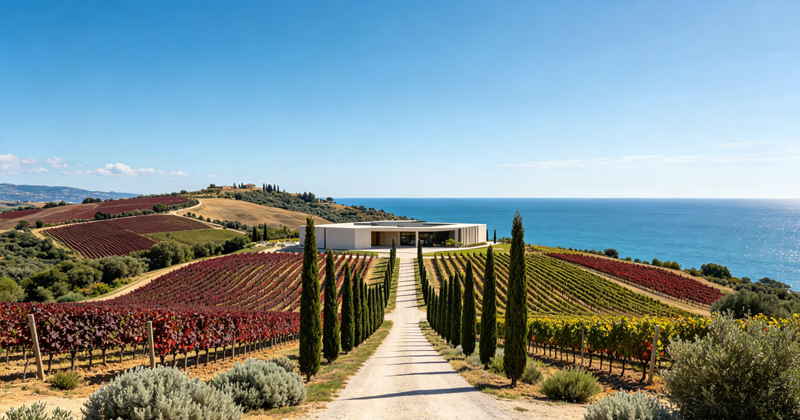
The inland hills are Tuscany’s historic heart. Chianti Classico, Chianti Rufina, Montalcino, Montepulciano, and Carmignano all occupy this landscape—rolling, forested, studded with cypress trees and medieval hill towns. Vineyards sit at elevation, typically 200–500 meters, where diurnal temperature swings preserve acidity and slow ripening. This is Sangiovese country, and it’s been Sangiovese country since the Etruscans.
The coastal strip—Bolgheri, Maremma, Scansano—is a different world. Flatter, warmer, more Mediterranean. Until the 1970s, nobody took these areas seriously for quality wine. They were marshland and scrub. The discovery that Bordeaux varieties thrived here, producing wines of startling concentration and polish, is one of modern wine’s great surprises. Today, Bolgheri’s best wines are among Italy’s most expensive.
Then there’s San Gimignano, perched on a hilltop in the west, ancient and anomalous—home to Vernaccia, one of Italy’s oldest white wine traditions.
And Chianti proper—the larger DOCG zone that wraps around Chianti Classico like a capital letter C—sprawls across a wider area with more varied terrain and, generally, more generous, earlier-drinking wines.
2.2 Soils: Galestro, Alberese, and Why They Matter
If you spend time in Tuscan vineyards, you’ll hear two words constantly: galestro and alberese. They are the two dominant soil types, and they produce different wines.
Galestro is a crumbly, flaky marl—a mix of clay and limestone that fractures into brittle plates. It drains fast, is poor in nutrients, and forces vines to struggle. Wines from galestro-dominant sites tend to be more aromatic, higher in acidity, and more structured. Much of Chianti Classico’s best hillside vineyards sit on galestro.
Alberese is a harder, sandier limestone that weathers into powdery white soil. It drains well but holds slightly more heat than galestro. Wines from alberese sites tend to be richer, rounder, and more approachable young.
Montalcino has its own geological signature: a complex mix of galestro, alberese, clay, and ancient marine deposits. The northern slopes of the Montalcino hill (around Montosoli) are famously galestro-rich and produce some of the most perfumed, elegant Brunello. The southern and southwestern slopes (around Castelnuovo dell’Abate and Sant’Angelo in Colle) are warmer, with heavier clay soils, producing darker, plusher, more powerful wines.
Bolgheri sits on what was once seabed. The soils are a patchwork of alluvial deposits: clay, sand, gravel, and significant amounts of rounded stones that radiate heat back onto the vines at night. These stony soils, combined with cooling sea breezes and the Tuscan sun, produce the Bordeaux-like conditions that make Cabernet Sauvignon and Merlot excel here.
Montepulciano grows on sandy clay and limestone at 250–600 meters. The wines split the difference between Chianti Classico’s lift and Montalcino’s weight—often described as Tuscany’s most elegant Sangiovese.
2.3 Climate: Mediterranean with a Continental Edge
Tuscany is broadly Mediterranean—hot, dry summers; mild, wet winters. But there are critical distinctions within the region.
Inland (Chianti Classico, Montalcino, Montepulciano): Summers are hot but not scorching—the elevation moderates extremes. Nights are cool, which preserves acidity in the grapes. The main risk is September rain during harvest, which can dilute what would otherwise be an excellent vintage. Hail is a recurring threat in the hills.
Coastal (Bolgheri, Maremma): Warmer, drier, more consistently Mediterranean. The Tyrrhenian Sea moderates summer heat and extends the growing season. Rainfall is lower than inland, and the risk of harvest rain is reduced. This is why Bolgheri produces such consistent wines year to year compared to Chianti Classico.
Vintage variation matters more inland than on the coast. A challenging year in Chianti Classico (2014, anyone?) can produce lean, green wines. The same year in Bolgheri, protected by the sea, often turns out well.
3. The Classification System: DOCG, DOC, IGT, and the Super Tuscan Paradox
3.1 The Italian Pyramid (and Why It Confuses Everyone)
Italy’s wine classification has four tiers:
| Tier | Full Name | What It Means |
|---|---|---|
| DOCG | Denominazione di Origine Controllata e Garantita | The top tier. Strictest rules on grape varieties, yields, aging, and geography. Wines are tasted and certified by a government panel. The “G”—guaranteed—is the key addition over DOC. |
| DOC | Denominazione di Origine Controllata | Specified geographic origin with rules on grapes and production, but less strict than DOCG. Most Bolgheri wines fall here. |
| IGT | Indicazione Geografica Tipica | Regional designation, much looser rules. Covers Toscana IGT and sub-regional IGTs. |
| VdT | Vino da Tavola | Table wine. No geographic indication. Barely used for serious wine anymore. |
The system was intended to be a quality pyramid. In practice, it’s a production rulebook, not a qualitative ranking. And here’s the kicker: some of Italy’s most famous and expensive wines are IGT.
Tignanello. Solaia. Masseto. Sassicaia (now DOC, but started as VdT). Ornellaia. Redigaffi. All were, or still are, IGT or equivalent. The reason is simple: the DOCG rules for Chianti Classico required white grapes in the blend and forbade pure Sangiovese, let alone Cabernet Sauvignon or Merlot. Wines that broke these rules—even if they were objectively superior—couldn’t qualify.
The Italian government has since caught up. Chianti Classico now allows 100% Sangiovese. International varieties are permitted. The white grape requirement was abolished. But the culture has absorbed the paradox: calling a wine “Super Tuscan” means it doesn’t fit the rules, regardless of whether the rules still make sense.
3.2 Chianti Classico’s Internal Tiers
Chianti Classico DOCG has its own quality hierarchy embedded within the broader classification:
| Tier | Minimum Aging | Key Rules |
|---|---|---|
| Annata (vintage) | 12 months | Standard Chianti Classico. Minimum 80% Sangiovese. The baseline, and often excellent value. |
| Riserva | 24 months (3 in bottle) | Stricter selection, longer aging. Higher minimum alcohol. |
| Gran Selezione | 30 months (3 in bottle) | Single-estate fruit only. The top tier, created in 2013. 154 producers currently make at least one. |
Gran Selezione was controversial when introduced—critics argued it was a marketing invention, not a terroir-driven classification. And there are legitimate complaints: some Gran Selezione wines are excellent, some are just darker, oakier versions of the Annata with a price tag to match. But the best examples—Fontodi’s Vigna del Sorbo, Castello di Ama’s single-vineyard bottlings, Ricasoli’s Colledilà and Castello di Brolio—are genuinely remarkable wines that compete with Brunello in quality and age-worthiness.
3.3 Brunello di Montalcino’s Two Tiers
Brunello di Montalcino DOCG is simpler but stricter:
- Brunello di Montalcino: 100% Sangiovese (locally called Brunello). Minimum 5 years aging, at least 2 in oak. Released January 1 of the 5th year after harvest.
- Brunello di Montalcino Riserva: Same rules but minimum 6 years aging. Released January 1 of the 6th year.
There’s also Rosso di Montalcino DOC—a “baby Brunello” released after just 1 year of aging. It’s made from younger vines or declassified Brunello fruit, and it’s often the best value in Tuscan wine: the structure and character of Montalcino Sangiovese without the price or the wait.
4. The Grapes of Tuscany
4.1 Sangiovese: The Many Faces of One Grape
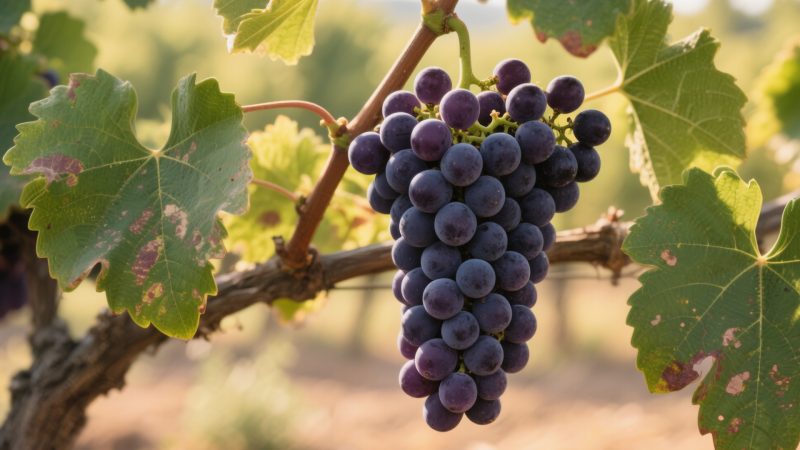
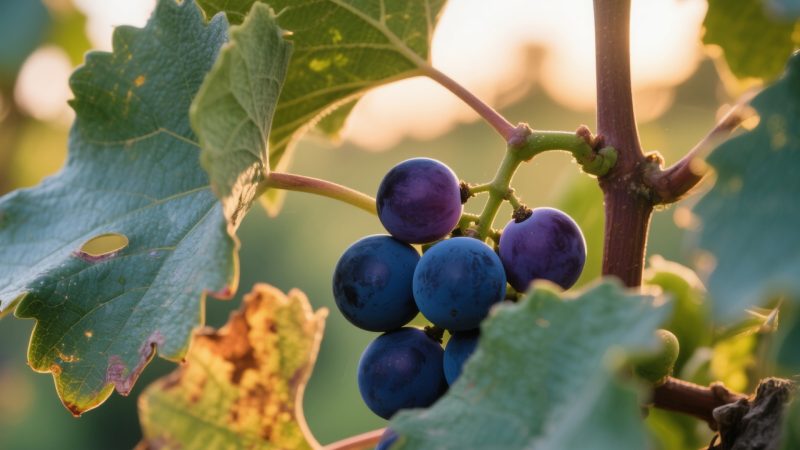
Sangiovese is Italy’s most-planted grape and Tuscany’s defining variety. But “Sangiovese” isn’t one grape—it’s a family of clones, each evolved for its specific environment. Tuscany has four principal Sangiovese types:
- Sangioveto — The Chianti Classico clone. Small berries, thick skins, high acidity, firm tannins. Produces wines of aromatic lift (cherry, violet, dried herbs) with a characteristic savory, almost saline finish. The name means “little Sangiovese” and refers to the small berry size.
- Brunello (Sangiovese Grosso) — The Montalcino clone. Literally “the big one.” Larger, thicker-skinned berries that produce darker, more concentrated, more tannic wines than Sangioveto. Brunello di Montalcino’s structure and longevity come from this clone’s biological character as much as from the terroir. The aromatics lean toward black cherry, leather, tobacco, and balsamic.
- Prugnolo Gentile — The Montepulciano clone. “Gentle plum.” Softer, rounder, producing Sangiovese that reaches approachability earlier while maintaining structure. Vino Nobile di Montepulciano is often the most immediately charming of Tuscany’s three great Sangiovese wines.
- Morellino — The Scansano clone. Grown in the warmer coastal Maremma, producing a softer, plumper, more fruit-forward Sangiovese. Morellino di Scansano is Tuscany’s everyday-drinking Sangiovese—generous, uncomplicated, and affordable.
What good Sangiovese tastes like: The flavor spectrum runs from sour cherry, red plum, and pomegranate (younger/cooler) to black cherry, dried herbs, leather, tobacco, and balsamic (older/warmer). Always present: high acidity, firm but not aggressive tannins, and an earthiness that can range from tea leaves to underbrush. Sangiovese rarely shows the overt fruit sweetness of Cabernet or Merlot—it’s a savory grape at heart, and that’s the point.
4.2 The Traditional Blending Partners
Before 100% Sangiovese became common (and legal), Chianti was always a blend. The traditional partners:
- Canaiolo: The historical blending grape of Chianti. Adds softness and fruit to Sangiovese’s angular structure. Declined after the 1970s but seeing a revival among traditionalist producers.
- Colorino: As the name implies, a deeply pigmented grape used primarily for color. Adds little aroma but deepens the wine visually.
- Malvasia Nera: Aromatic, softening, increasingly rare.
- Trebbiano Toscano and Malvasia Bianca: White grapes, once mandated in Chianti (up to 30%!). Added acidity and, in the view of modern winemakers, diluted everything. The so-called “Chianti recipe” of 1872, codified by Barone Ricasoli, included white grapes for freshness. Today, they’re nearly extinct in quality Chianti.
4.3 The Internationals: Cabernet, Merlot, and the Super Tuscan Palette
The grapes that built the Super Tuscan movement:
- Cabernet Sauvignon: Thrives in Bolgheri’s stony, warm soils. Sassicaia is approximately 85% Cabernet Sauvignon, 15% Cabernet Franc. Tastes closer to a ripe, polished Bordeaux than to California Cab—more savory, more structured, less overtly fruity.
- Merlot: Tuscany produces some of the world’s most celebrated Merlot—wines that can hold their own against Pétrus. Masseto (from the Ornellaia estate) is pure Merlot and routinely lists for $800–$1,200. Tua Rita’s Redigaffi is another benchmark. These are not soft, easy wines. They’re massive, concentrated, and built for decades.
- Cabernet Franc: Increasingly important in Bolgheri and the inland hills. Adds floral lift and herbal complexity. Sometimes bottled solo, as in Duemani’s Cabernet Franc.
- Syrah: Grown in the warmer coastal areas, especially around Cortona. Produces a distinctly Tuscan Syrah—less Rhône-like, more Mediterranean, with black olive and rosemary alongside the expected dark fruit. Fontodi’s Case Via Syrah is the reference point.
4.4 The Whites
- Vernaccia di San Gimignano: Tuscany’s only white DOCG. Grown around the medieval hill town of San Gimignano. Produces a dry, crisp white with almond, citrus, and mineral notes. Quality can vary dramatically; look for producers like Montenidoli and Panizzi.
- Vermentino: Grown along the coast. Fresh, saline, citrus-driven. Better known in Sardinia and Liguria, but Tuscan versions are increasingly good.
- Trebbiano Toscano: High-yielding, neutral white grape. Historically important but rarely exciting. The best examples come from old vines and low yields.
5. The Sub-Regions and Their Wines
5.1 Chianti Classico: The Heart of Tuscany
The Wine: Chianti Classico DOCG is Sangiovese-dominant red wine from the hills between Florence and Siena. It is defined not by power but by tension—the interplay of high acidity, savory fruit, and firm tannins that makes it, at its best, one of the world’s great food wines.
The Geography: Chianti Classico covers approximately 7,200 hectares of vineyards across nine communes. The original heartland—the area delimited by Cosimo III de’ Medici in 1716—is the highest-quality zone. Within it, four communes form the core: Greve, Radda, Gaiole, and Castellina.
The Black Rooster (Gallo Nero): The Chianti Classico consortium’s symbol dates to a medieval legend. Florence and Siena, at war, agreed to settle their border by having two horsemen depart at dawn—one from each city—with the boundary drawn where they met. The Florentines starved their black rooster so it would crow earlier. It did. The Florentine rider left before dawn. The boundary was set deep in Sienese territory. The black rooster has been Chianti Classico’s symbol ever since. If the bottle doesn’t have it, it’s not Chianti Classico.
Key Communes and Their Styles:
| Commune | Soil | Character |
|---|---|---|
| Radda in Chianti | Galestro, high elevation | The most aromatic, high-toned, elegant. Perfumed, mineral, age-worthy. |
| Gaiole in Chianti | Mix of galestro and alberese | Structured, muscular, savory. Often considered the most “complete.” |
| Castellina in Chianti | Alberese-rich | Rounder, softer, more approachable young. |
| Greve in Chianti | Galestro, varied | The largest commune. Diverse styles. Home to Panzano (the “conca d’oro” or golden basin) and Lamole (high-elevation, famously perfumed). |
| Panzano (sub-zone of Greve) | Galestro, amphitheater-shaped | Some of the most powerful, concentrated Chianti Classico. Fontodi is the reference point. |
Standout Producers by Tier:
Gran Selezione / Flagship: Fontodi (Vigna del Sorbo, Flaccianello), Castello di Ama (single-vineyard Gran Selezioni), Ricasoli (Colledilà, Castello di Brolio), Montevertine (Le Pergole Torte—technically IGT, but Chianti Classico in spirit), Isole e Olena (Cepparello—also IGT but sourced from Chianti Classico).
Riserva: Fèlsina (Rancia, Colonia), Castellare, Badia a Coltibuono, Querciabella, Villa Calcinaia.
Annata (value sweet spot): Monsanto, Volpaia, Castell’in Villa, Poggerino, Selvapiana (technically Chianti Rufina, not Classico, but comparable quality at lower prices).
5.2 Chianti DOCG and Its Seven Sub-Zones
Chianti DOCG is the larger appellation that wraps around Chianti Classico. It has seven sub-zones, of which Chianti Rufina is the most respected. Rufina, in the hills northeast of Florence, is high-elevation (up to 650m), cool, and produces Chianti with surprising elegance and ageability. Selvapiana is the benchmark.
Other sub-zones—Colli Fiorentini, Colli Senesi, Colli Aretini, Colline Pisane, Montalbano—are less distinctive but can produce good value wines. If you want cheap drinkable Chianti, any sub-zone from a quality producer will serve. If you want something that competes with Classico, Rufina is the one.
Chianti vs. Chianti Classico: They are entirely separate DOCGs. Chianti Classico is smaller, hillier, stricter, and generally higher quality. Chianti DOCG is larger, more variable, and generally cheaper. The two are not interchangeable on a wine list—if a restaurant lists “Chianti” without “Classico,” it’s the broader DOCG, and you should expect a lighter, simpler wine.
5.3 Brunello di Montalcino: Tuscany’s King
The Landscape: Montalcino is a hilltop town about 40 kilometers south of Siena. The DOCG covers roughly 2,100 hectares on slopes ranging from 120 to 650 meters. The variation within Montalcino is significant—some consider it as internally diverse as Burgundy’s Côte d’Or, just with one grape instead of two.
The History: Clemente Santi isolated the Brunello clone in the mid-19th century. His grandson, Ferruccio Biondi-Santi, produced the first labeled Brunello di Montalcino in 1888. For most of the 20th century, Biondi-Santi was essentially the only producer. The 1955 Biondi-Santi Riserva is one of the most legendary Italian wines ever made. The DOCG was granted in 1980—Italy’s first.
What Makes Brunello Different: The Brunello clone (Sangiovese Grosso) produces thicker-skinned berries with more color, more tannin, and more extract than Chianti Classico’s Sangioveto. The warmer, drier climate of Montalcino pushes ripeness further. The mandatory aging—5 years minimum—builds structure that Chianti Classico rarely approaches. A great Brunello at 20 years old can be transcendent: leather, tobacco, dried cherry, balsamic, earth, with tannins that have melted into silk.
The Sub-Zones of Montalcino:
| Zone | Elevation | Character |
|---|---|---|
| Montosoli (north) | 300–400m | Elegance, perfume, finesse. Often compared to Chambolle-Musigny. |
| Central / Town | 400–500m | Classic Brunello: balanced, structured, long-aging. |
| Castelnuovo dell’Abate (south) | 200–350m | Warmer. Riper, darker, more powerful. More accessible young. |
| Sant’Angelo in Colle (southwest) | 250–400m | Warmest zone. Plush, rich, opulent Brunello. |
| Sant’Antimo (west) | 200–300m | Varied. Lighter, fresher styles near the valley floor. |
Standout Producers:
- Legendary: Biondi-Santi, Soldera (Case Basse)
- Elite: Salvioni, Poggio di Sotto, Cerbaiona, Il Marroneto, Stella di Campalto, Gianfranco Soldera
- Excellence: Costanti, Fuligni, Il Poggione, Lisini, Sesti, Valdicava, Altesino, Capanna, Ciacci Piccolomini
- Rosso Value: Rosso di Montalcino from any of the above producers—typically 40–60% of the Brunello price with 80% of the experience.
5.4 Vino Nobile di Montepulciano
Vino Nobile is Tuscany’s third great Sangiovese wine and, unfairly, the least celebrated. The town of Montepulciano sits on a ridge in southeastern Tuscany at 250–600 meters. The wines, made from Prugnolo Gentile (the local Sangiovese clone) with small amounts of Canaiolo and other traditional varieties, occupy a space between Chianti Classico and Brunello: more structured and age-worthy than the former, less dense and demanding than the latter.
The DOCG has three tiers: Vino Nobile, Riserva (3 years aging), and—controversially—Pieve (single-vineyard, longer aging, created in 2022).
Standout producers: Avignonesi, Boscarelli, Poliziano, Salcheto, Dei.
5.5 Bolgheri and the Super Tuscans
The Geography: Bolgheri is a small DOC on the Tuscan coast, south of Livorno. It’s flat, stony, and backed by hills that create a natural amphitheater open to the sea. The soils are alluvial—gravel, sand, clay—with significant deposits of rounded stones.
The Origin Story: In the 1940s, Marchese Mario Incisa della Rocchetta, a Piedmontese aristocrat with a passion for Bordeaux, planted Cabernet Sauvignon and Cabernet Franc on his wife’s estate at Tenuta San Guido. He made the wine for private consumption. The first commercial vintage of Sassicaia was 1968. When it was released in the 1970s, critics noticed. At a 1978 Decanter tasting of “great clarets,” Sassicaia won—beating Mouton-Rothschild, among others. The wine world took note.
What Bolgheri Wines Taste Like: They’re Bordeaux-like in structure—more savory, mineral, and medium-bodied than Napa Cabernet—but with an unmistakable Mediterranean warmth that Bordeaux’s Atlantic climate rarely produces. The signature is dark fruit, cedar, tobacco, olive, and a distinctive saline-mineral note from the coastal soils and breezes.
The Key Wines:
| Wine | Estate | Blend | Price Range |
|---|---|---|---|
| Sassicaia | Tenuta San Guido | ~85% Cab Sauv, 15% Cab Franc | $250–$400+ |
| Ornellaia | Tenuta dell’Ornellaia | Cab Sauv, Merlot, Cab Franc, Petit Verdot | $200–$350+ |
| Masseto | Tenuta dell’Ornellaia | 100% Merlot | $800–$1,200+ |
| Guado al Tasso | Antinori | Cab Sauv, Merlot, Cab Franc, Petit Verdot | $120–$200 |
| Paleo | Le Macchiole | Cabernet Franc | $100–$150 |
| Messorio | Le Macchiole | 100% Merlot | $200–$350 |
| Redigaffi | Tua Rita | 100% Merlot | $200–$300 |
| Camarcanda | Ca’ Marcanda (Gaja) | Cab Sauv, Cab Franc | $150–$250 |
Beyond Bolgheri: “Super Tuscan” as a style isn’t limited to the coast. Flaccianello della Pieve (Fontodi) and Cepparello (Isole e Olena) are pure Sangiovese IGTs from Chianti Classico that broke the blending rules. Tignanello (Antinori) and Solaia (Antinori) come from the Chianti Classico zone but use Cabernet and, in Solaia’s case, are Bordeaux-blend-dominant. Le Pergole Torte (Montevertine) is 100% Sangiovese from Radda that’s been IGT for decades by choice—a philosophical statement against the DOCG system.
5.6 Other Notable Sub-Regions
Morellino di Scansano DOCG: Coastal southern Tuscany. Soft, plump, affordable Sangiovese. The everyday red of Tuscany. Quality has risen in recent decades; producers like Moris Farms and Fattoria Le Pupille (Saffredi) have shown the region can produce serious wines.
Carmignano DOCG: A tiny zone west of Florence, granted DOCG status in 1990. Historically significant—Cosimo III named it alongside Chianti in 1716. The key distinction: Cabernet Sauvignon has been part of Carmignano’s blend since the 1500s, likely introduced by Catherine de’ Medici. Capezzana is the benchmark.
Vernaccia di San Gimignano DOCG: Ancient white wine, crisp and mineral. Worth knowing if you need a break from red.
Maremma Toscana DOC: A catch-all for the coastal south. Some excellent value wines, especially Vermentino and Sangiovese-Cabernet blends.
6. How to Buy Tuscan Wine
6.1 Decoding a Tuscan Label
Tuscan labels can be dense, but the hierarchy of useful information is consistent:
- Producer name. Just as with Napa, this is your starting point. A strong producer making Chianti Classico Annata is often more rewarding than a weak producer making Brunello.
- DOCG/DOC/IGT status. Tells you the production rules the wine followed. But remember: IGT does not mean inferior. The most expensive Tuscan wines are often IGT.
- Sub-region. Chianti Classico vs. Chianti. Brunello vs. Rosso di Montalcino. Bolgheri vs. generic Toscana IGT. The sub-region is often more informative than the classification level.
- Vintage. Matters more for Sangiovese-based wines (Chianti Classico, Brunello, Vino Nobile) than for coastal Bordeaux blends. See vintage guide below.
- Tier within the sub-region. Riserva, Gran Selezione (for Chianti Classico); Riserva (for Brunello). These signal additional aging and stricter selection but do not guarantee quality. Producer reputation still matters more.
- “Classico.” If appended to a DOCG name, this word means the original, historic heartland of the appellation. Chianti Classico vs. Chianti. It is, with very few exceptions, a meaningful quality signal.
6.2 Price Tiers: What You’re Actually Buying
| Price | What You’re Buying | Expectation |
|---|---|---|
| $12–$20 | Entry-level Chianti DOCG, Morellino di Scansano, basic Rosso di Montalcino. Simple, clean, food-friendly. | Midweek pasta wine. Nothing profound, but authentic. |
| $20–$35 | Chianti Classico Annata from solid producers, Chianti Rufina, Rosso di Montalcino from good estates, basic Vino Nobile. | The value zone. This is where Tuscan wine shines for everyday drinking. |
| $35–$60 | Chianti Classico Riserva, top Rosso di Montalcino, entry Brunello, entry Bolgheri. | Weekend wines with serious character. Start of the cellar-worthy range. |
| $60–$120 | Premier Chianti Classico Gran Selezione, good Brunello, Bolgheri second wines. | Serious, structured wines that reward cellaring. The sweet spot for Brunello quality-to-price. |
| $120–$250 | Top Brunello, Gran Selezione flagships, entry-level Super Tuscans. | Investment-grade drinking. Opus One territory. |
| $250–$500 | Flagship Super Tuscans (Ornellaia, Sassicaia), elite Brunello (Salvioni, Poggio di Sotto), top Riserva Brunello. | Collectibles. Second-mortgage-adjacent. |
| $500–$1,500+ | Masseto, Soldera, Biondi-Santi Riserva, Sassicaia in great vintages. | The ceiling. Same conversation as First Growth Bordeaux. |
6.3 Vintage Guide
Outstanding (buy and cellar): 2010, 2015, 2016, 2019, 2021
- 2010: Legendary for Brunello. Structured, balanced, built for 30+ years. Chianti Classico also superb.
- 2015: Warm, ripe, generous. Wines are drinking well now but have the stuffing to age.
- 2016: The “perfect” vintage. Balance, freshness, structure—everything in place. Universally excellent across all sub-regions.
- 2019: Approachable but structured. Slightly cooler than 2015/2016, producing fresher, more elegant wines.
- 2021: Early reports suggest exceptional across the board. High quality, moderate yields.
Very Good: 2012, 2013, 2018, 2020
- 2013: Cooler, leaner, more classic. Excellent for Chianti Classico. Brunello is structured and will age well.
- 2018: Elegant, fresh, accessible. Good value relative to the hyped 2015/2016 vintages.
Good (drink now): 2011, 2014, 2017
- 2011: Hot year. Ripe, early-drinking wines.
- 2014: Cool, rainy, challenging. The weakest vintage in recent memory. But top producers still made credible wine.
- 2017: Hot and dry. Concentrated but sometimes unbalanced. Strong producers navigated it well.
6.4 Practical Buying Strategies
For everyday drinking, Chianti Classico Annata is the best value in fine wine, period. A $25–$35 Chianti Classico from a good producer delivers more authenticity and character than virtually anything else at that price point. Monsanto, Volpaia, and Castell’in Villa bottlings regularly outperform wines costing twice as much.
Rosso di Montalcino is the backdoor into Brunello. Producers like Il Poggione, Capanna, and Fuligni make Rosso that captures the essence of Montalcino Sangiovese at $25–$40. You get the soul of the wine without the price or the wait.
For Brunello, buy the producer, not the vintage. A strong producer’s Brunello from a “lesser” year (2018, 2014 from top estates) will often outperform a weak producer’s 2016. Biondi-Santi’s 2014 Brunello, for example, is excellent—the estate simply declassified more fruit to Rosso.
If you want the Super Tuscan experience without the Super Tuscan price: Guado al Tasso’s second wine (Il Bruciato, $30–$40), Ornellaia’s Le Volte ($30–$35), and Tenuta San Guido’s Guidalberto ($50–$60) deliver the Bolgheri signature at a fraction of the flagship price. Guidalberto in particular is widely considered one of the best second wines in the world.
Don’t sleep on Chianti Rufina. Selvapiana’s Bucerchiale Riserva is frequently stunning and costs half of what an equivalent-quality Chianti Classico Gran Selezione would.
7. Frequently Asked Questions
What’s the difference between Chianti and Chianti Classico?
They are entirely separate DOCGs. Chianti Classico is the smaller, historic heartland between Florence and Siena—higher elevation, stricter rules, generally higher quality. Chianti DOCG is the larger surrounding appellation with seven sub-zones. If the label just says “Chianti” without “Classico,” it’s the broader DOCG. The black rooster on the neck or label is the guarantee of Chianti Classico origin.
Why are Super Tuscans so expensive?
Two reasons. First, they started it—Tignanello, Sassicaia, and Ornellaia created the category in the 1970s, and first-mover prestige has compounded for 50 years. Second, production is small: Sassicaia makes roughly 15,000 cases per year, Masseto about 4,000. Global demand vastly exceeds supply. Secondary, the wines are genuinely world-class and compete with Bordeaux First Growths in blind tastings. Whether any $800 wine is “worth it” is subjective, but the quality is not fake.
What does “Riserva” mean on a Tuscan wine label?
It means the wine was aged longer than the standard version of that DOCG/DOC:
Chianti Classico Riserva: 24 months minimum (vs. 12 for Annata)
Brunello di Montalcino Riserva: 6 years (vs. 5 for standard)
Vino Nobile di Montepulciano Riserva: 3 years
Riserva also typically implies stricter grape selection and higher minimum alcohol. It’s a quality signal but not a guarantee—some Riserva wines just taste like oakier versions of the standard wine.
What is Gran Selezione?
Chianti Classico’s top tier, introduced in 2013. Requires single-estate fruit, minimum 30 months aging (3 in bottle), and passing a tasting panel. It’s the Chianti Classico answer to Brunello—Sangiovese at its most structured and age-worthy. 154 producers currently make at least one Gran Selezione. Quality varies; the best are extraordinary, and some are overpriced.
How long does Brunello di Montalcino age?
Standard Brunello: drink at 8–20 years from vintage for peak expression. Riserva: 12–30+ years. Top producers in great vintages (Biondi-Santi, Soldera, 2010, 2016) can evolve for 40+ years. Brunello is one of the world’s most age-worthy wines—routinely outlasting classified Bordeaux at comparable quality levels.
Is Tuscan wine only red?
No, though red dominates. The most important white is Vernaccia di San Gimignano DOCG—crisp, mineral, almond-tinged. Vermentino from the Maremma coast is increasingly good. And Vin Santo—Tuscany’s traditional dessert wine made from dried grapes—is one of Italy’s great sweet wine traditions, ranging from simple and nutty to profoundly complex and decades-worthy.
What’s the best Tuscan wine for beginners?
Chianti Classico Annata from a quality producer ($25–$35). It’s the most transparent expression of Sangiovese, has the acidity to work with food, and won’t overwhelm a new palate with tannin or oak. From there, graduate to Rosso di Montalcino (same grape, deeper character) and then to Brunello and Vino Nobile.
What food pairs with Tuscan red wine?
Sangiovese’s high acidity and savory character make it arguably the world’s most food-flexible red. Classic pairings: bistecca alla Fiorentina (grilled T-bone), wild boar ragu, aged pecorino, pizza Margherita, and anything with tomato sauce. The acidity cuts through fat; the savory notes complement meat; the tannins clean the palate. Brunello demands richer food; Chianti Classico is more versatile.
Why doesn’t Brunello di Montalcino say “Sangiovese” on the label?
Because by law, Brunello di Montalcino is 100% Sangiovese—the grape name is implied by the appellation. The local name for the Sangiovese clone is Brunello, so the wine name and grape name are essentially the same thing. You’ll never see “Sangiovese” on a Brunello label, but that’s what’s in the bottle.
Last updated: June 2026. Vintage recommendations reflect market conditions and critic consensus as of this date.

No comments yet